
Call us
301-363-4651 (Available 9 a.m. to 5 p.m. CST from Monday to Friday)

| Code | CSB-RA824594A0HU |
| Size | US$210 |
| Order now | |
| Image |
|
| Have Questions? | Leave a Message or Start an on-line Chat |
| Application | Recommended Dilution |
|---|---|
| WB | 1:500-1:2000 |
| IHC | 1:50-1:200 |
| IF | 1:50-1:200 |
HTATSF1, also known as HIV Tat-specific factor 1 or Tat-SF1, plays a critical role in transcriptional elongation and RNA processing. Originally identified through its interaction with the HIV-1 Tat protein, HTATSF1 has since been recognized as an important regulator of cellular transcription, functioning as a component of the transcription elongation complex. This makes it a valuable target for researchers investigating gene expression regulation, viral-host interactions, and RNA metabolism.
This recombinant monoclonal antibody, clone 6B7, offers the consistency and reliability that demanding experimental workflows require. Produced using recombinant technology with a defined sequence, it eliminates the lot-to-lot variability often encountered with traditional hybridoma-derived antibodies, ensuring reproducible results across extended studies and multi-site collaborations.
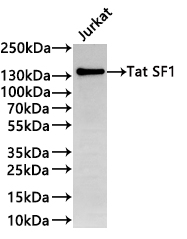
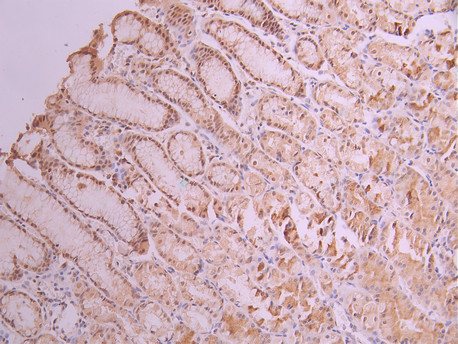
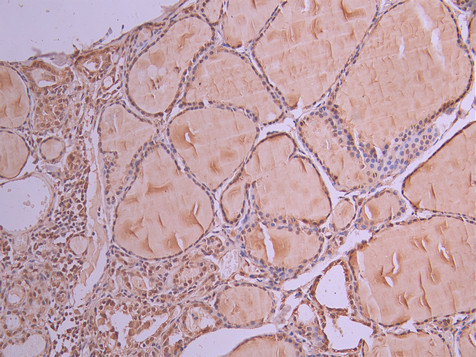
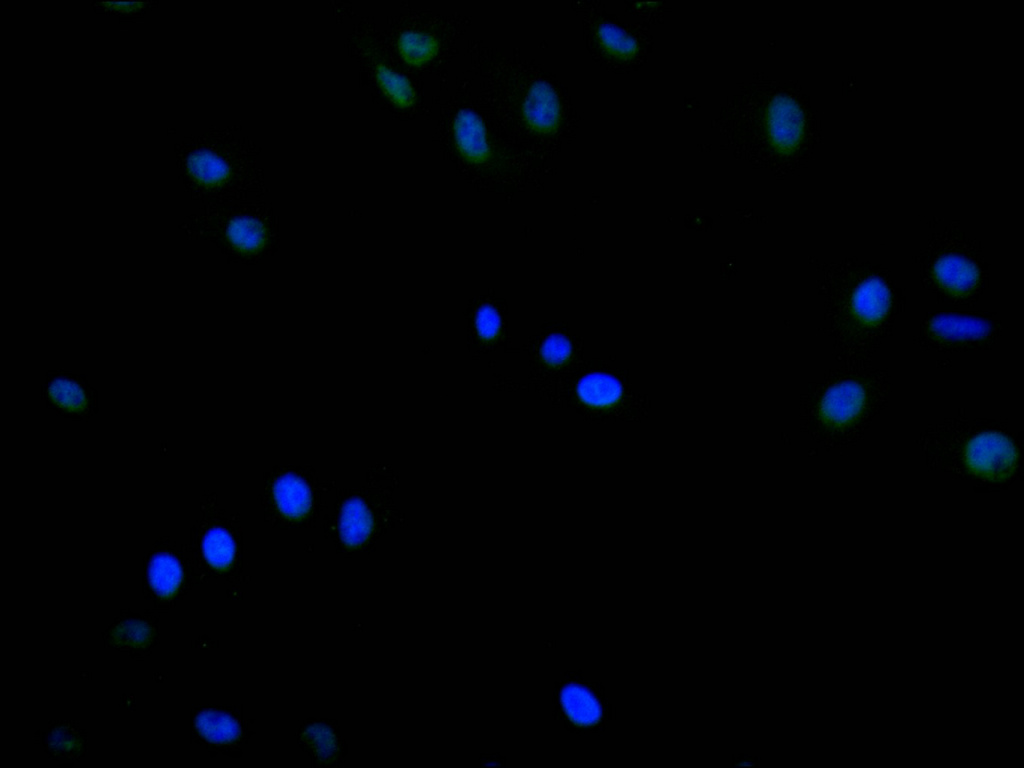
Validation data demonstrates robust performance across multiple applications. In western blot analysis of Jurkat whole cell lysate, the antibody detects a band at approximately 140 kDa rather than the predicted 86 kDa molecular weight. This size difference likely reflects extensive post-translational modifications, including glycosylation, which are characteristic of many nuclear regulatory proteins. Immunohistochemistry validation in paraffin-embedded human gastric cancer and thyroid tissue sections confirms reliable detection in archival specimens, while immunofluorescence staining in HeLa cells demonstrates clear subcellular localization suitable for cell biology applications.
The antibody is supplied in a stabilized liquid format with glycerol for convenient long-term storage at -20°C or -80°C. Recommended working dilutions range from 1:500–1:2000 for western blotting and 1:50–1:200 for immunohistochemistry and immunofluorescence applications. This antibody serves researchers exploring transcriptional regulation, cancer biology, and viral pathogenesis mechanisms.
There are currently no reviews for this product.





