
Call us
301-363-4651 (Available 9 a.m. to 5 p.m. CST from Monday to Friday)

| Code | CSB-RA921088A0HU |
| Size | US$210 |
| Order now | |
| Image |
|
| Have Questions? | Leave a Message or Start an on-line Chat |
| Application | Recommended Dilution |
|---|---|
| WB | 1:500-1:5000 |
| IHC | 1:50-1:200 |
| IF | 1:50-1:200 |
| FC | 1:50-1:200 |
IQGAP1 serves as a critical scaffold protein that integrates signals from Rho GTPases, cell adhesion molecules, and the cytoskeleton to coordinate cell migration, proliferation, and cytokinesis. Its dysregulation has been implicated in cancer progression and metastasis, making it a compelling target for researchers investigating cytoskeletal dynamics, signal transduction, and tumor biology.
This recombinant monoclonal antibody, clone 1B10, offers the reproducibility and consistency that demanding experimental workflows require. Because the antibody sequence is defined and produced recombinantly in rabbit host cells, researchers benefit from lot-to-lot uniformity that traditional hybridoma-derived antibodies cannot guarantee. This predictability is particularly valuable for longitudinal studies or when standardizing protocols across laboratories.
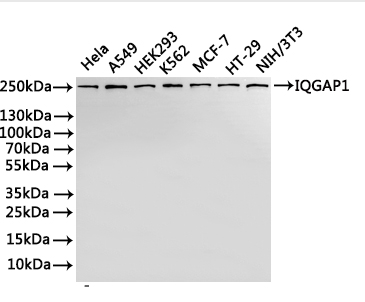
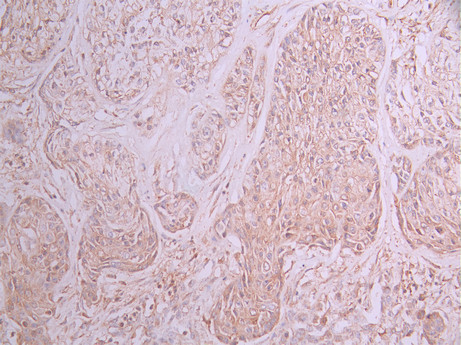
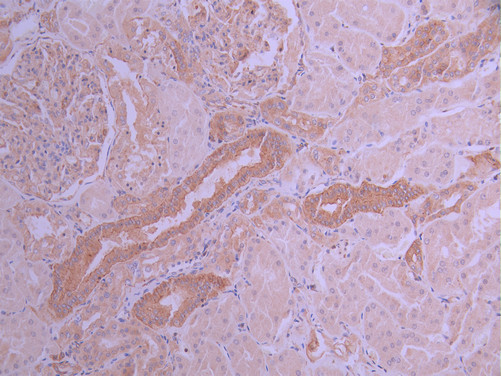
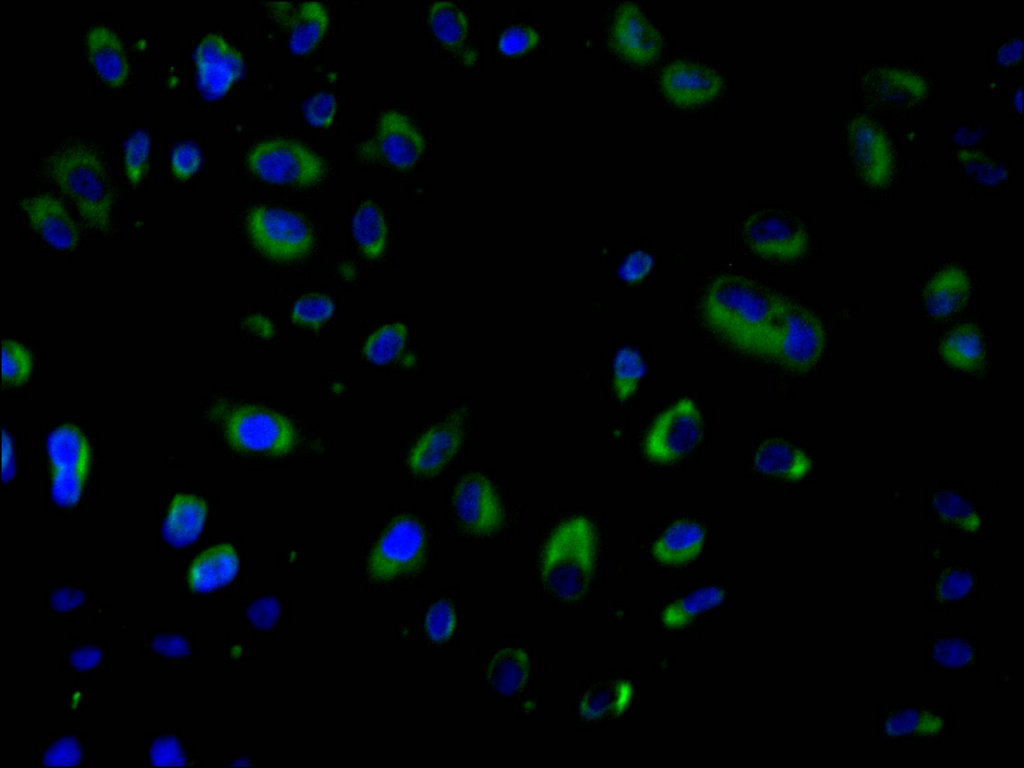
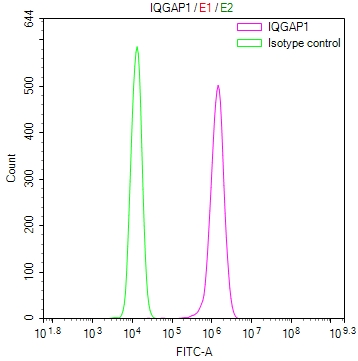
Validation data demonstrate robust performance across multiple applications. In Western blot analysis, the antibody detects IQGAP1 in a diverse panel of human cell lines including HeLa, A549, HEK293, K562, MCF-7, and HT-29, as well as mouse NIH/3T3 cells. The observed band at approximately 250 kDa runs higher than the predicted 189 kDa molecular weight, which is consistent with post-translational modifications such as glycosylation commonly observed with this large scaffold protein. Immunohistochemistry validation includes successful staining in paraffin-embedded human pancreatic cancer and kidney tissue sections. Immunofluorescence studies in HeLa cells reveal clear cytoplasmic localization patterns, while flow cytometry analysis in 786-O renal carcinoma cells demonstrates distinct positive signal separation from isotype controls.
This antibody supports researchers studying cytoskeletal regulation, cell motility mechanisms, and cancer cell behavior, providing a reliable tool for interrogating IQGAP1 function across cell-based and tissue-based experimental systems.
There are currently no reviews for this product.





