
Call us
301-363-4651 (Available 9 a.m. to 5 p.m. CST from Monday to Friday)

| Code | CSB-RA954520A0HU |
| Size | US$210 |
| Order now | |
| Image |
|
| Have Questions? | Leave a Message or Start an on-line Chat |
| Application | Recommended Dilution |
|---|---|
| WB | 1:500-1:5000 |
| IHC | 1:50-1:200 |
| IF | 1:50-1:200 |
Keratin 6 proteins (KRT6A, KRT6B, and KRT6C) are type II intermediate filament keratins that play essential roles in epithelial cell structure and wound healing responses. These closely related isoforms are characteristically expressed in stratified epithelia, including skin, oral mucosa, and certain carcinomas, making them valuable markers for studying epithelial differentiation, hyperproliferative conditions, and tissue regeneration. Their upregulation during wound repair and in various pathological states positions keratin 6 as a relevant target for dermatological research and cancer biology investigations.
This recombinant rabbit monoclonal antibody (clone 24H10) offers the reproducibility and consistency that demanding experimental workflows require. Because recombinant antibodies are produced from defined genetic sequences, you can expect reliable performance across different lots, eliminating the variability concerns often associated with traditional hybridoma-derived reagents. The affinity-purified IgG format ensures high specificity for your target while minimizing background interference.
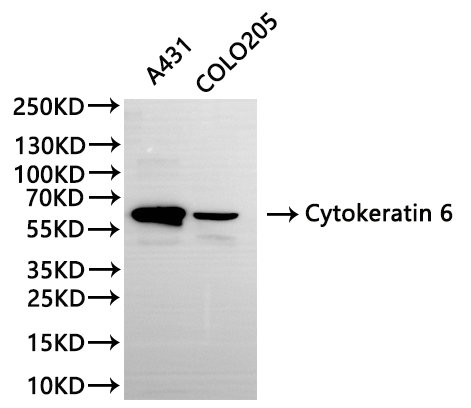
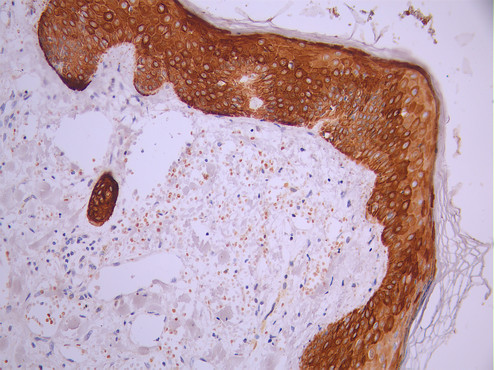
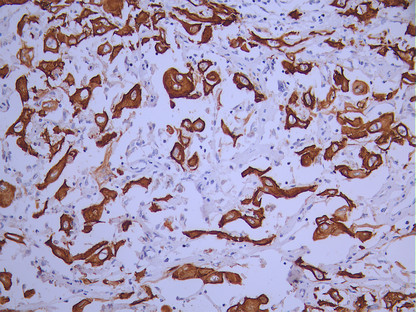
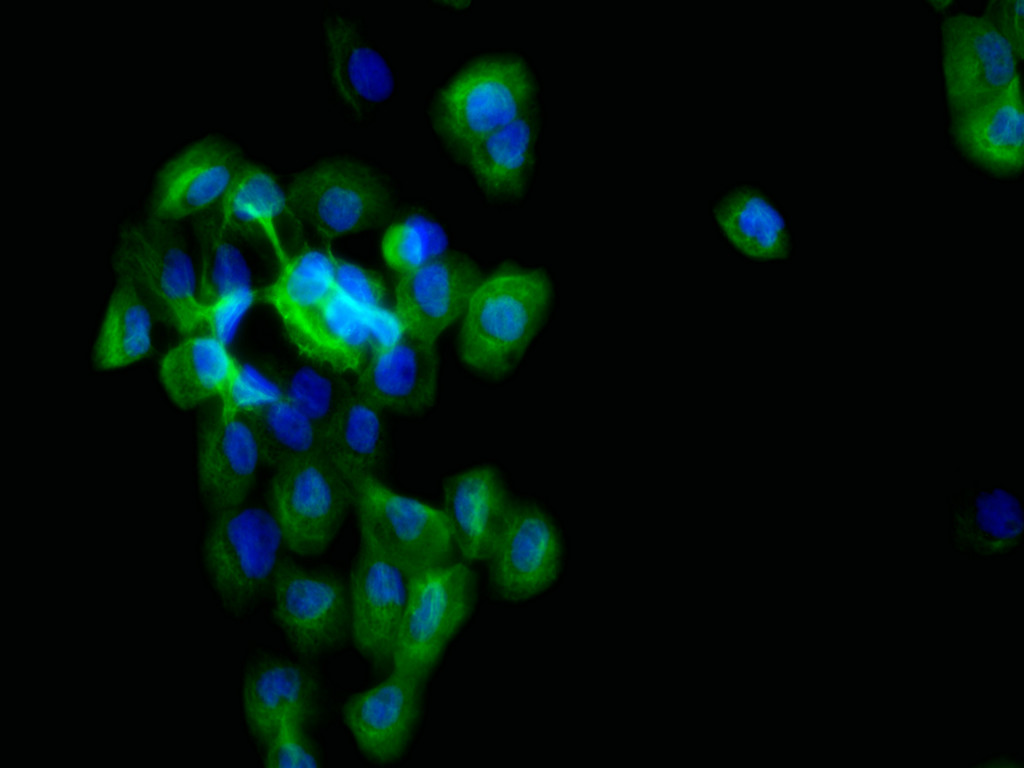
Validation studies demonstrate robust performance across multiple applications. Western blot analysis detects a clean 60 kDa band—consistent with the predicted molecular weight—in A431 epidermoid carcinoma and COLO205 colorectal adenocarcinoma cell lysates, confirming specificity in epithelial cell models. Immunohistochemistry staining has been successfully performed on paraffin-embedded human skin tissue and cervical cancer sections using citrate buffer antigen retrieval, revealing expected epithelial localization patterns. Immunofluorescence studies in A431 cells further demonstrate the antibody's utility for subcellular localization experiments.
With validated reactivity in human samples and flexibility across ELISA, western blot, immunohistochemistry, and immunofluorescence platforms, this antibody supports diverse experimental approaches for researchers investigating epithelial biology, wound healing mechanisms, and keratin expression in normal and pathological tissues.
There are currently no reviews for this product.





