
Call us
301-363-4651 (Available 9 a.m. to 5 p.m. CST from Monday to Friday)

| Code | CSB-RA774813MA1HU |
| Size | US$210 |
| Order now | |
| Image |
|
| Have Questions? | Leave a Message or Start an on-line Chat |
| Application | Recommended Dilution |
|---|---|
| WB | 1:500-1:2000 |
| IHC | 1:50-1:200 |
LRRTM4, or leucine-rich repeat transmembrane neuronal protein 4, plays a critical role in synaptic development and function within the central nervous system. As a postsynaptic adhesion molecule, LRRTM4 interacts with presynaptic neurexins to regulate excitatory synapse formation, making it a protein of significant interest in neuroscience research exploring synaptic connectivity, neural circuit development, and neurological disorders.
This recombinant monoclonal antibody (clone 21D2) offers researchers the reproducibility and consistency that sequence-defined antibody production provides. Unlike traditional hybridoma-derived antibodies, recombinant technology ensures that every lot delivers identical binding characteristics, eliminating the variability that can compromise longitudinal studies or multi-site collaborations. The human IgG1 format and affinity-chromatography purification further contribute to reliable, specific detection of your target.
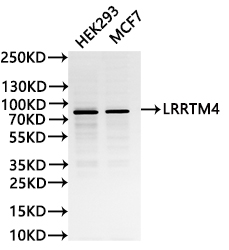
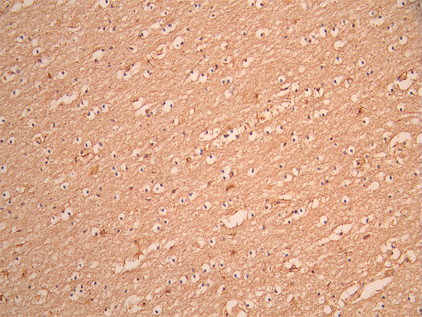
Validation studies confirm robust performance across multiple applications, giving you flexibility in experimental design. Western blot analysis demonstrates clear detection in HEK293 and MCF7 whole cell lysates at dilutions ranging from 1:500 to 1:2000. The observed band at approximately 80 kDa runs slightly higher than the predicted 67 kDa molecular weight, consistent with post-translational modifications such as glycosylation that are characteristic of transmembrane proteins. For tissue-based studies, immunohistochemistry validation in paraffin-embedded human brain tissue at 1:50 to 1:200 dilutions reveals specific staining patterns appropriate for neuroanatomical investigations.
Whether you are investigating synapse formation mechanisms, characterizing LRRTM4 expression in neural tissues, or exploring its potential involvement in neurodevelopmental conditions, this antibody provides a dependable tool for advancing your research into this important synaptic organizer.
There are currently no reviews for this product.





