
Call us
301-363-4651 (Available 9 a.m. to 5 p.m. CST from Monday to Friday)

| Code | CSB-RA590869A0HU |
| Size | US$210 |
| Order now | |
| Image |
|
| Have Questions? | Leave a Message or Start an on-line Chat |
| Application | Recommended Dilution |
|---|---|
| WB | 1:500-1:2000 |
| IHC | 1:50-1:200 |
| FC | 1:50-1:200 |
MAP2K6 and MAP2K3, also known as MEK6 and MEK3 respectively, are dual-specificity kinases that serve as critical upstream activators of the p38 MAPK signaling pathway. These kinases play essential roles in cellular stress responses, inflammatory signaling, and apoptotic regulation, making them important targets for researchers investigating signal transduction mechanisms in cancer biology, immunology, and stress-related cellular processes.
This recombinant monoclonal antibody, developed using rabbit host immunization and clone 2B4, offers the reproducibility and consistency that demanding experimental workflows require. Because recombinant antibodies are produced from defined genetic sequences, researchers benefit from lot-to-lot uniformity that supports longitudinal studies and ensures comparable results across experiments. The antibody has been affinity-purified to maximize specificity while minimizing background interference.
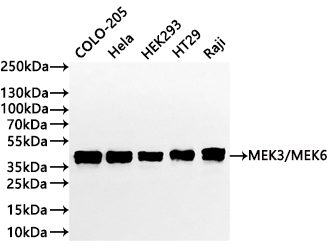
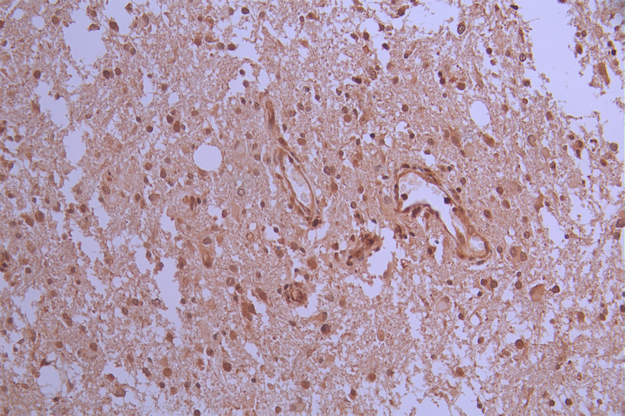
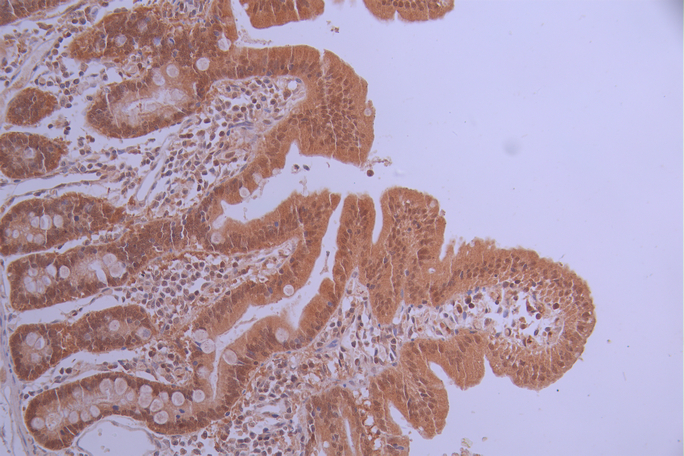
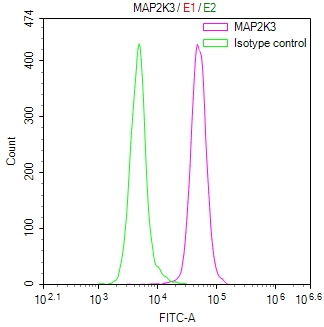
Validation studies demonstrate robust performance across multiple applications in human samples. Western blot analysis confirms detection of both MEK3 and MEK6 at their predicted molecular weights of 37 and 39 kDa across diverse cell lines including COLO-205, HeLa, HEK293, HT-29, and Raji, indicating reliable performance in colorectal cancer, cervical carcinoma, embryonic kidney, and B-cell lymphoma research models. Immunohistochemistry validation in paraffin-embedded human glioma cancer and small intestine tissue sections demonstrates suitability for tissue-based studies examining MEK3/MEK6 expression patterns. Flow cytometry analysis using PC-3 prostate cancer cells further extends the antibody's utility for single-cell quantification of intracellular kinase levels.
This versatile reagent supports investigations into p38 MAPK pathway dysregulation, stress-activated signaling cascades, and therapeutic target validation across oncology and inflammatory disease research programs.
There are currently no reviews for this product.





