
Call us
301-363-4651 (Available 9 a.m. to 5 p.m. CST from Monday to Friday)

| Code | CSB-RA562365A0HU |
| Size | US$210 |
| Order now | |
| Image |
|
| Have Questions? | Leave a Message or Start an on-line Chat |
| Application | Recommended Dilution |
|---|---|
| WB | 1:500-1:5000 |
| IHC | 1:50-1:200 |
| FC | 1:50-1:200 |
MED4 serves as an essential component of the Mediator complex, a multiprotein assembly that functions as a critical bridge between gene-specific transcription factors and RNA polymerase II. This regulatory role positions MED4 at the heart of transcriptional control, making it a valuable target for researchers investigating gene expression mechanisms, nuclear receptor signaling pathways, and the molecular basis of transcriptional regulation in both normal physiology and disease states.
This recombinant monoclonal antibody, generated from clone 14C5, offers the consistency and reproducibility that demanding experimental workflows require. Because the antibody sequence is defined and production occurs through recombinant expression in rabbit host cells, researchers can expect reliable performance across experiments and between lots, eliminating the variability often encountered with traditional hybridoma-derived antibodies.
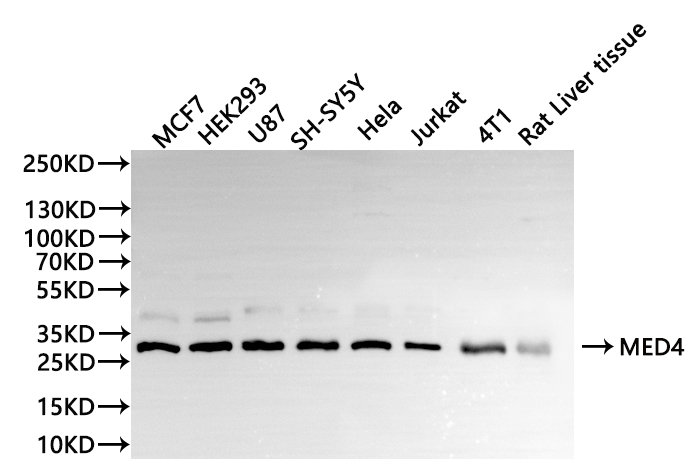
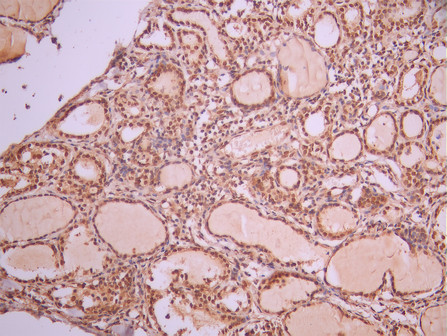
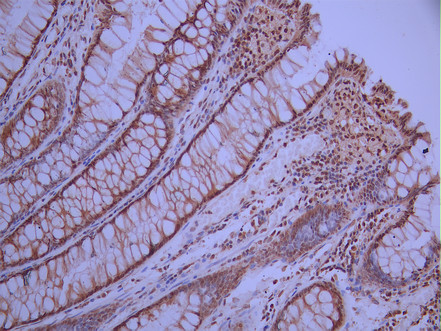
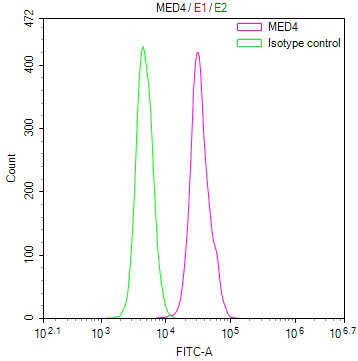
Validation studies demonstrate robust performance across multiple applications. Western blot analysis at 1:1000 dilution reveals a clean 30 kDa band matching the predicted molecular weight, with positive detection confirmed in diverse human cell lines including MCF7, HEK293, U87, SH-SY5Y, HeLa, and Jurkat cells. Cross-species reactivity extends to rat samples, as demonstrated in rat liver tissue lysate and the mouse-derived 4T1 cell line. Immunohistochemistry validation in paraffin-embedded human thyroid tissue and colorectal cancer specimens shows specific staining at 1:100 dilution using standard citrate buffer antigen retrieval. Flow cytometry applications have been validated in SH-SY5Y neuroblastoma cells, providing researchers with flexibility for intracellular detection studies.
This antibody supports investigations into Mediator complex function, vitamin D receptor signaling pathways, and transcriptional dysregulation in cancer biology, offering researchers a dependable tool for exploring fundamental mechanisms of gene regulation.
There are currently no reviews for this product.





