
Call us
301-363-4651 (Available 9 a.m. to 5 p.m. CST from Monday to Friday)

| Code | CSB-RA792403A0HU |
| Size | US$210 |
| Order now | |
| Image |
|
| Have Questions? | Leave a Message or Start an on-line Chat |
| Application | Recommended Dilution |
|---|---|
| IHC | 1:50-1:200 |
| IF | 1:50-1:200 |
| FC | 1:50-1:200 |
Histone H3 lysine 9 monomethylation represents a critical epigenetic mark that plays nuanced roles in chromatin organization and transcriptional regulation. Unlike the more extensively studied di- and trimethylated states at this position, H3K9me1 is associated with both active transcription and the establishment of heterochromatin, making it an important target for researchers investigating the dynamic interplay between histone modifications and gene expression programs.
This recombinant monoclonal antibody, clone 13E1, offers the reproducibility and consistency that epigenetics research demands. Produced using recombinant technology with a defined sequence, it eliminates the lot-to-lot variability that can compromise longitudinal studies or multi-site collaborations examining histone methylation patterns. The rabbit IgG format, raised against a synthetic peptide derived from human HIST1H3A, provides reliable detection of this modification in human samples.
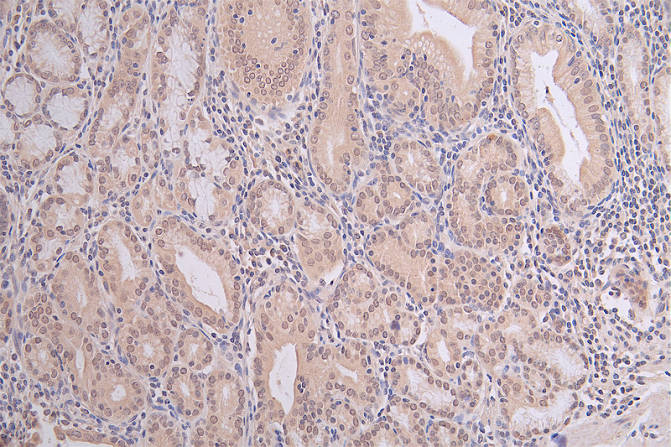
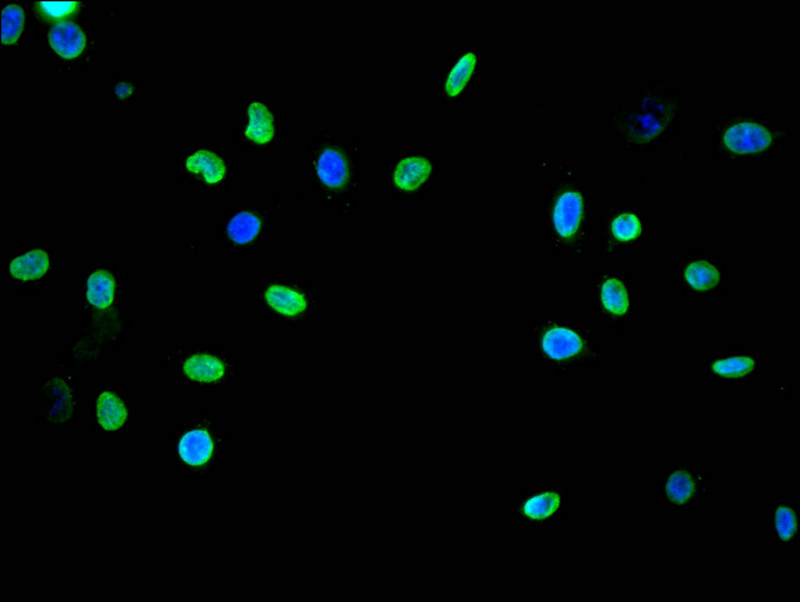
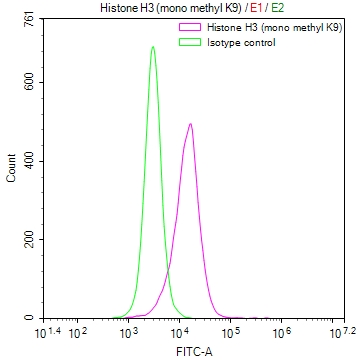
Validation across multiple experimental platforms demonstrates genuine workflow flexibility. Immunohistochemistry studies in paraffin-embedded human gastric cancer tissue reveal clear nuclear staining patterns when using citrate buffer antigen retrieval, with effective detection at dilutions from 1:50 to 1:200. Immunofluorescence analysis in A549 human lung carcinoma cells confirms the expected nuclear localization of this histone modification, while flow cytometry validation in the same cell line shows distinct positive population shifts compared to isotype controls, enabling quantitative assessment of H3K9me1 levels at the single-cell level.
For researchers exploring epigenetic mechanisms in cancer biology, chromatin dynamics, or nuclear signaling pathways, this antibody provides a dependable tool for interrogating monomethylation status at this functionally significant lysine residue across immunohistochemical, immunofluorescent, and flow cytometric applications.
There are currently no reviews for this product.





