
Call us
301-363-4651 (Available 9 a.m. to 5 p.m. CST from Monday to Friday)

| Code | CSB-RA097243A0HU |
| Size | US$210 |
| Order now | |
| Image |
|
| Have Questions? | Leave a Message or Start an on-line Chat |
| Application | Recommended Dilution |
|---|---|
| WB | 1:500-1:5000 |
| IHC | 1:50-1:200 |
NDUFB4 serves as an essential accessory subunit of mitochondrial Complex I, the largest enzyme of the respiratory chain responsible for electron transfer from NADH to ubiquinone. As a component of this multi-subunit assembly, NDUFB4 contributes to the structural integrity and function of the oxidative phosphorylation machinery, making it a valuable marker for studies investigating mitochondrial bioenergetics, metabolic disorders, and cellular energy homeostasis.
This recombinant monoclonal antibody, generated from clone 17B3, offers the reproducibility and consistency that demanding mitochondrial research requires. Because the antibody sequence is defined and produced recombinantly, researchers can expect uniform performance across experiments and over time, eliminating the lot-to-lot variability that can complicate longitudinal studies or multi-site collaborations.
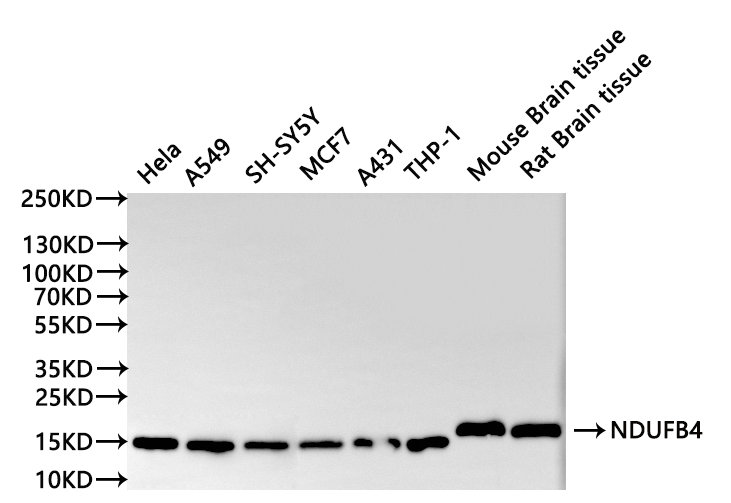
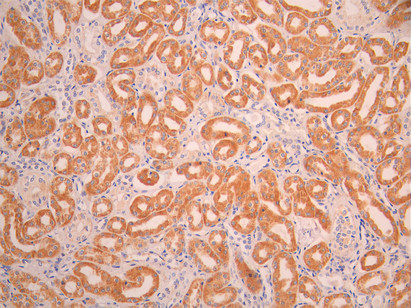
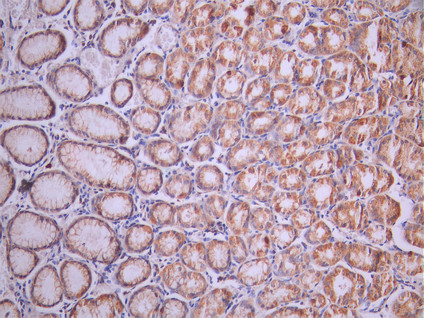
Validation data demonstrates robust performance across multiple experimental platforms. In western blot applications, the antibody detects a clean band at the predicted 15 kDa molecular weight across a diverse panel of human cell lines including HeLa, A549, SH-SY5Y, MCF-7, A431, and THP-1, providing flexibility for researchers working with different cellular models. Cross-species reactivity extends to rodent samples, with confirmed detection in both mouse and rat brain tissue lysates, supporting translational studies that bridge human cell culture and animal model systems. For spatial analysis of NDUFB4 expression, immunohistochemistry validation in paraffin-embedded human kidney tissue and gastric cancer specimens demonstrates suitability for examining mitochondrial protein distribution in both normal and pathological contexts.
This antibody supports researchers investigating mitochondrial dysfunction in neurodegeneration, cancer metabolism, and inherited Complex I deficiencies, where reliable detection of respiratory chain components is fundamental to understanding disease mechanisms.
There are currently no reviews for this product.





