
Call us
301-363-4651 (Available 9 a.m. to 5 p.m. CST from Monday to Friday)

| Code | CSB-RA632615A0HU |
| Size | US$210 |
| Order now | |
| Image |
|
| Have Questions? | Leave a Message or Start an on-line Chat |
| Application | Recommended Dilution |
|---|---|
| IHC | 1:50-1:200 |
| FC | 1:50-1:200 |
Phospholipid scramblase 1 (PLSCR1) plays a critical role in calcium-dependent redistribution of phospholipids across the plasma membrane, a process fundamental to apoptotic signaling, blood coagulation, and cellular responses to viral infection. This protein has garnered significant attention in microbiology research due to its involvement in interferon-mediated antiviral responses and its potential as a biomarker in various pathological conditions, including certain cancers.
This recombinant monoclonal antibody, clone 2D7, offers researchers the reproducibility and consistency that sequence-defined antibody production provides. Generated against a synthetic peptide derived from human PLSCR1, this rabbit IgG delivers reliable target recognition across experiments, eliminating the lot-to-lot variability that can complicate longitudinal studies or multi-site collaborations.
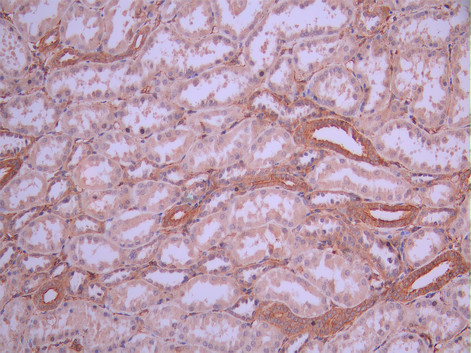
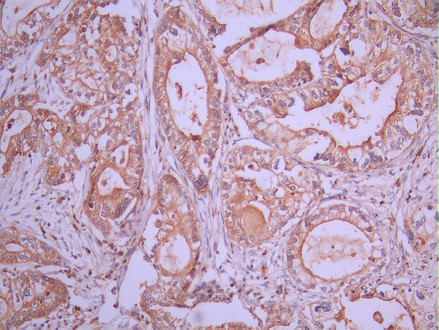
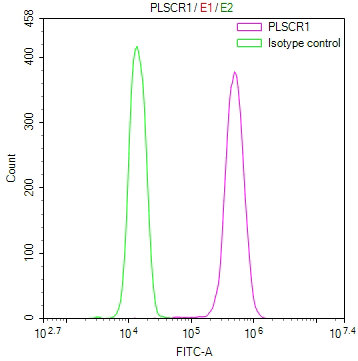
Validation studies demonstrate robust performance across multiple applications, giving researchers flexibility in their experimental design. Immunohistochemical analysis at 1:100 dilution reveals clear staining in paraffin-embedded human kidney tissue and human pancreatic cancer specimens using citrate buffer antigen retrieval, making this antibody well-suited for tissue-based investigations of PLSCR1 expression patterns. Flow cytometry validation using A431 cells confirms intracellular detection capability, with distinct signal separation from isotype controls when cells are fixed and permeabilized, enabling quantitative analysis of PLSCR1 levels at the single-cell level.
The antibody is supplied in a stabilized liquid format containing glycerol for convenient long-term storage at -20°C or -80°C. Whether investigating PLSCR1's role in membrane dynamics, exploring its function in host-pathogen interactions, or examining its expression in disease states, this recombinant antibody provides a dependable tool for advancing your research.
There are currently no reviews for this product.





