
Call us
301-363-4651 (Available 9 a.m. to 5 p.m. CST from Monday to Friday)

| Code | CSB-RA171352A0HU |
| Size | US$210 |
| Order now | |
| Image |
|
| Have Questions? | Leave a Message or Start an on-line Chat |
| Application | Recommended Dilution |
|---|---|
| IHC | 1:50-1:200 |
| IF | 1:50-1:200 |
| FC | 1:50-1:200 |
PML, or promyelocytic leukemia protein, serves as a critical tumor suppressor and the defining component of PML nuclear bodies—dynamic subnuclear structures that regulate diverse cellular processes including apoptosis, senescence, DNA damage response, and antiviral defense. The protein gained its name from its involvement in acute promyelocytic leukemia, where chromosomal translocation creates the oncogenic PML-RARα fusion protein. Beyond oncology, PML research extends into viral pathogenesis, cellular stress responses, and stem cell biology, making it a target of significant interest across multiple disciplines.
This recombinant monoclonal antibody, clone 4E8, offers the consistency and reproducibility that demanding research applications require. Generated against a synthetic peptide derived from human PML and produced using recombinant technology in rabbit host, this antibody provides sequence-defined specificity with minimal lot-to-lot variation—particularly valuable for longitudinal studies or multi-site collaborations where experimental reproducibility is paramount.
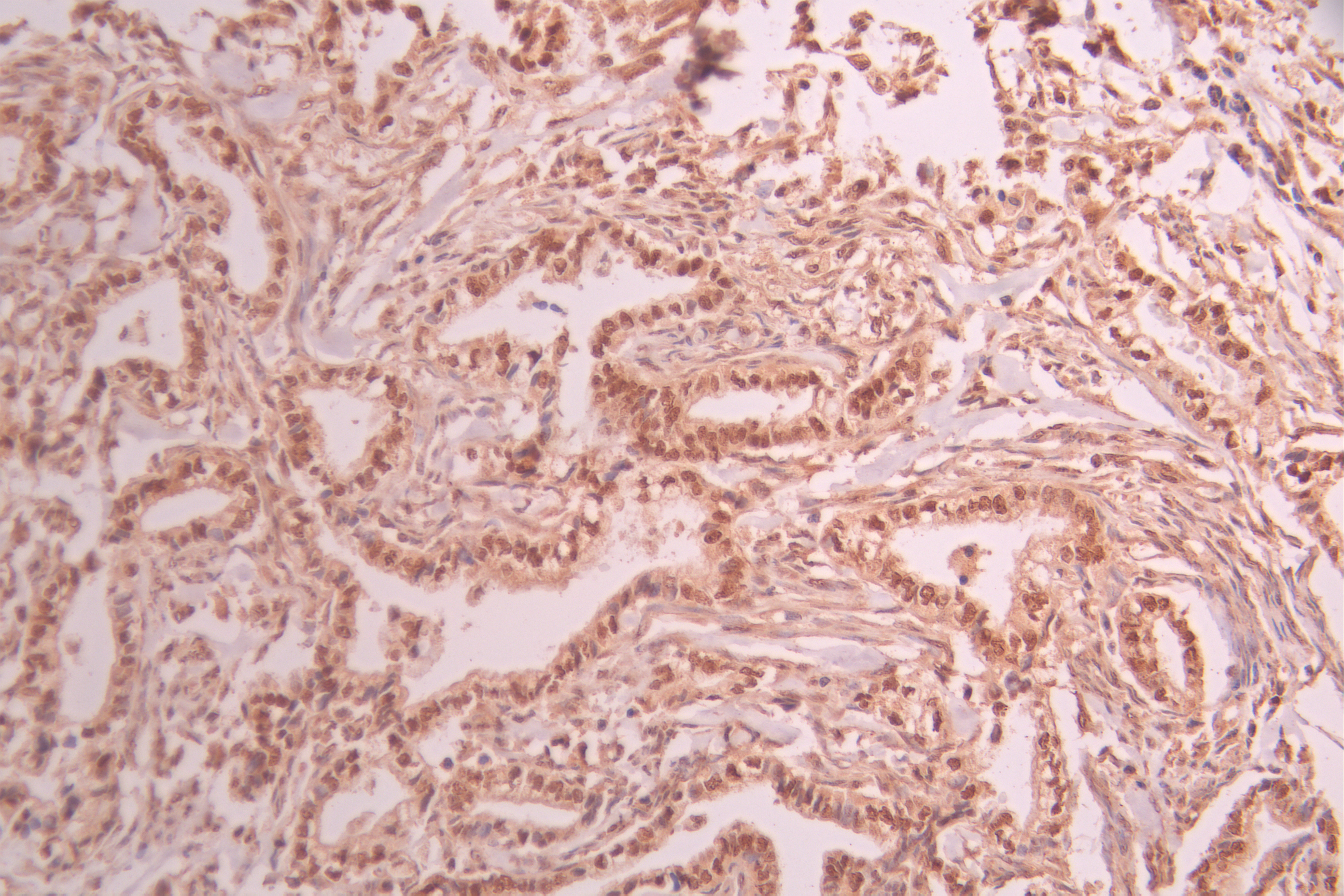
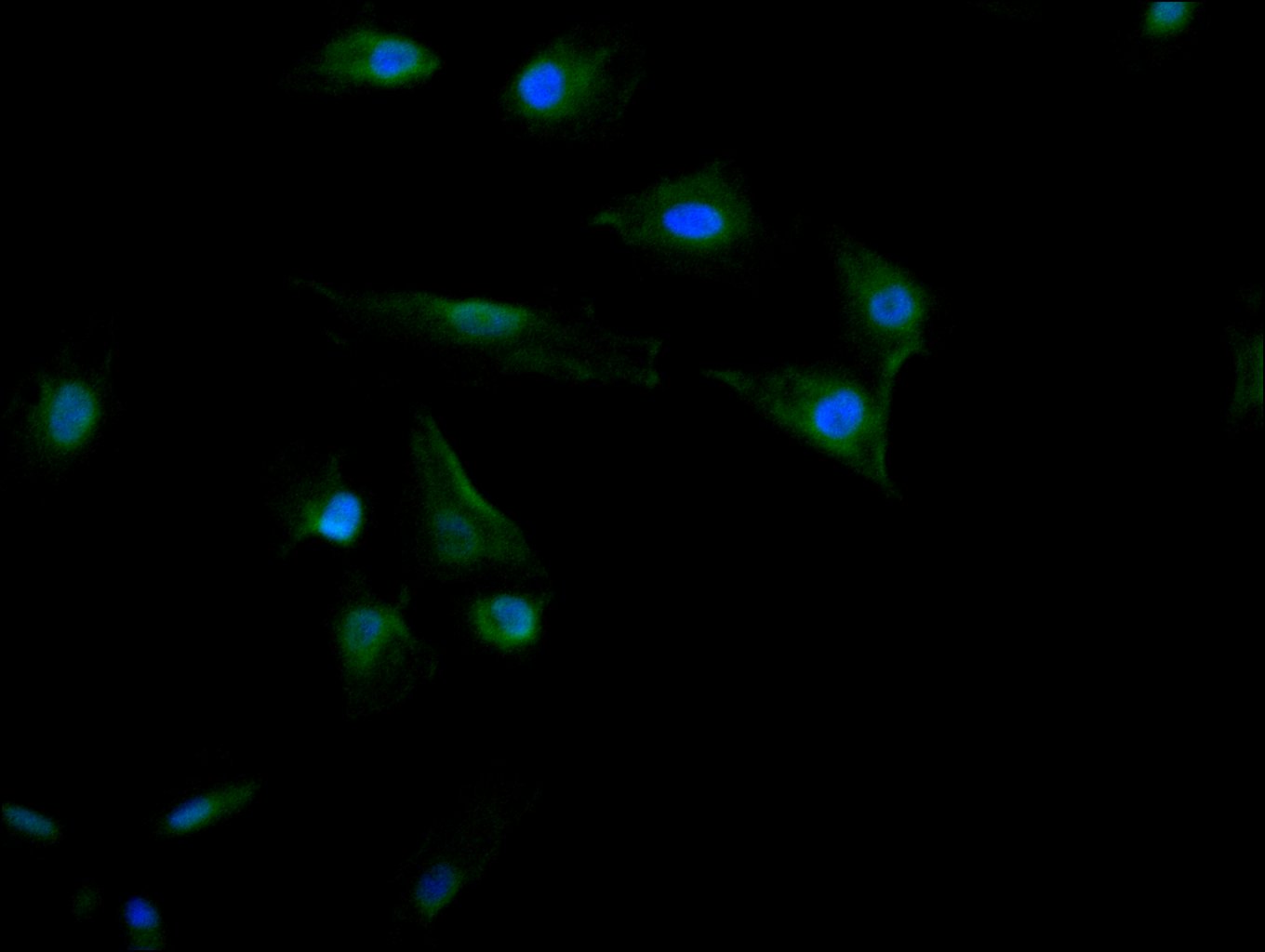
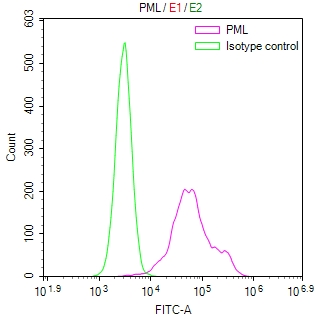
Validation across multiple platforms demonstrates this antibody's versatility in your experimental workflows. Immunohistochemistry performed on paraffin-embedded human cervical cancer tissue using a Leica Bond system shows clear target detection at 1:100 dilution with citrate buffer antigen retrieval. Immunofluorescence staining in A-549 lung carcinoma cells reveals the expected nuclear localization pattern characteristic of PML bodies. Flow cytometry analysis using 786-O renal carcinoma cells confirms reliable detection in suspension-based applications, with clear separation from isotype control.
Whether investigating PML's role in leukemogenesis, exploring nuclear body dynamics, or examining stress-induced cellular responses, this antibody provides researchers with a dependable tool for visualizing and quantifying PML across tissue sections, cultured cells, and flow cytometry applications.
There are currently no reviews for this product.





