
Call us
301-363-4651 (Available 9 a.m. to 5 p.m. CST from Monday to Friday)

| Code | CSB-RA584389A0HU |
| Size | US$210 |
| Order now | |
| Image |
|
| Have Questions? | Leave a Message or Start an on-line Chat |
| Application | Recommended Dilution |
|---|---|
| WB | 1:500-1:5000 |
| IHC | 1:50-1:200 |
| FC | 1:50-1:200 |
The protein kinase C family represents a cornerstone of cellular signal transduction, with individual isoforms orchestrating diverse processes from cell proliferation and differentiation to apoptosis and immune responses. This recombinant monoclonal antibody targets multiple PKC isoforms including PRKCA, PRKCB, PRKCG, PRKCD, PRKCE, and PRKCZ, making it particularly valuable for researchers investigating the broader PKC signaling network or comparing isoform expression patterns across experimental conditions.
Developed using recombinant technology and produced as clone 6A2, this rabbit monoclonal antibody offers the reproducibility essential for longitudinal studies and multi-site collaborations. The sequence-defined nature of recombinant production ensures consistent performance across lots, eliminating the variability that can complicate data interpretation when tracking subtle changes in kinase expression or activation states.
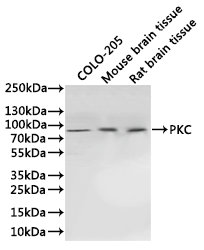
Validation across multiple platforms demonstrates genuine experimental flexibility. Western blot analysis confirms detection in human COLO-205 cells as well as mouse and rat brain tissue lysates, with observed bands at approximately 77 kDa. This molecular weight aligns with the larger PKC isoforms and likely reflects post-translational modifications, particularly glycosylation, which are characteristic of these kinases in their native cellular context. The antibody's cross-species reactivity across human, mouse, and rat samples supports translational research workflows moving between model systems.
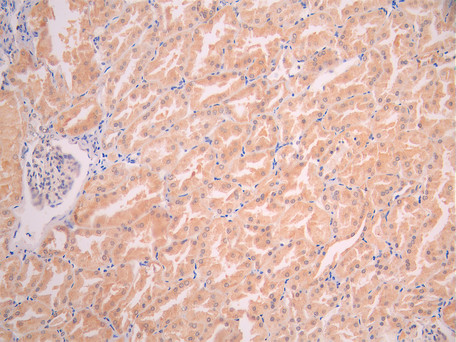
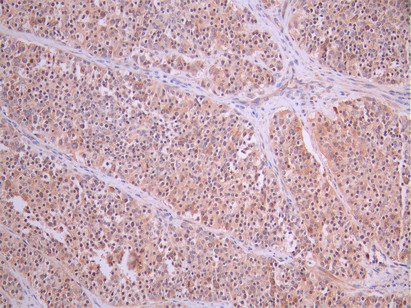
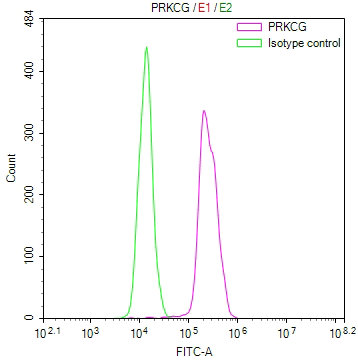
Immunohistochemistry validation in human kidney and liver cancer tissue sections expands utility into spatial expression studies, while flow cytometry performance in BxPC-3 pancreatic cancer cells enables single-cell analysis of PKC levels. This combination of validated applications positions the antibody well for cancer biology research, neuroscience investigations, and studies exploring PKC-mediated signaling in metabolic disease.
There are currently no reviews for this product.





