
Call us
301-363-4651 (Available 9 a.m. to 5 p.m. CST from Monday to Friday)

| Code | CSB-RA904109A0HU |
| Size | US$210 |
| Order now | |
| Image |
|
| Have Questions? | Leave a Message or Start an on-line Chat |
| Application | Recommended Dilution |
|---|---|
| IHC | 1:50-1:200 |
| IF | 1:50-1:200 |
| FC | 1:50-1:200 |
PRPF19 serves as a critical component of the spliceosome, functioning as a RING-type E3 ubiquitin ligase essential for pre-mRNA processing and genome stability. Beyond its core role in splicing, PRPF19 has garnered significant research interest for its involvement in DNA damage response pathways and cellular senescence, where it acts as a senescence evasion factor. These diverse functions make PRPF19 a compelling target for researchers investigating RNA processing mechanisms, aging biology, and cancer progression.
This recombinant monoclonal antibody, generated in rabbit against a synthetic peptide from human PRPF19, offers the consistency and reliability that demanding experimental workflows require. As a sequence-defined recombinant clone, it eliminates the lot-to-lot variability inherent in traditional hybridoma-derived antibodies, ensuring reproducible results across extended studies and collaborative projects.
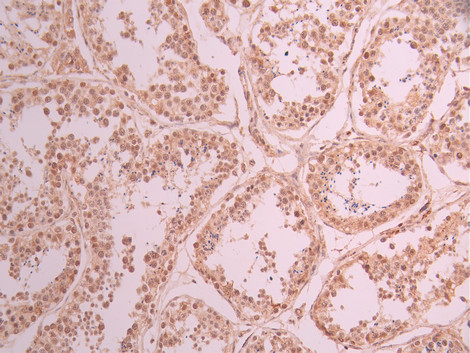
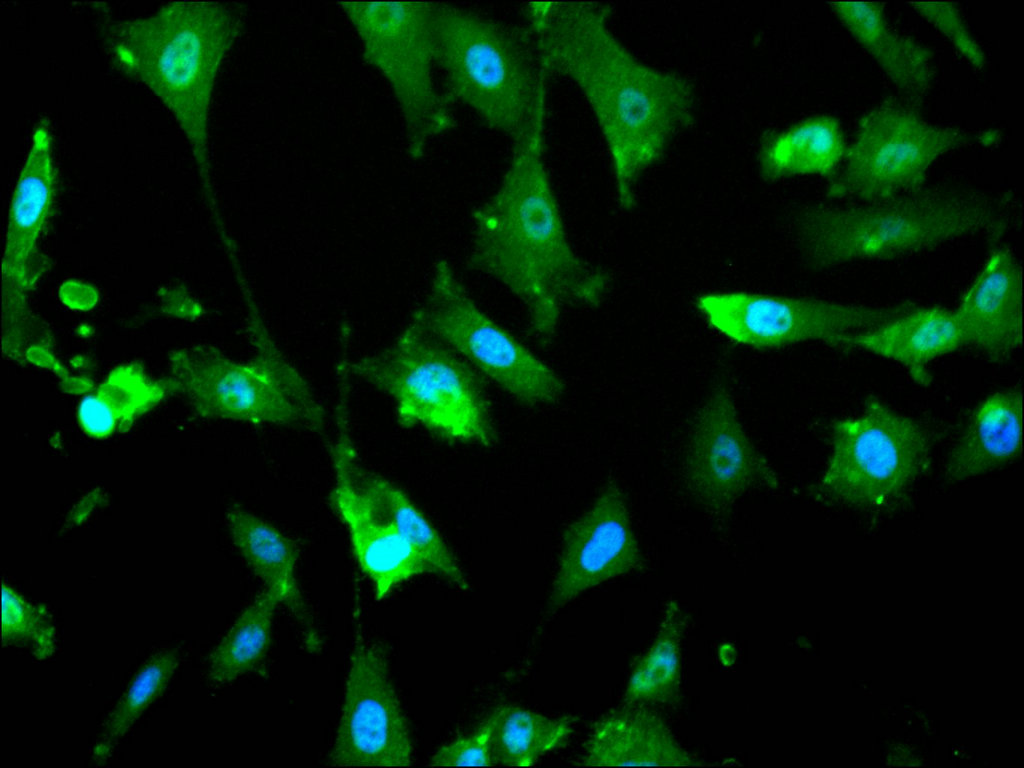
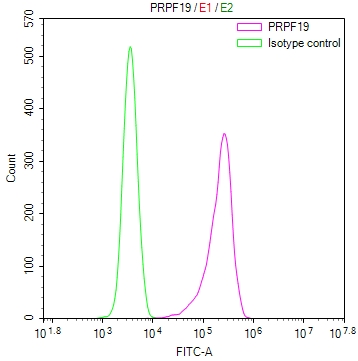
Validation across multiple detection platforms demonstrates this antibody's versatility in your research toolkit. Immunohistochemistry studies in paraffin-embedded human testis tissue reveal clear target detection using citrate buffer antigen retrieval at dilutions of 1:50–1:200. Immunofluorescence analysis in PC-3 prostate cancer cells shows distinct cellular localization patterns, while flow cytometry experiments using Jurkat cells confirm robust performance in single-cell analysis applications, with clear separation between specific staining and isotype control populations.
The antibody's compatibility with fixed and permeabilized samples across these platforms provides flexibility for researchers examining PRPF19 expression in tissue sections, cultured cells, or suspension cell populations. Whether your work focuses on spliceosome biology, DNA repair mechanisms, or the molecular underpinnings of cellular aging and transformation, this antibody delivers the specificity and reproducibility essential for meaningful experimental outcomes.
There are currently no reviews for this product.





