
Call us
301-363-4651 (Available 9 a.m. to 5 p.m. CST from Monday to Friday)

| Code | CSB-RA189952A0HU |
| Size | US$210 |
| Order now | |
| Image |
|
| Have Questions? | Leave a Message or Start an on-line Chat |
| Application | Recommended Dilution |
|---|---|
| IF | 1:50-1:200 |
| FC | 1:50-1:200 |
RACGAP1, also known as MgcRacGAP or CYK4, serves as a critical regulator of cytokinesis and cell division, functioning as a GTPase-activating protein that controls Rac and Cdc42 signaling pathways. This protein plays essential roles in central spindle assembly and the completion of cell division, making it a key target for researchers investigating cell cycle regulation, mitotic progression, and the molecular mechanisms underlying cellular proliferation.
This recombinant monoclonal antibody, clone 8G12, offers the reproducibility and consistency that demanding cell biology research requires. Generated against a synthetic peptide derived from human RACGAP1, the antibody is produced using recombinant technology, ensuring sequence-defined specificity and eliminating the lot-to-lot variability that can compromise longitudinal studies. The rabbit IgG format, combined with affinity chromatography purification, delivers a reagent optimized for reliable target detection in human samples.
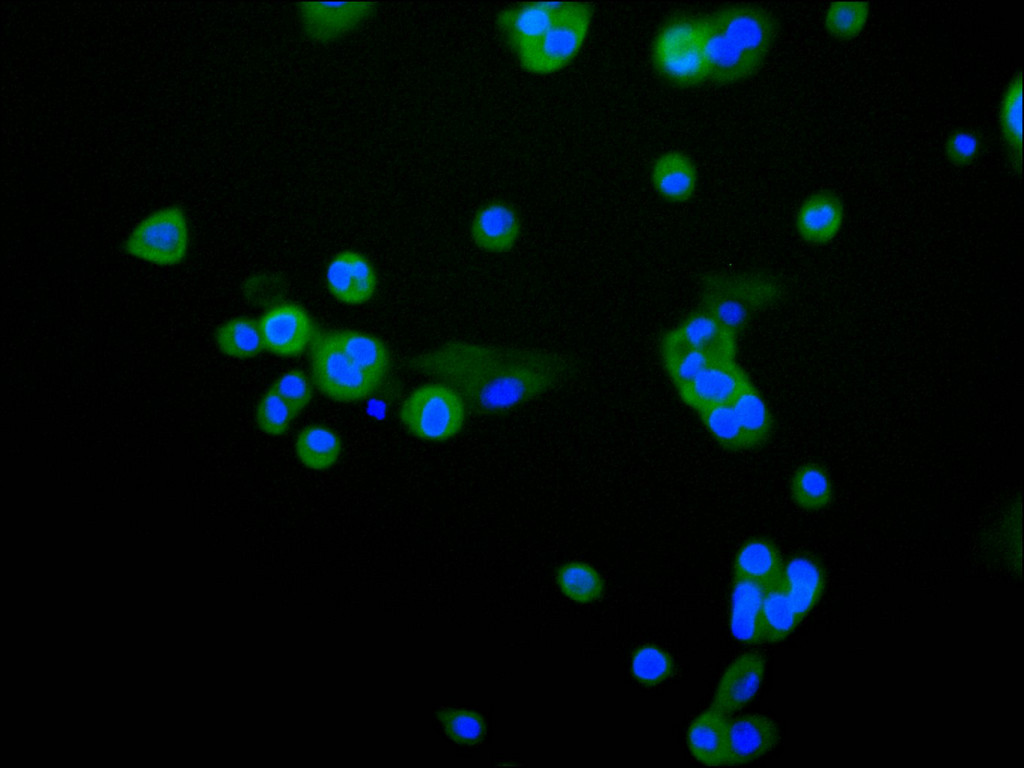
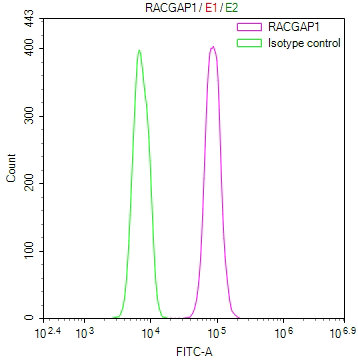
Validation studies demonstrate strong performance across multiple experimental platforms. Immunofluorescence analysis in HepG2 cells reveals clear cellular localization patterns when used at dilutions between 1:50 and 1:200, with DAPI counterstaining enabling precise subcellular context. Flow cytometry validation in HeLa cells confirms robust detection with distinct positive signal separation from isotype controls, supporting quantitative analysis of RACGAP1 expression at the single-cell level. The antibody is also validated for ELISA applications, providing flexibility across different experimental workflows.
For researchers studying cytokinesis, cell division machinery, or exploring RACGAP1's emerging roles in cancer biology, this antibody provides a dependable tool backed by demonstrated performance in well-characterized human cell line models.
There are currently no reviews for this product.





