
Call us
301-363-4651 (Available 9 a.m. to 5 p.m. CST from Monday to Friday)

| Code | CSB-RA251963A0HU |
| Size | US$210 |
| Order now | |
| Image |
|
| Have Questions? | Leave a Message or Start an on-line Chat |
| Application | Recommended Dilution |
|---|---|
| WB | 1:500-1:2000 |
| IHC | 1:50-1:200 |
| IF | 1:50-1:200 |
| FC | 1:50-1:200 |
RAD51 plays a central role in homologous recombination, the primary pathway for error-free repair of DNA double-strand breaks. As a RecA homolog, this recombinase facilitates strand invasion and exchange during repair, making it essential for maintaining genomic stability. RAD51 has garnered significant attention in cancer research due to its functional relationship with BRCA1 and BRCA2 tumor suppressors, and its involvement in the Fanconi anemia pathway positions it as a key player in understanding hereditary cancer syndromes and therapeutic resistance mechanisms.
This recombinant monoclonal antibody, generated from clone 18H6 in rabbit host, offers the reproducibility and consistency that demanding research applications require. Because the antibody sequence is defined and production occurs in controlled recombinant systems, researchers can expect reliable performance across experiments and over time, eliminating the lot-to-lot variability that can complicate long-term studies or multi-site collaborations.
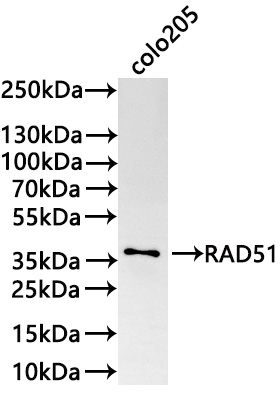
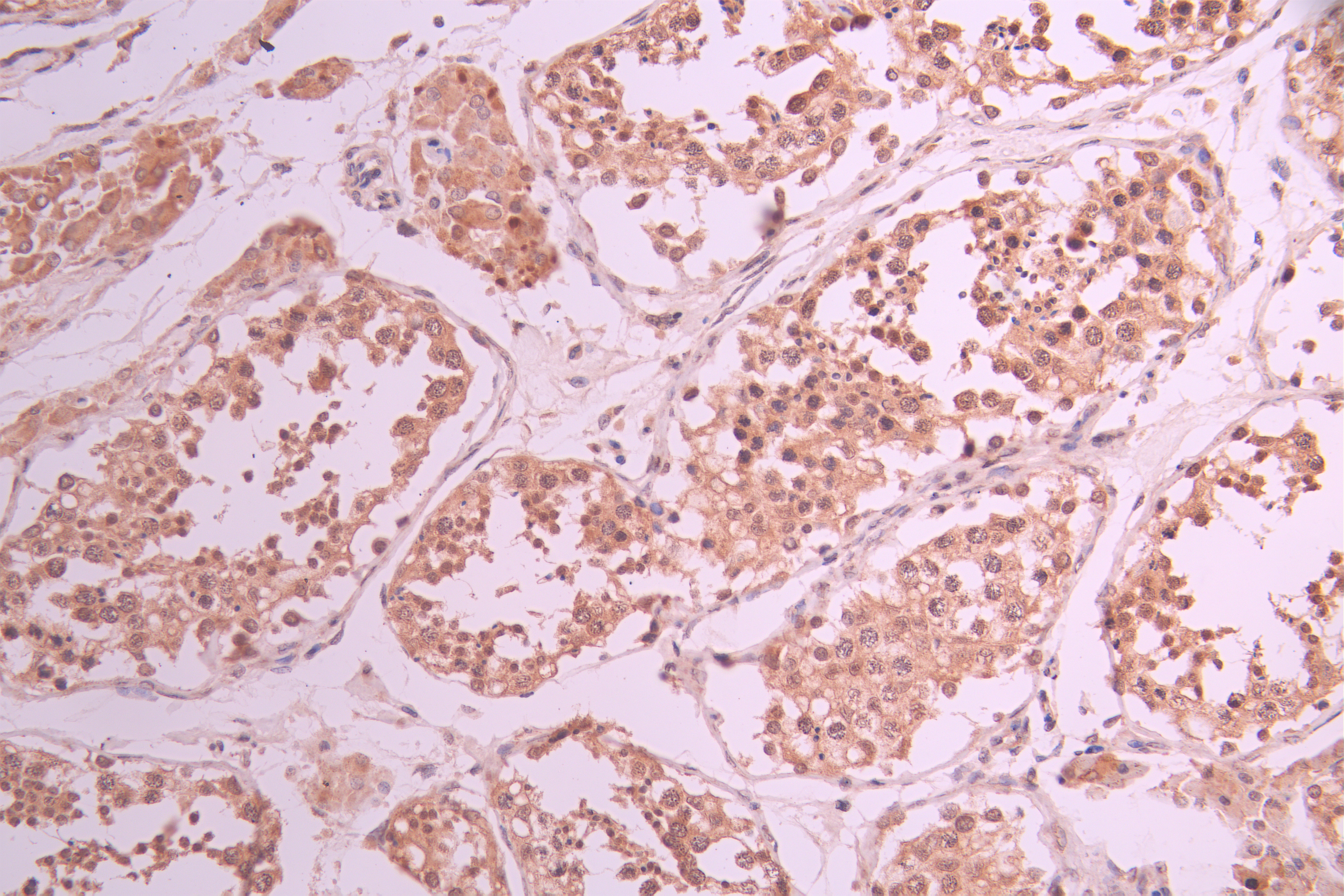
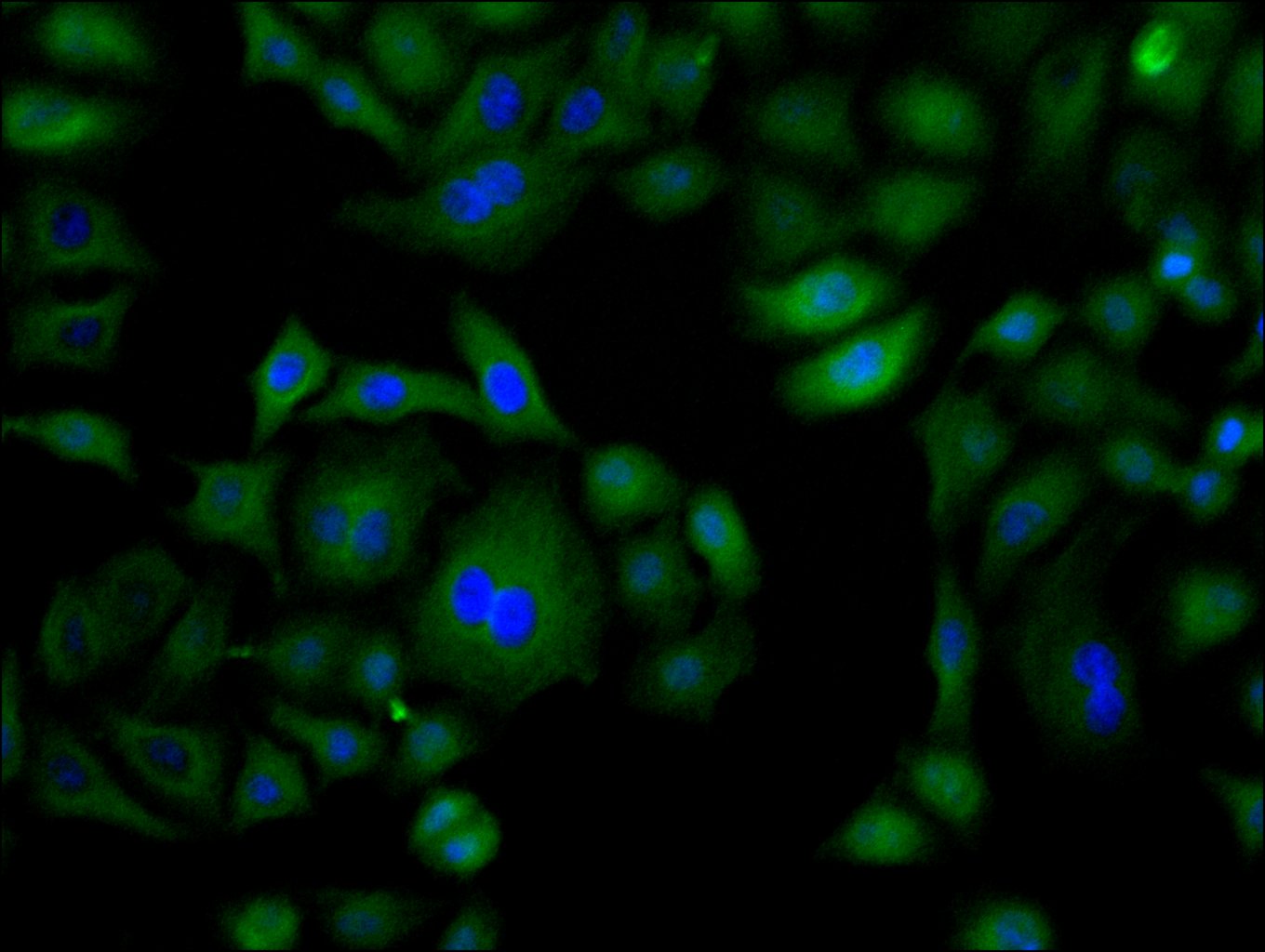
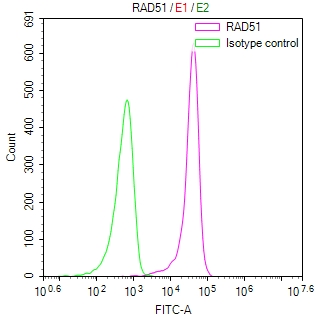
Validation across multiple platforms demonstrates this antibody's versatility in your experimental workflow. Western blot analysis in COLO205 colorectal cancer cells produces a clean band at the expected 37 kDa molecular weight, confirming target specificity. Immunohistochemistry staining in human testis tissue reveals clear signal with citrate buffer antigen retrieval, while immunofluorescence in HeLa cells and flow cytometry analysis in Jurkat cells extend its utility to cell-based assays examining RAD51 expression and localization.
Whether investigating DNA damage response pathways, characterizing homologous recombination deficiency in tumor samples, or exploring synthetic lethality approaches with PARP inhibitors, this antibody provides a reliable tool for advancing your understanding of RAD51 biology in human systems.
There are currently no reviews for this product.





