

Call us
301-363-4651 (Available 9 a.m. to 5 p.m. CST from Monday to Friday)

| Code | CSB-RA922439A0HU |
| Size | US$210 |
| Order now | |
| Image |
|
| Have Questions? | Leave a Message or Start an on-line Chat |
| Application | Recommended Dilution |
|---|---|
| WB | 1:500-1:2000 |
| IHC | 1:50-1:200 |
| IF | 1:50-1:200 |
| FC | 1:50-1:200 |
RANGAP1 plays a central role in regulating nucleocytoplasmic transport, functioning as the GTPase-activating protein for the small GTPase Ran. This regulatory activity is essential for maintaining the Ran-GTP gradient across the nuclear envelope, which drives the directional movement of proteins and RNA between the nucleus and cytoplasm. Disruption of RANGAP1 function has been implicated in various cellular processes including mitotic spindle assembly, nuclear envelope reformation, and chromosome segregation, making it a target of significant interest in cell biology and cancer research.
This recombinant monoclonal antibody, clone 9E1, offers researchers the reproducibility and consistency that comes with sequence-defined production. Unlike traditional hybridoma-derived antibodies, recombinant technology ensures that every lot performs identically, eliminating the variability that can compromise longitudinal studies or multi-site collaborations.
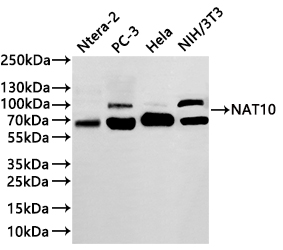
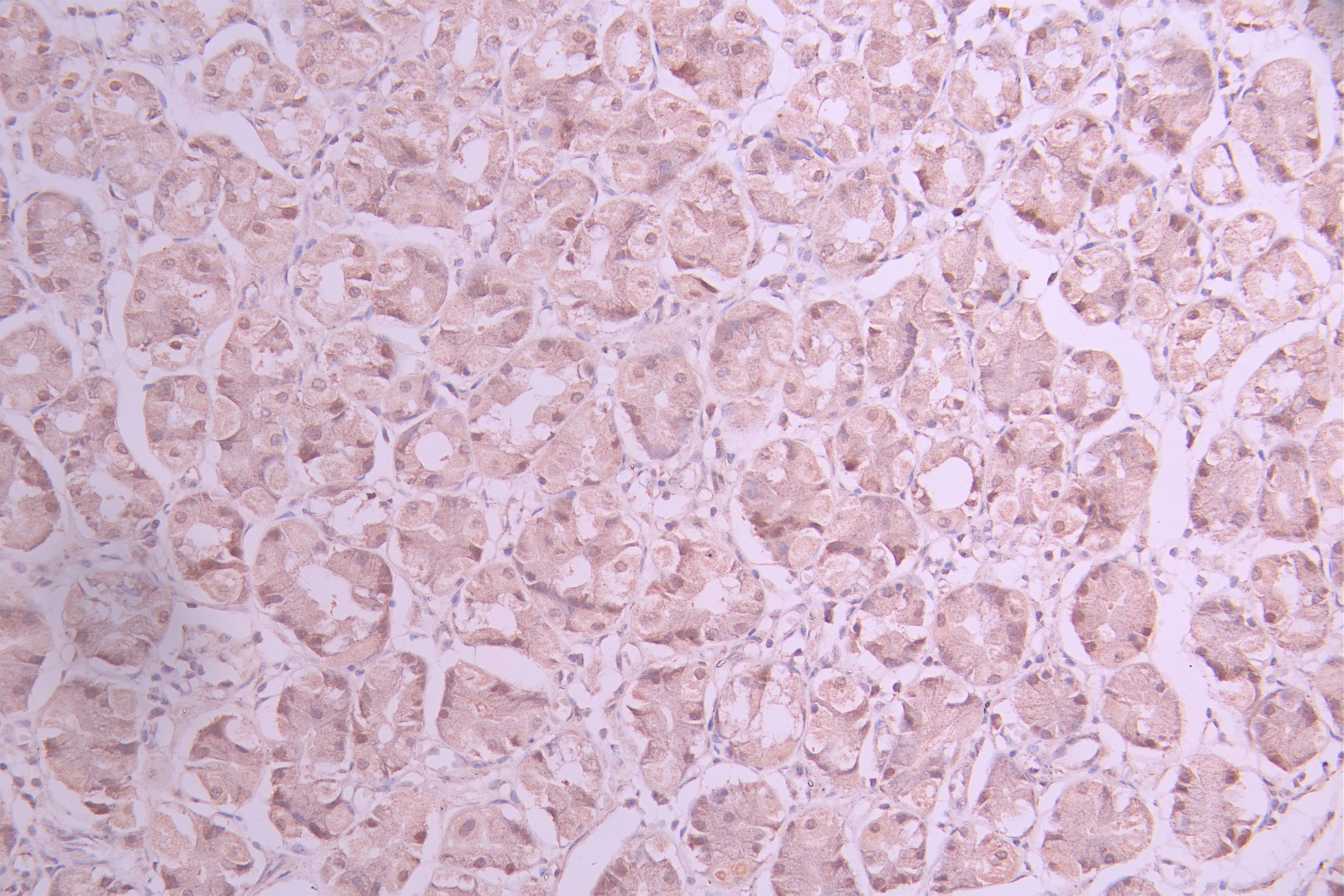
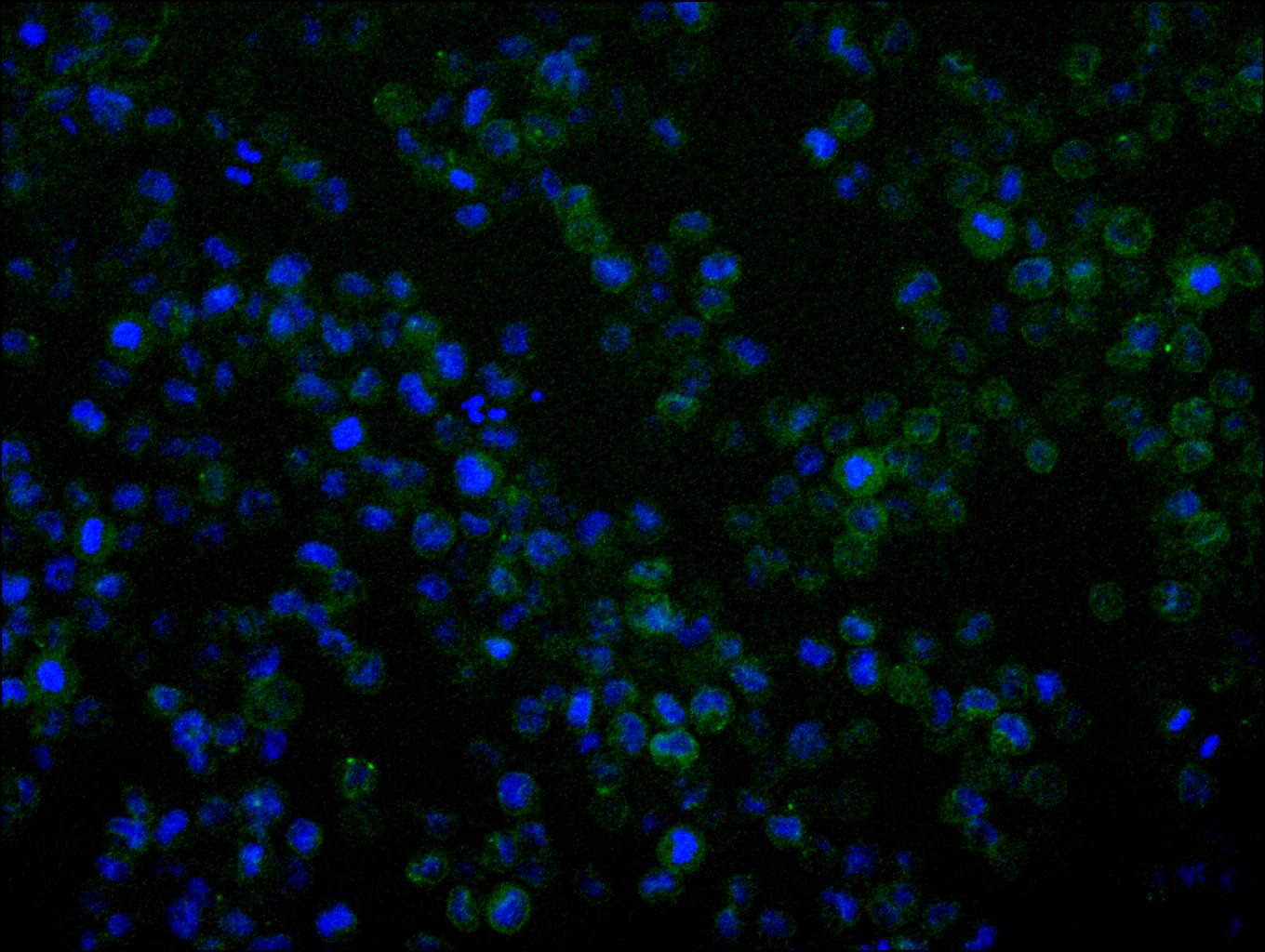
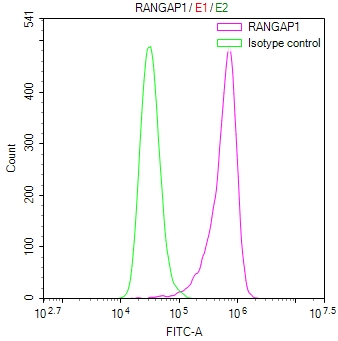
Validation across multiple experimental platforms demonstrates the versatility of this antibody for diverse research workflows. Western blot analysis detects RANGAP1 in human cell lines including Ntera-2, PC-3, and HeLa, as well as mouse NIH/3T3 cells, confirming cross-species reactivity between human and mouse samples. The observed bands at 64 kDa correspond to the predicted molecular weight, while an additional band at approximately 90 kDa likely reflects the SUMOylated form of RANGAP1, a well-characterized post-translational modification important for its localization at nuclear pore complexes. Immunohistochemistry has been validated in human glioma and stomach tissues, while immunofluorescence staining in K-562 cells reveals characteristic nuclear envelope and cytoplasmic localization patterns. Flow cytometry analysis in HeLa cells further extends its utility for quantitative single-cell studies.
This antibody serves researchers investigating nuclear transport mechanisms, cell cycle regulation, and cancer biology where RANGAP1 dysfunction may contribute to disease pathology.
There are currently no reviews for this product.





