SAFB Recombinant Monoclonal Antibody

Code CSB-RA018252A0HU
Size US$210
Order now
Image
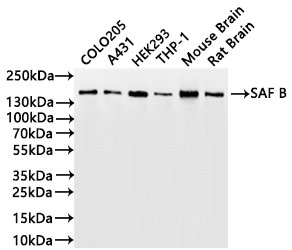
  • Western Blot
    Positive WB detected in: COLO-205 whole cell lysate(30µg), A-431 whole cell lysate(30µg), HEK293 whole cell lysate(30µg), THP-1 whole cell lysate(30µg), Mouse brain tissue lysate(30µg), Rat brain tissue lysate(30µg)
    All lanes: SAF B antibody at 1:1000
    Secondary
    Goat polyclonal to rabbit IgG at 1/40000 dilution
    Predicted band size: 103 kDa
    Observed band size: 150 kDa
    Exposure time:1min
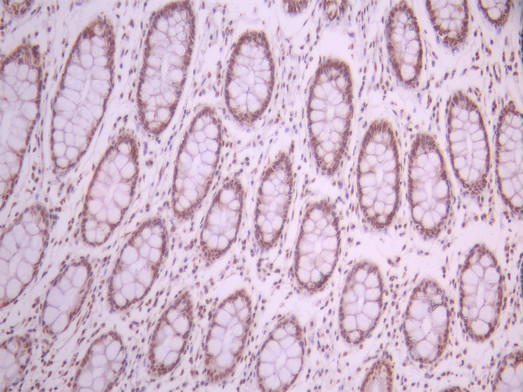
  • IHC image of CSB-RA018252A0HU diluted at 1:100 and staining in paraffin-embedded human small intestine tissue performed on a Leica BondTM system. After dewaxing and hydration, antigen retrieval was mediated by high pressure in a citrate buffer (pH 6.0). Section was blocked with 10% normal goat serum 30min at RT. Then primary antibody (1% BSA) was incubated at 4°C overnight. The primary is detected by a Goat anti-rabbit polymer IgG labeled by HRP and visualized using 0.05% DAB.
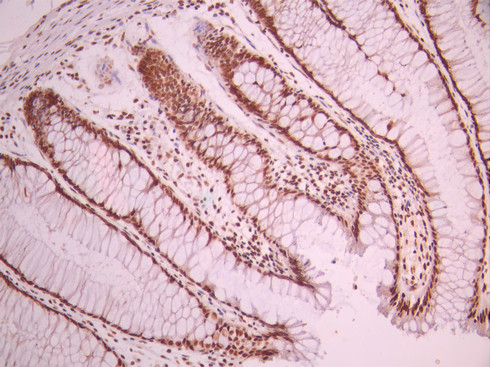
  • IHC image of CSB-RA018252A0HU diluted at 1:100 and staining in paraffin-embedded human colorectal cancer performed on a Leica BondTM system. After dewaxing and hydration, antigen retrieval was mediated by high pressure in a citrate buffer (pH 6.0). Section was blocked with 10% normal goat serum 30min at RT. Then primary antibody (1% BSA) was incubated at 4°C overnight. The primary is detected by a Goat anti-rabbit polymer IgG labeled by HRP and visualized using 0.05% DAB.
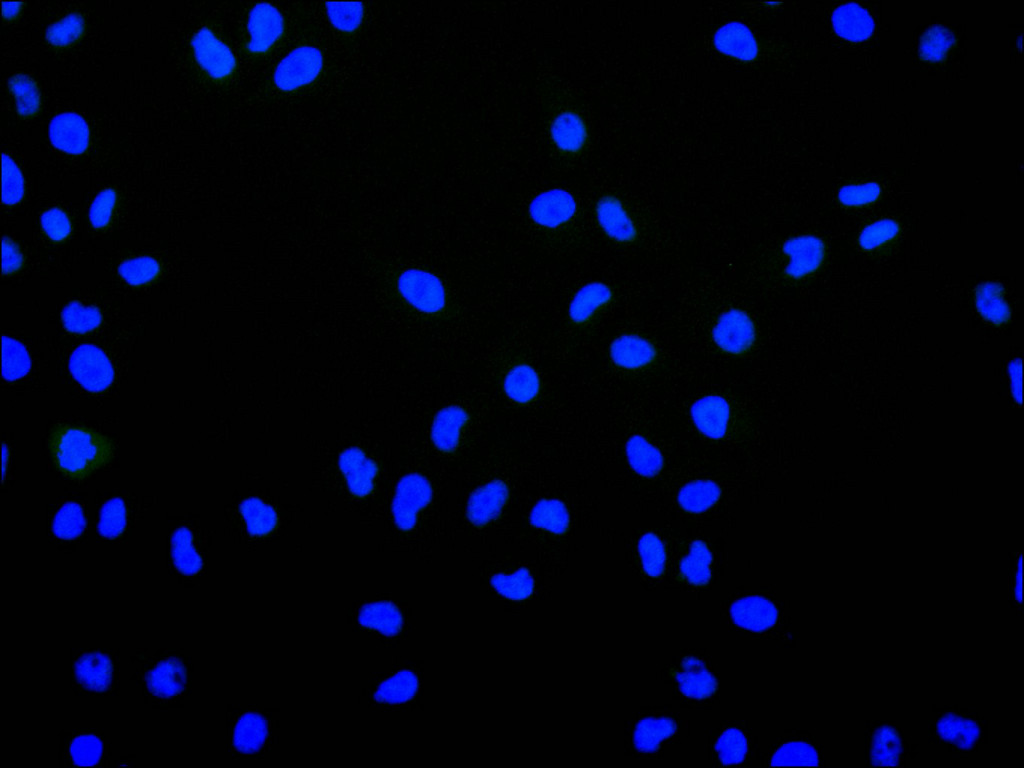
  • Immunofluorescence staining of HeLa cell with CSB-RA018252A0HU at 1:50 , counter-stained with DAPI. The cells were fixed in 4% formaldehyde, permeabilized using 0.2% Triton X-100 and blocked in 10% normal Goat Serum. The cells were then incubated with the antibody overnight at 4°C. The secondary antibody was Alexa Fluor 488-congugated AffiniPure Goat Anti-Rabbit IgG(H+L).
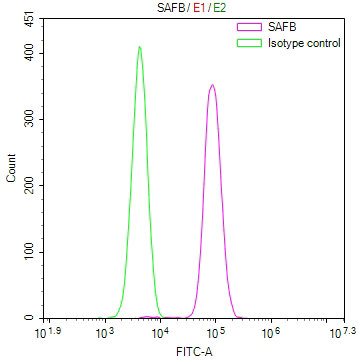
  • Overlay Peak curve showing jurkat cells stained with CSB-RA018252A0HU (red line) at 1:100. The cells were fixed in 4% formaldehyde and permeated by 0.2% TritonX-100 for 10min. Then 10% normal goat serum to block non-specific protein-protein interactions followed by the antibody (1ug/1*106cells) for 45min at 4℃. The secondary antibody used was FITC-conjugated goat anti-rabbit IgG (H+L) at 1/200 dilution for 35min at 4℃.Control antibody (green line) was Rabbit IgG (1ug/1*106cells) used under the same conditions. Acquisition of >10, 000 events was performed.
Have Questions? Leave a Message or Start an on-line Chat

Product Details

Uniprot No.
Target Names
SAFB
Alternative Names
DKFZp779C1727; glutathione S transferase fusion protein; HAP; HET; HSP27 ERE TATA binding protein; HSP27 ERE-TATA-binding protein; HSP27 estrogen response element-TATA box-binding protein; SAF B; SAF-B; SAF-B1; SAFB 1; SAFB; SAFB1; SAFB1_HUMAN; Scaffold attachment factor B1
Species Reactivity
Human, Mouse, Rat
Immunogen
A synthesized peptide from human SAFB protein
Immunogen Species
Homo sapiens (Human)
Conjugate
Non-conjugated
Clonality
Monoclonal
Isotype
Rabbit IgG
Clone No.
5G1
Purification Method
Affinity-chromatography
Concentration
It differs from different batches. Please contact us to confirm it.
Buffer
Rabbit IgG in 10mM phosphate buffered saline , pH 7.4, 150mM sodium chloride, 0.05% BSA, 0.02% sodium azide and 50% glycerol.
Form
Liquid
Tested Applications
ELISA, WB, IHC, IF, FC
Recommended Dilution
Application Recommended Dilution
WB 1:500-1:5000
IHC 1:50-1:200
IF 1:50-1:200
FC 1:50-1:200
Troubleshooting and FAQs
Storage
Upon receipt, store at -20°C or -80°C. Avoid repeated freeze.
Lead Time
Basically, we can dispatch the products out in 1-3 working days after receiving your orders. Delivery time maybe differs from different purchasing way or location, please kindly consult your local distributors for specific delivery time.
Usage
For Research Use Only. Not for use in diagnostic or therapeutic procedures.

Customer Reviews and Q&A

 Customer Reviews

There are currently no reviews for this product.

Submit a Review here

Target Background

Function
Binds to scaffold/matrix attachment region (S/MAR) DNA and forms a molecular assembly point to allow the formation of a 'transcriptosomal' complex (consisting of SR proteins and RNA polymerase II) coupling transcription and RNA processing. Functions as an estrogen receptor corepressor and can also bind to the HSP27 promoter and decrease its transcription. Thereby acts as a negative regulator of cell proliferation. When associated with RBMX, binds to and stimulates transcription from the SREBF1 promoter.
Gene References into Functions
  1. SAFB regulated the activity of NF-kappaB signaling in CRC by targeting TAK1 This novel mechanism provides a comprehensive understanding of both SAFB and the NF-kappaB signaling pathway in the progression of CRC and indicates that the SAFB-TAK1-NF-kappaB axis is a potential target for early therapeutic intervention in CRC progression PMID: 28912140
  2. Depletion of SAFB1 reduced FUS's localization to chromatin-bound fraction and splicing activity, suggesting SAFB1 could tether FUS to chromatin compartment thorough N-terminal DNA-binding motif. Moreover, FUS interacts with another nuclear matrix-associated protein, Matrin3. PMID: 27731383
  3. Data suggest that ERH interacts directly in nucleus with C-terminal Arg-Gly-rich region of SAFB1/SAFB2 and this multimer co-localizes in insoluble nuclear fraction; binding of ERH reverses inhibition exerted by SAFB1/SAFB2 on SRPK1. (ERH = enhancer of rudimentary homolog protein; SAFB = scaffold attachment factor B; SRPK1 = splicing kinase SR protein kinase-1) PMID: 28627136
  4. The expression of coding and non-coding genes with SAFB1 cross-link sites was altered by SAFB1 knockdown. The isoform-specific expression of neural cell adhesion molecule (NCAM1) and ASTN2 was influenced by SAFB1. PMID: 26694817
  5. Single depletion of either SAFB1 or SAFB2 leads to an increase in expression of the other SAFB protein. PMID: 26273616
  6. reveals an unexpected role of SUMO-1 and SAFB in the stimulatory coupling of promoter binding, transcription initiation and RNA processing PMID: 25800734
  7. SAFB1 formed a complex with the histone methyltransferase EZH2. PMID: 23893242
  8. Data indicate that scaffold attachment factor SAFB1 is transiently recruited to DNA breaks in a poly(ADP-ribose)-polymerase 1- and poly(ADP-ribose)-dependent manner. PMID: 24055346
  9. Results indicate that SAFB1 and SAFB2 are crucial repressors for ERalpha dynamics in association with the nuclear matrix and that their synergistic regulation of ERalpha mobility is sufficient for inhibiting ERalpha function. PMID: 22566185
  10. transcriptional repressor SAFB1 is modified by both SUMO1 and SUMO2/3, and this modification is necessary for its full repressive activity. PMID: 21527249
  11. Data show that binding of p53 to SAFB1 had a significant functional outcome, since SAFB1 was shown to suppress p53-mediated reporter gene expression. PMID: 21130767
  12. This study shows that low SAFB protein levels predict poor prognosis of breast cancer patients, suggesting critical functions of SAFB1 and SAFB2 in breast cancer cells. PMID: 19137425
  13. Study confirms the primary role of SAFB1/SAFB2 as corepressors and also uncovers a previously unknown role for SAFB1 in the regulation of immune genes and in estrogen-mediated repression of genes. PMID: 19901029
  14. HSP27 is a nuclear speckle component in unstressed cells in tissue culture. It is also associated with the nucleolar compartment. PMID: 12837281
  15. REVIEW: possibility that SAFB1 and SAFB2 are novel breast tumor suppressor genes, and how they might function in this role, are discussed PMID: 14587024
  16. HSP27 expression may have useful diagnostic use for the prognosis of mouth squamous cell carcinoma. PMID: 14702179
  17. SAFB1 represses ERalpha activity via indirect association with histone deacetylation and interaction with the basal transcription machinery PMID: 15066997
  18. SAFB1 was shown to interact directly with the nuclear receptor corepressor N-CoR. PMID: 16195251
  19. SAFB1 interacts in pull-down assays not only with PPARgamma but also with all nuclear receptors tested PMID: 16326836
  20. SAFB may direct the reorganization and segregation of nuclear RNA and DNA prior to endonuclease-mediated DNA cleavage. PMID: 17643427
  21. Over expression of HSP27 is associated with intrahepatic cholangiocarcinoma PMID: 18154639
  22. hXOR is a tumor suppressor-targeted gene and the phosphorylation of SAFB1 is regulated by OSM, which provides a molecular basis for understanding the role of SAFB1-regulated hXOR transcription in cytokine stimulation and tumorigenesis PMID: 18772145
  23. SAFB1 is not likely to be causative of the hereditary breast cancer syndrome in west Swedish breast cancer families PMID: 19077293
  24. Importance of ERE-BP as an attenuator of normal ERalpha signaling in vivo and is a novel target for modulation by selective estrogen receptor modulators. PMID: 19106221
  25. The enzymatic activity of SR protein kinases 1 and 1a is negatively affected by interaction with scaffold attachment factors B1 and 2. PMID: 19674106

Show More

Hide All

Subcellular Location
Nucleus.
Tissue Specificity
Ubiquitous. Expressed at high levels in the CNS and at low levels in the liver. Expressed in a wide number of breast cancer cell lines.
Database Links

HGNC: 10520

OMIM: 602895

KEGG: hsa:6294

STRING: 9606.ENSP00000292123

UniGene: Hs.728802

icon of phone
Call us
301-363-4651 (Available 9 a.m. to 5 p.m. CST from Monday to Friday)

icon of address
Address
7505 Fannin St., Ste 610, Room 7 (CUBIO Innovation Center), Houston, TX 77054, USA
icon of social media
Join us with

Subscribe newsletter

Leave a message

* To protect against spam, please pass the CAPTCHA test below.
CAPTCHA verification
© 2007-2026 CUSABIO TECHNOLOGY LLC All rights reserved. 鄂ICP备15011166号-1
Place an order now

I. Product details

*
*
*
*

II. Contact details

*
*

III. Ship To

*
*
*
*
*
*
*

IV. Bill To

*
*
*
*
*
*
*
*


