
Call us
301-363-4651 (Available 9 a.m. to 5 p.m. CST from Monday to Friday)

| Code | CSB-RA567010A0HU |
| Size | US$210 |
| Order now | |
| Image |
|
| Have Questions? | Leave a Message or Start an on-line Chat |
| Application | Recommended Dilution |
|---|---|
| IHC | 1:50-1:200 |
SELPLG, also known as P-selectin glycoprotein ligand 1 (PSGL-1) or CD162, serves as a critical adhesion molecule that mediates the initial tethering and rolling of leukocytes along activated endothelium during inflammatory responses. This mucin-type glycoprotein functions as the primary ligand for P-selectin, E-selectin, and L-selectin, positioning it at the intersection of cardiovascular biology and immunology research. Understanding SELPLG expression and regulation provides valuable insights into inflammatory cell recruitment, thrombosis, and immune cell trafficking mechanisms.
This recombinant monoclonal antibody, clone 3G11, offers researchers the reproducibility advantages inherent to recombinant technology. Because the antibody sequence is defined and produced through controlled expression systems, you can expect consistent performance across experiments and between lot numbers, eliminating the variability often encountered with traditional hybridoma-derived reagents. The rabbit host origin combined with affinity chromatography purification yields a highly specific reagent suitable for demanding detection applications.
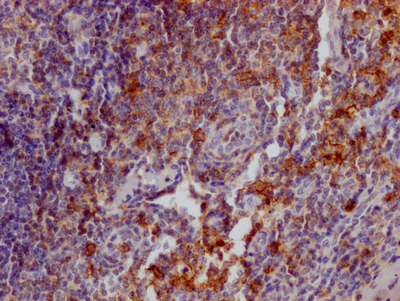
Validation in immunohistochemistry demonstrates reliable performance in paraffin-embedded human tonsil tissue, where SELPLG expression was successfully detected using the Leica Bond system with citrate buffer antigen retrieval at pH 6.0. Working dilutions between 1:50 and 1:200 provide flexibility to optimize signal intensity based on your specific tissue type and detection system. The antibody is also validated for ELISA applications, expanding its utility across different experimental workflows.
For researchers investigating leukocyte-endothelial interactions, inflammatory disease mechanisms, or immune cell biology, this antibody provides a dependable tool for characterizing SELPLG expression in human samples across multiple detection platforms.
There are currently no reviews for this product.





