
Call us
301-363-4651 (Available 9 a.m. to 5 p.m. CST from Monday to Friday)

| Code | CSB-RA285428A0HU |
| Size | US$210 |
| Order now | |
| Image |
|
| Have Questions? | Leave a Message or Start an on-line Chat |
| Application | Recommended Dilution |
|---|---|
| WB | 1:500-1:5000 |
| IHC | 1:50-1:200 |
| FC | 1:50-1:200 |
SF3A3, also known as splicing factor 3A subunit 3 or SAP61, serves as an essential component of the U2 small nuclear ribonucleoprotein complex, playing a critical role in pre-mRNA splicing. This 59 kDa protein participates in the recognition and selection of splice sites during spliceosome assembly, making it a valuable target for researchers investigating RNA processing mechanisms, gene expression regulation, and nuclear signaling pathways.
This recombinant rabbit monoclonal antibody, clone 4A6, offers the reproducibility and consistency that demanding experimental workflows require. Generated against a synthetic peptide derived from human SF3A3, the recombinant production method ensures sequence-defined specificity and eliminates the lot-to-lot variability often encountered with traditional hybridoma-derived antibodies. Affinity chromatography purification further enhances performance by removing non-specific immunoglobulins.
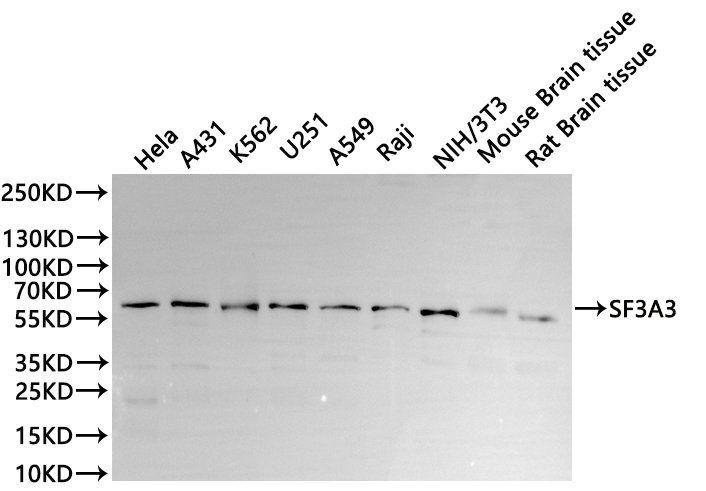
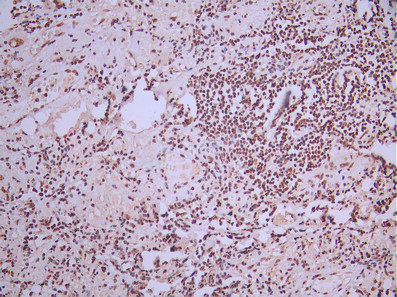
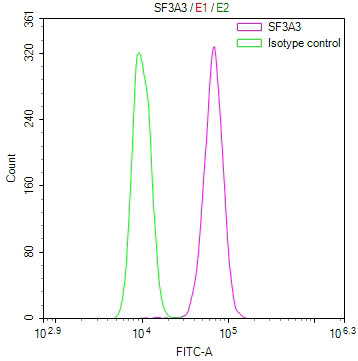
Extensive validation demonstrates reliable performance across multiple applications and sample types. Western blot analysis confirms detection of the expected 59 kDa band across a diverse panel of human cell lines including HeLa, A431, K562, U-251MG, A549, and Raji cells, with cross-species reactivity verified in NIH/3T3 cells and both mouse and rat brain tissue lysates. Immunohistochemical staining in paraffin-embedded human lung cancer tissue reveals clear nuclear localization consistent with SF3A3's functional role in splicing. Flow cytometry validation in HeLa cells demonstrates suitability for single-cell analysis of intracellular SF3A3 expression.
The unconjugated format provides flexibility for pairing with your preferred detection systems across ELISA, western blotting, immunohistochemistry, and flow cytometry applications. This antibody supports investigations into spliceosome biology, epigenetic regulation, and nuclear signaling mechanisms where consistent, reproducible SF3A3 detection is essential.
There are currently no reviews for this product.





