
Call us
301-363-4651 (Available 9 a.m. to 5 p.m. CST from Monday to Friday)

| Code | CSB-RA585595A0HU |
| Size | US$210 |
| Order now | |
| Image |
|
| Have Questions? | Leave a Message or Start an on-line Chat |
| Application | Recommended Dilution |
|---|---|
| IHC | 1:50-1:200 |
Alpha-synuclein, encoded by the SNCA gene, stands at the center of neurodegenerative disease research as a key protein implicated in Parkinson's disease and related synucleinopathies. This presynaptic protein normally functions in neurotransmitter release and synaptic vesicle regulation, but its pathological aggregation into Lewy bodies represents a defining hallmark of Parkinson's disease. Understanding alpha-synuclein expression, localization, and aggregation states remains essential for researchers investigating disease mechanisms and potential therapeutic interventions.
This recombinant monoclonal antibody, generated against a synthetic peptide derived from human alpha-synuclein, offers the reproducibility and consistency that demanding neuroscience research requires. As a sequence-defined recombinant clone, it eliminates the lot-to-lot variability that can compromise longitudinal studies or multi-site collaborations. The rabbit IgG format provides excellent signal amplification in immunodetection workflows while maintaining the specificity expected from monoclonal technology.
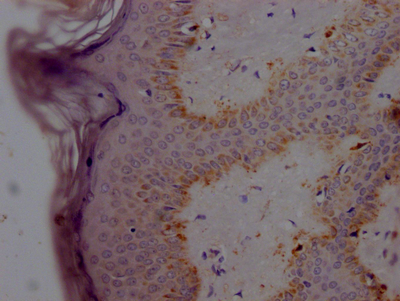
Validation in immunohistochemistry demonstrates reliable performance in paraffin-embedded human tissue sections. Testing in human skin tissue using a Leica Bond system with citrate buffer antigen retrieval at pH 6.0 and HRP-polymer detection confirms the antibody's suitability for FFPE workflows at dilutions between 1:50 and 1:200. This validated IHC performance, combined with ELISA compatibility, provides flexibility for researchers examining alpha-synuclein across different experimental contexts.
Whether investigating peripheral alpha-synuclein expression patterns, studying protein distribution in tissue sections, or developing quantitative detection assays, this antibody delivers the technical consistency needed for meaningful results in Parkinson's disease research and broader synucleinopathy studies.
There are currently no reviews for this product.





