
Call us
301-363-4651 (Available 9 a.m. to 5 p.m. CST from Monday to Friday)

| Code | CSB-RA592917A0HU |
| Size | US$210 |
| Order now | |
| Image |
|
| Have Questions? | Leave a Message or Start an on-line Chat |
| Application | Recommended Dilution |
|---|---|
| WB | 1:500-1:5000 |
| IHC | 1:50-1:200 |
| IF | 1:20-1:200 |
SOX10 is a critical transcription factor belonging to the SRY-related HMG-box family, playing essential roles in neural crest development, melanocyte differentiation, and the maintenance of glial cell identity. Its involvement in melanoma progression and various neurodevelopmental disorders makes it a valuable marker for researchers investigating developmental biology, cancer pathology, and nervous system function.
This recombinant monoclonal antibody, generated from clone 8E1, offers the consistency and reproducibility that demanding research applications require. Because the antibody sequence is defined and production occurs in a controlled recombinant system, you can expect reliable lot-to-lot performance across long-term studies and multi-site collaborations. The rabbit host and monoclonal nature ensure high specificity for human SOX10, while affinity chromatography purification delivers a clean reagent ready for your experiments.
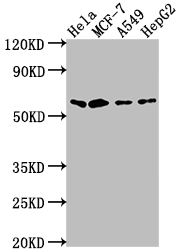
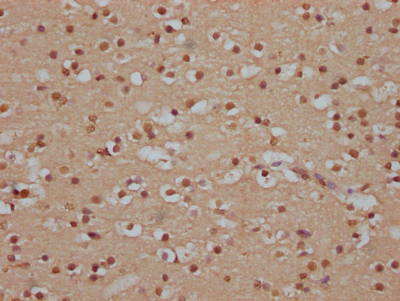
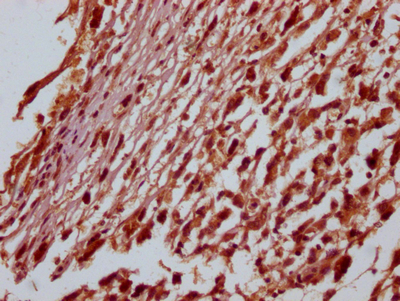
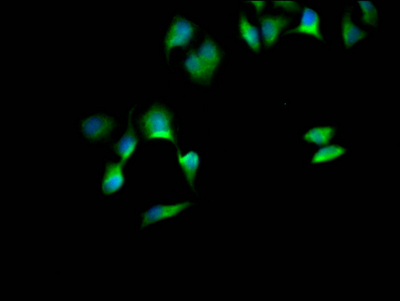
Validation data demonstrates robust performance across multiple platforms. In western blot applications, the antibody successfully detects SOX10 in HeLa, MCF-7, A549, and HepG2 whole cell lysates at dilutions ranging from 1:500 to 1:5000. The observed band at approximately 60 kDa runs slightly higher than the predicted molecular weight, which is commonly attributed to post-translational modifications such as phosphorylation or sumoylation that are known to regulate SOX10 activity. Immunohistochemical staining has been validated in paraffin-embedded human brain tissue and human melanoma samples, confirming utility for both normal tissue characterization and cancer research. Additionally, immunofluorescence studies in HeLa cells reveal clear nuclear localization, consistent with SOX10's function as a transcription factor.
Whether you're investigating neural crest-derived tumors, exploring stem cell differentiation pathways, or studying epigenetic regulation in the nervous system, this antibody provides the flexibility and reliability your research demands.
There are currently no reviews for this product.





