THEMIS Recombinant Monoclonal Antibody

Code CSB-RA262013A0HU
Size US$210
Order now
Image
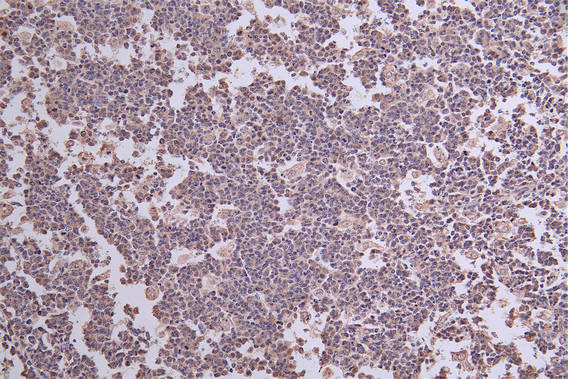
  • IHC image of CSB-RA262013A0HU diluted at 1:50 and staining in paraffin-embedded human tonsil tissue performed on a Leica BondTM system. After dewaxing and hydration, antigen retrieval was mediated by high pressure in a citrate buffer (pH 6.0). Section was blocked with 10% normal goat serum 30min at RT. Then primary antibody (1% BSA) was incubated at 4°C overnight. The primary is detected by a Goat anti-rabbit polymer IgG labeled by HRP and visualized using 0.30% DAB.
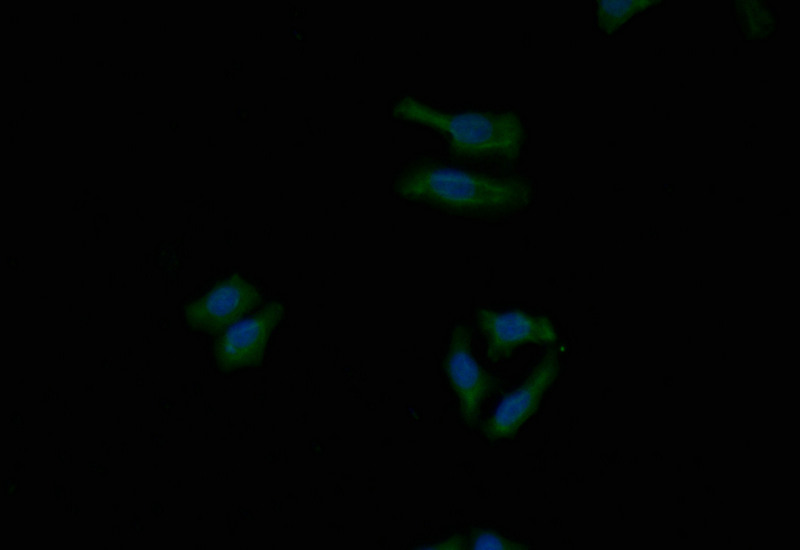
  • Immunofluorescence staining of HepG2 with CSB-RA262013A0HU at 1:40, counter-stained with DAPI. The cells were fixed in 4% formaldehyde and blocked in 10% normal Goat Serum. The cells were then incubated with the antibody overnight at 4°C. The secondary antibody was Alexa Fluor 503-congugated AffiniPure Goat Anti-Rabbit IgG(H+L).
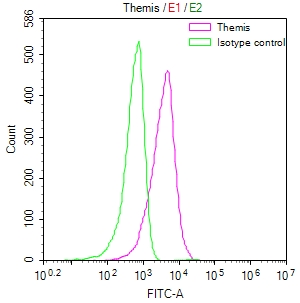
  • Overlay Peak curve showing Jurkat cells stained with CSB-RA262013A0HU (red line) at 1:50. The cells were fixed in 4% formaldehyde and permeated by 0.2% TritonX-100. Then 10% normal goat serum to block non-specific protein-protein interactions followed by the antibody (1µg/1*106cells) for 45min at 4℃. The secondary antibody used was FITC-conjugated Goat Anti-rabbit IgG(H+L) at 1:200 dilution for 35min at 4℃.Control antibody (green line) was rabbit IgG (1µg/1*106cells) used under the same conditions. Acquisition of >10,000 events was performed.
Have Questions? Leave a Message or Start an on-line Chat

Product Details

Uniprot No.
Target Names
THEMIS
Alternative Names
Protein THEMIS (Thymocyte-expressed molecule involved in selection), THEMIS, C6orf190 C6orf207
Species Reactivity
Human
Immunogen
A synthesized peptide derived from Human THEMIS
Immunogen Species
Homo sapiens (Human)
Conjugate
Non-conjugated
Clonality
Monoclonal
Isotype
Rabbit IgG
Clone No.
7G7
Purification Method
Affinity-chromatography
Concentration
It differs from different batches. Please contact us to confirm it.
Buffer
Rabbit IgG in 10mM phosphate buffered saline , pH 7.4, 150mM sodium chloride, 0.05% BSA, 0.02% sodium azide and 50% glycerol.
Form
Liquid
Tested Applications
ELISA, IHC, IF, FC
Recommended Dilution
Application Recommended Dilution
IHC 1:50-1:200
IF 1:50-1:200
FC 1:50-1:200
Troubleshooting and FAQs
Storage
Upon receipt, store at -20°C or -80°C. Avoid repeated freeze.
Lead Time
Basically, we can dispatch the products out in 1-3 working days after receiving your orders. Delivery time maybe differs from different purchasing way or location, please kindly consult your local distributors for specific delivery time.
Description

THEMIS plays a central role in T cell development, functioning as a critical signaling molecule during thymocyte selection processes that shape the adaptive immune repertoire. This protein participates in T cell receptor signal transduction pathways that determine whether developing thymocytes undergo positive or negative selection, making it an essential target for researchers investigating thymic education, T cell maturation, and immune system development.

This recombinant monoclonal antibody, generated against a synthetic peptide derived from human THEMIS, offers the reproducibility and consistency that demanding immunological studies require. As a sequence-defined reagent produced through recombinant technology, clone 7G7 eliminates the lot-to-lot variability that can compromise longitudinal studies or multi-site collaborations. The rabbit IgG format provides strong signal amplification while maintaining specificity for your target.

Validation across multiple detection platforms demonstrates this antibody's versatility in your experimental workflows. Immunohistochemistry studies in paraffin-embedded human tonsil tissue reveal clear staining using a polymer detection system with citrate buffer antigen retrieval at dilutions of 1:50-1:200. For cellular localization studies, immunofluorescence analysis in HepG2 cells confirms reliable detection of THEMIS with maintained morphological context. Flow cytometry validation using Jurkat cells, a T cell line where THEMIS expression is particularly relevant, shows distinct positive population shifts compared to isotype controls, supporting quantitative expression analysis in suspension cell applications.

Whether you are examining thymocyte development, characterizing T cell signaling pathways, or exploring stem cell differentiation toward lymphoid lineages, this antibody provides a dependable tool for advancing your immunology research with confidence in your results.

Usage
For Research Use Only. Not for use in diagnostic or therapeutic procedures.

Customer Reviews and Q&A

 Customer Reviews

There are currently no reviews for this product.

Submit a Review here

Target Background

Function
Plays a central role in late thymocyte development by controlling both positive and negative T-cell selection. Required to sustain and/or integrate signals required for proper lineage commitment and maturation of T-cells. Regulates T-cell development through T-cell antigen receptor (TCR) signaling and in particular through the regulation of calcium influx and phosphorylation of Erk.
Gene References into Functions
  1. we have demonstrated mutually exclusive use of exon 1 and 2 amongst 16 novel THEMIS isoforms. We also show inverse correlation between THEMIS expression in human CD4+ T-cells and dosage of the multiple sclerosis risk allele at rs13204742, driven by reduced expression of exon 1- containing isoforms PMID: 27438997
  2. we found that THEMIS directly regulated the catalytic activity of the tyrosine phosphatase SHP-1. PMID: 28250424
  3. the THEMIS:SHP complex dampens early TCR signalling by a previously unknown molecular mechanism that favours T-cell survival. PMID: 25535246
  4. THEMIS showed higher mRNA expression in active celiac disease compared with treated patients and controls. PMID: 23820479
  5. THEMIS binding to GRB2 was required for thymocyte development. PMID: 23460737
  6. Themis1 exhibits the same potential to restore T cell development and T cell receptor-mediated signaling in Themis1-deficient mice. PMID: 22732588
  7. SPOP mutations may define a new molecular subtype of prostate cancer. PMID: 22610119
  8. specific role for THEMIS in early TCR signalosome function PMID: 21189249
  9. Observational study of gene-disease association. (HuGE Navigator) PMID: 19913121
  10. Observational study of gene-disease association, gene-environment interaction, and pharmacogenomic / toxicogenomic. (HuGE Navigator) PMID: 20628086
  11. Observational study of gene-disease association and gene-environment interaction. (HuGE Navigator) PMID: 20095854
  12. Functional characterization of the homologous mouse gene. PMID: 19597498
  13. Functional analysis of the mouse gene by knockout, and comparison of the mouse and human proteins. PMID: 19597499

Show More

Hide All

Subcellular Location
Cytoplasm. Nucleus.
Protein Families
Themis family
Database Links

HGNC: 21569

OMIM: 613607

KEGG: hsa:387357

UniGene: Hs.661756

icon of phone
Call us
301-363-4651 (Available 9 a.m. to 5 p.m. CST from Monday to Friday)

icon of address
Address
7505 Fannin St., Ste 610, Room 7 (CUBIO Innovation Center), Houston, TX 77054, USA
icon of social media
Join us with

Subscribe newsletter

Leave a message

* To protect against spam, please pass the CAPTCHA test below.
CAPTCHA verification
© 2007-2026 CUSABIO TECHNOLOGY LLC All rights reserved. 鄂ICP备15011166号-1
Place an order now

I. Product details

*
*
*
*

II. Contact details

*
*

III. Ship To

*
*
*
*
*
*
*

IV. Bill To

*
*
*
*
*
*
*
*


