
Call us
301-363-4651 (Available 9 a.m. to 5 p.m. CST from Monday to Friday)

| Code | CSB-RA031794A0HU |
| Size | US$210 |
| Order now | |
| Image |
|
| Have Questions? | Leave a Message or Start an on-line Chat |
| Application | Recommended Dilution |
|---|---|
| WB | 1:500-1:5000 |
| IHC | 1:50-1:200 |
| FC | 1:50-1:200 |
TIMELESS plays a central role in maintaining genome stability and regulating circadian clock function, making it an essential target for researchers investigating DNA replication, cell cycle checkpoint responses, and the molecular links between circadian rhythm disruption and cancer progression. As a core component of the replication fork protection complex, TIMELESS coordinates DNA synthesis with checkpoint signaling, positioning it at the intersection of fundamental cellular processes that are frequently dysregulated in disease states.
This recombinant monoclonal antibody, generated against a synthetic peptide from human TIMELESS protein, offers the reproducibility and sequence-defined specificity that demanding experimental workflows require. The recombinant format ensures consistent performance across experiments and eliminates the lot-to-lot variability that can complicate long-term studies or multi-site collaborations.
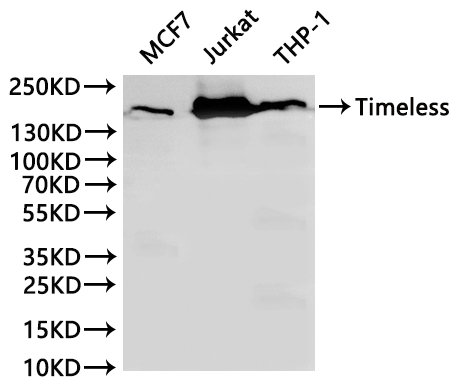
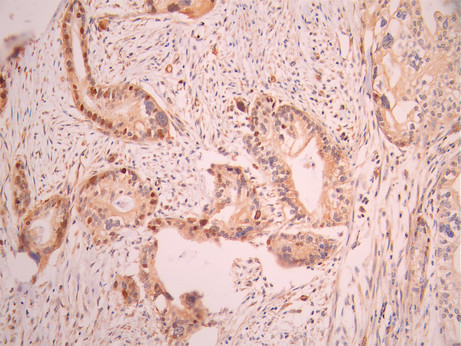
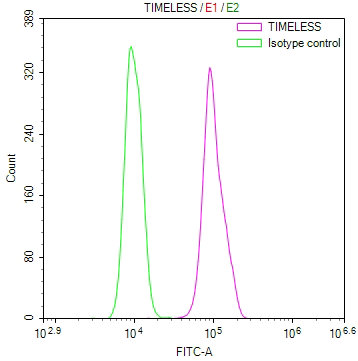
Validation across multiple applications demonstrates genuine experimental flexibility. Western blot analysis detects TIMELESS in MCF7 breast cancer, Jurkat T-cell leukemia, and THP-1 monocytic cell lysates, with an observed band size of approximately 150 kDa. The difference from the predicted 139 kDa molecular weight likely reflects post-translational modifications such as glycosylation or phosphorylation, which are consistent with TIMELESS biology. Immunohistochemistry staining has been optimized using human pancreatic cancer tissue sections, providing researchers studying tumor biology with a validated detection system. Flow cytometry applications enable quantitative analysis of TIMELESS expression at the single-cell level, as demonstrated in HeLa cells with clear separation from isotype control.
Whether investigating circadian clock mechanisms, DNA damage responses, or the epigenetic landscape of cancer cells, this antibody provides a reliable detection tool backed by validated performance data across complementary experimental platforms.
There are currently no reviews for this product.





