
Call us
301-363-4651 (Available 9 a.m. to 5 p.m. CST from Monday to Friday)

| Code | CSB-RA043670A0HU |
| Size | US$210 |
| Order now | |
| Image |
|
| Have Questions? | Leave a Message or Start an on-line Chat |
| Application | Recommended Dilution |
|---|---|
| WB | 1:500-1:5000 |
| IHC | 1:50-1:200 |
| IF | 1:50-1:200 |
| FC | 1:50-1:200 |
U2AF2, also known as U2AF65, serves as the large subunit of the U2 auxiliary factor complex and plays an essential role in pre-mRNA splicing. This splicing factor recognizes the polypyrimidine tract near the 3' splice site, facilitating spliceosome assembly and ensuring accurate intron removal during gene expression. Given its fundamental importance in RNA processing, U2AF2 has become a key target for researchers investigating splicing regulation, nuclear signaling pathways, and the molecular mechanisms underlying various disease states where splicing dysregulation occurs.
This recombinant monoclonal antibody, generated in rabbit using clone 1H1, offers the reproducibility and consistency that demanding experimental workflows require. Because the antibody sequence is defined and production occurs through recombinant expression, researchers can expect reliable performance across experiments and between lots, eliminating the variability often encountered with traditional hybridoma-derived antibodies.
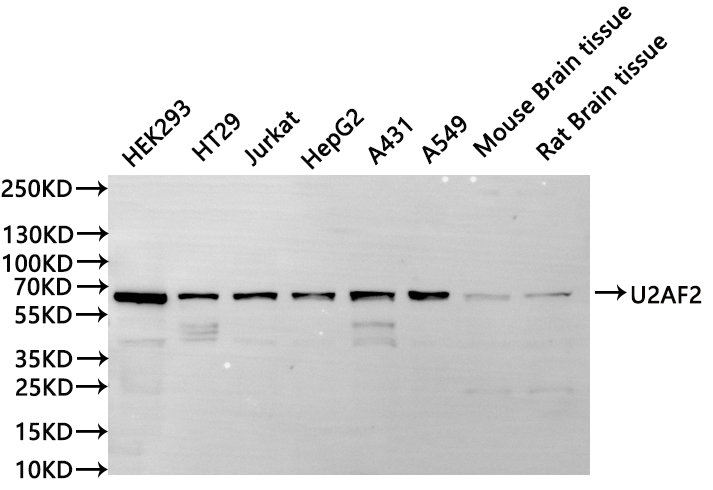
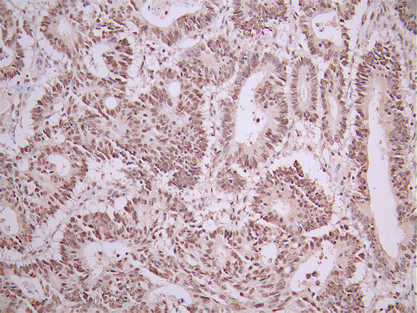
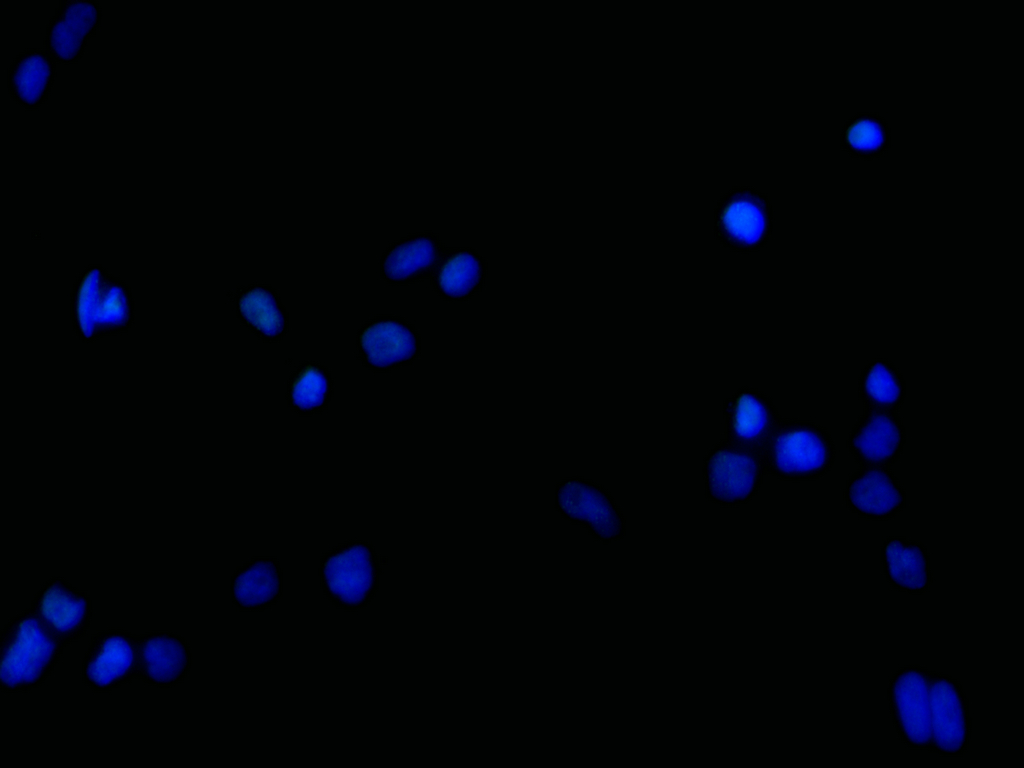
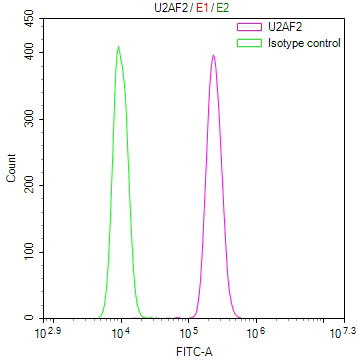
Extensive validation demonstrates this antibody's versatility across multiple applications. Western blot analysis confirms robust detection in human cell lines including HEK293, HT29, Jurkat, HepG2, A431, and A549, with cross-species reactivity verified in mouse and rat brain tissue lysates. The observed band at approximately 60 kDa, slightly higher than the predicted 54 kDa molecular weight, likely reflects post-translational modifications such as phosphorylation, which is well-documented for this splicing factor. Immunohistochemistry validation in human colorectal cancer tissue sections, immunofluorescence staining in A-431 cells showing expected nuclear localization, and flow cytometry analysis in HeLa cells further demonstrate the antibody's suitability for diverse experimental approaches.
For researchers studying epigenetics, nuclear signaling, or RNA processing mechanisms, this antibody provides a dependable tool for investigating U2AF2 biology across multiple model systems and experimental platforms.
There are currently no reviews for this product.





