


Call us
301-363-4651 (Available 9 a.m. to 5 p.m. CST from Monday to Friday)

Thank you for your continued support of CUSABIO! In November 2025, articles related to CUSABIO products were published in excess of 280. The total number of articles has now reached 29,000.
Thank you for choosing CUSABIO research products on your scientific research journey. Your trust and support are deeply appreciated. We will continue to work hard to provide you with even better products and services.
Now, let's take a moment to share these wonderful research results.

Impact Factor: 52.7
Journal Name: Signal Transduction and Targeted Therapy
CUSABIO Citation Product:
Human bovine serum albumin (BSA) ELISA kit; CSB-E08633h
Mouse neutrophil elastase,NE ELISA Kit; CSB-E04804m
A novel cyclic peptide Cp1, discovered via phage display, potently and stably neutralizes C5a, blocking the C5a-C5aR1 axis to curb inflammatory cascade, markedly reducing cytokines, organ damage and bacterial load in CLP septic mice, significantly prolonging survival after single dosing and offering a cost-effective sepsis intervention.
Impact Factor: 42.5
Journal Name: Cell
CUSABIO Citation Product:
Human Slit2 ELISA Kit; CSB-E11038h
Mouse Slit2 ELISA Kit; CSB-E11039m
Tumors hijack a nociceptive neuron-mediated inter-organ circuit: ATF4-SLIT2 activates sensory nerves, releasing CGRP to silence draining lymph nodes, damp CCL5, and skew TAMs to M2, fueling growth and blunting ICB. Disrupting this axis restores immunity, alleviates pain, and sensitizes tumors to checkpoint blockade.
Impact Factor: 30.9
Journal Name: Cell metabolism
CUSABIO Citation Product:
Mouse Lipopolysaccharides(LPS) ELISA Kit; CSB-E13066m
HCC-enriched gut microbe Catenibacterium mitsuokai breaches barrier, translocates to liver, adheres via Gtr1/RagA-γ-catenin, secretes quinolinic acid that activates TIE2-PI3K/AKT signaling and drives hepatocarcinogenesis; TIE2 inhibition abolishes its tumor-promoting effect.
Impact Factor: 20
Journal Name: Nature Neuroscience
CUSABIO Citation Product:
Rat Estradiol,E2 ELISA Kit; CSB-E05110r
The study shows that 17β-estradiol enhances reinforcement learning in female rats during proestrus by reducing dopamine transporter expression in the nucleus accumbens, boosting dopamine signaling and reward prediction errors, revealing a novel hormonal modulation of cognition.
Impact Factor: 19.4
Journal Name: Nature Aging
CUSABIO Citation Product:
Mouse Fibronectin,FN ELISA Kit; CSB-E04552m
This study shows that serum levels of elastin, hyaluronan and fibronectin fragments rise with age in humans and mice; the elastin-derived VGVAPG peptide (E-motif) is most potent. Intravenously administered E-motif engages NEU1 on monocytes/macrophages, triggering innate immunity and chronic inflammation that skews T/B cells, driving obesity, hepatic steatosis, osteoporosis and shortened lifespan. Pharmacological inhibition of NEU1 with DANA extended median lifespan of naturally aged mice by 17%, improved metabolic, inflammatory and degenerative parameters, and was similarly effective in immune-humanized mice and pigs, offering a translatable anti-aging strategy.
Impact Factor: 15.7
Journal Name: Nature Communications
CUSABIO Citation Product:
Recombinant Mouse Granzyme K (Gzmk); CSB-EP010084MO
Recombinant Human Granzyme K (GZMK); CSB-EP010084HU
TUBB3 Antibody; CSB-PA03874A0Rb
This study shows that CD103–CD8+ tissue-resident memory T cells accumulate in AD brains and release granzyme K (GrK), which activates neuronal PAR-1 to trigger Ca2+ dysregulation and tau hyperphosphorylation, driving neurotoxicity and cognitive decline. These cells originate from the periphery and infiltrate the brain via LFA-1 integrin. Depleting them or blocking GrK–PAR-1 signaling ameliorates pathology and memory in 3xTg-AD mice, identifying a T cell–mediated neurotoxic axis as a novel therapeutic target for AD.
Impact Factor: 15.7
Journal Name: Nature Communications
CUSABIO Citation Product:
Mouse malonyl coenzyme A ELISA kit; CSB-E12896m
This study identifies MTCH2, a mitochondrial outer membrane protein, as a key negative regulator of energy metabolism in adipocytes. Analysis of human and mouse adipose tissues reveals that MTCH2 expression strongly correlates with obesity. Adipocyte-specific deletion of Mtch2 enhances mitochondrial function and whole-body energy expenditure, protecting mice from diet-induced obesity independently of UCP1. Mechanistically, MTCH2 directly interacts with CPT1, modulating its sensitivity to malonyl-CoA and thereby suppressing fatty acid oxidation (FAO). Loss of MTCH2 increases CPT1 activity, promoting FAO and energy dissipation. These findings highlight MTCH2 as a potential therapeutic target for obesity and related metabolic disorders.
Impact Factor: 15.7
Journal Name: Nature Communications
CUSABIO Citation Product:
Mouse anti-nuclear Antibody (IgG) ELISA Kit; CSB-E12912m
This study shows macrophage WDFY3 curbs autoimmunity by enhancing efferocytosis and suppressing CD4+ T-cell activation. Myeloid Wdfy3 deletion impairs apoptotic-cell clearance, heightens MHC-II presentation and IL-1β release, and exacerbates autoantibody production and nephritis in young and middle-aged mice, whereas WDFY3 overexpression boosts efferocytosis, restrains T-cell responses, and ameliorates pathology. WDFY3 thus acts as a critical guardian of immune tolerance, offering a therapeutic target for autoimmune disorders.
Impact Factor: 15
Journal Name: Neuron
CUSABIO Citation Product:
Mouse Follistatin-related protein 1(FSTL1) ELISA kit; CSB-EL009025MO
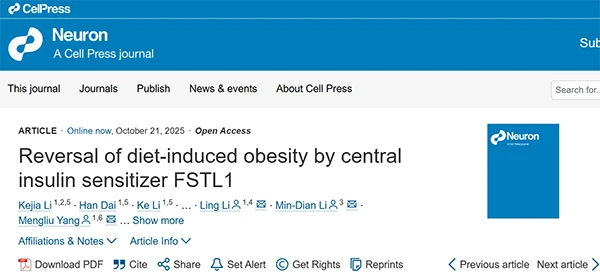
The study identifies hypothalamic AgRP-neuron-derived FSTL1 as a central insulin sensitizer that counters diet-induced obesity. FSTL1 falls in obese mice; its AgRP-specific deletion worsens feeding, weight and insulin resistance, whereas viral overexpression or intranasal FSTL1-liposomes activates Akt/FoxO1, suppresses AgRP, and reverses adiposity and glucose intolerance independent of body weight. Human serum FSTL1 correlates with BMI and Mendelian randomization supports causality. The work uncovers a brain FSTL1-insulin axis regulating energy balance and offers a nose-to-brain therapeutic strategy for obesity.
Impact Factor: 14.6
Journal Name: Acta Pharmaceutica Sinica B
CUSABIO Citation Product:
Rat inositol 1,4,5,-trisphosphate(IP3) ELISA kit; CSB-E13004r
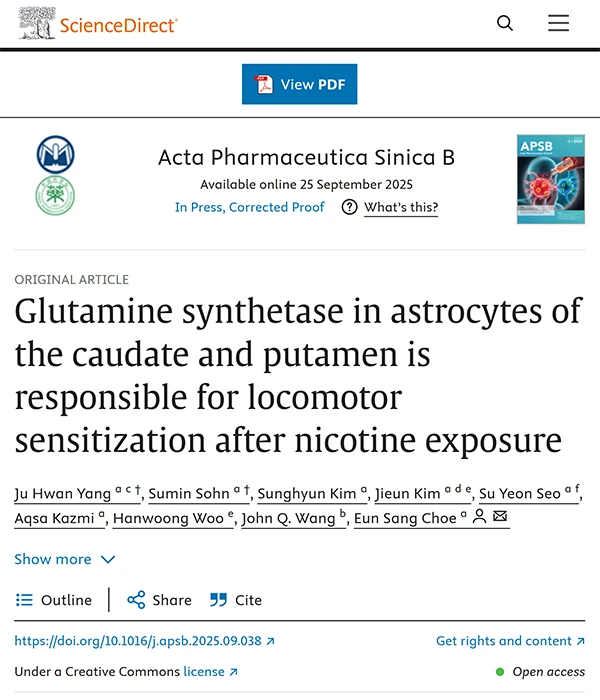
This study reveals that nicotine activates the JNK-mGluR1a pathway in astrocytes via α7 nicotinic receptors, enhancing glutamine synthetase (GS) activity in the caudate and putamen, which boosts glutamatergic transmission and mediates locomotor sensitization. It identifies GS as a key regulator in nicotine dependence, offering a novel astrocytic target for addiction treatment.


