CRYBA1 Antibody

Code CSB-PA006009LA01HU
Size US$166
Order now
Image
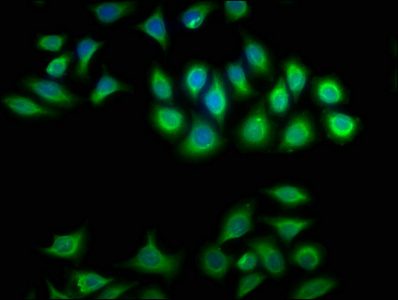
  • Immunofluorescence staining of A549 cells with CSB-PA006009LA01HU at 1:100, counter-stained with DAPI. The cells were fixed in 4% formaldehyde, permeabilized using 0.2% Triton X-100 and blocked in 10% normal Goat Serum. The cells were then incubated with the antibody overnight at 4°C. The secondary antibody was Alexa Fluor 488-congugated AffiniPure Goat Anti-Rabbit IgG(H+L).

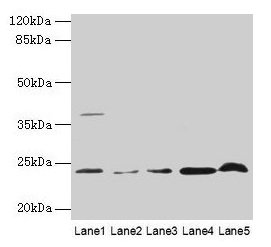
  • Western blot
    All lanes: CRYBA1 antibody at 6µg/ml
    Lane 1: Human placenta tissue
    Lane 2: U251 whole cell lysate
    Lane 3: U937 whole cell lysate
    Lane 4: Mouse stomach tissue
    Lane 5: Mouse liver tissue
    Secondary
    Goat polyclonal to rabbit IgG at 1/10000 dilution
    Predicted band size: 26, 24 kDa
    Observed band size: 24 kDa

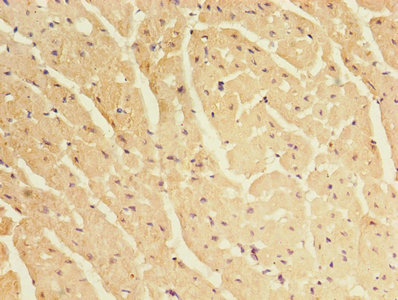
  • Immunohistochemistry of paraffin-embedded human heart tissue using CSB-PA006009LA01HU at dilution of 1:100

Promotion Free Antibody trial simple
Have Questions? Leave a Message or Start an on-line Chat

Product Details

Full Product Name
Rabbit anti-Homo sapiens (Human) CRYBA1 Polyclonal antibody
Uniprot No.
Target Names
CRYBA1
Alternative Names
Beta crystallin A3 isoform A1 Delta4 form antibody; Beta crystallin A3 antibody; Beta crystallin A3 isoform A1 Delta7 form antibody; Beta crystallin A3 isoform A1 Delta8 form antibody; Beta-crystallin A3 antibody; CRBA1_HUMAN antibody; CRYB1 antibody; CRYBA1 antibody; Crystallin beta A1 antibody; Crystallin beta A3 antibody; Delta8 form antibody; Eye lens structural protein antibody; isoform A1 antibody
Raised in
Rabbit
Species Reactivity
Human, Mouse
Immunogen
Recombinant Human Beta-crystallin A3 protein (1-215AA)
Immunogen Species
Homo sapiens (Human)
Conjugate
Non-conjugated

The CRYBA1 Antibody (Product code: CSB-PA006009LA01HU) is Non-conjugated. For CRYBA1 Antibody with conjugates, please check the following table.

Available Conjugates
Conjugate Product Code Product Name Application
HRP CSB-PA006009LB01HU CRYBA1 Antibody, HRP conjugated ELISA
FITC CSB-PA006009LC01HU CRYBA1 Antibody, FITC conjugated
Biotin CSB-PA006009LD01HU CRYBA1 Antibody, Biotin conjugated ELISA
Clonality
Polyclonal
Isotype
IgG
Purification Method
>95%, Protein G purified
Concentration
It differs from different batches. Please contact us to confirm it.
Buffer
Preservative: 0.03% Proclin 300
Constituents: 50% Glycerol, 0.01M PBS, PH 7.4
Form
Liquid
Tested Applications
ELISA, WB, IHC, IF
Recommended Dilution
Application Recommended Dilution
WB 1:1000-1:5000
IHC 1:20-1:200
IF 1:50-1:200
Troubleshooting and FAQs
Storage
Upon receipt, store at -20°C or -80°C. Avoid repeated freeze.
Lead Time
Basically, we can dispatch the products out in 1-3 working days after receiving your orders. Delivery time maybe differs from different purchasing way or location, please kindly consult your local distributors for specific delivery time.
Usage
For Research Use Only. Not for use in diagnostic or therapeutic procedures.
Customer Reviews and Q&A

 Customer Reviews

There are currently no reviews for this product.

Submit a Review here

Target Background

Function
Crystallins are the dominant structural components of the vertebrate eye lens.
Gene References into Functions
  1. We identified a de novo in-frame 3-bp deletion in the proband with an autosomal dominant congenital cataract, but not in her parents, in an Iranian family. This mutation has occurred de novo on a paternal gamete during spermatogenesis. The in-silico results predicted the interaction of CRYBA1 protein with the other CRY as well as proteins responsible for eye cell signaling. PMID: 28120589
  2. The findings suggest that impaired endolysosomal signaling in ocular astrocytes can cause PFV disease, by adversely affecting the vascular remodeling processes essential to ocular development, including regression of the fetal vasculature. [review] PMID: 26022148
  3. association between a frameshift mutation in exon 6 of CRYBA1/A3 and congenital cataracts PMID: 24926697
  4. A novel splice site mutation in CRYBA1/A3 is associated with autosomal dominant nuclear cataracts in a Chinese family. PMID: 22665976
  5. A splice site mutation (c.215+1G>A) at the first base of intron 3 of the crystallin beta A3/A1 (CRYBA3/A1) gene has been identified in Chinese congenital polymorphic cataract patients. PMID: 22919269
  6. ThebetaA3-crystallin and betaB1-crystallin homomers and the betaA3/betaB1-crystallin heteromer all undergo similar five-state folding pathways which include one dimeric and two monomeric intermediates. PMID: 22032798
  7. A G-->T splice site mutation of CRYBA1/A3 associated with autosomal dominant suture cataracts in a Chinese family. PMID: 21850182
  8. The c.279-281delGAG mutation in CRYBA1 is responsible for the autosomal dominant congenital nuclear cataract disease in this Chinese family. PMID: 21686330
  9. A serine-type protease activity of betaA3-crystalllin was responsible for its autodegradation. PMID: 21139689
  10. This is the first report of a phenotype of progressive nuclear and cortical cataracts related to the CRYBA3/A1 mutation IVS3+1 G>A. PMID: 21139983
  11. Mutations involved in congenital cataracts and deamidation in aged lenses commonly altered protein-protein interaction between human lens betaA3-crystallins. PMID: 20300566
  12. This study is the first report relating a mutation of CRYBA1/A3 to posterior polar cataract. PMID: 20142846
  13. A deletion mutation in the betaA1/A3 crystallin gene is associated with autosomal dominant congenital nuclear cataract PMID: 14598164
  14. comprehensive description of the biophysical consequences of a mutant beta-crystallin protein that is associated with human inherited cataract. PMID: 15016766
  15. The DeltaG91 mutation in CRYBA3/A1 is associated with an autosomal dominant congenital nuclear lactescent cataract PMID: 15111599
  16. The glutamine residues at the Q180 and the Q85 were substituted with glutamic acid residues by site-directed mutagenesis. These structural changes led to decreased stability during unfolding in urea and increased precipitation during heat denaturation. PMID: 17616172
  17. Delta91 mutation arise in a relatively mutation-prone sequence of the CRYBA1 gene. PMID: 17653060
  18. Deamidation destabilizes and triggers aggregation of crystallin beta A3. PMID: 18567786
  19. mixed betaB1- and betaA3-crystallins associate predominantly into heterotetramers in equilibrium with heterodimers PMID: 18823128
  20. deamidation decreased formation of hetero-oligomers between beta-crystallin subunits; excess accumulation of deamidated beta-crystallins in vivo may disrupt normal protein-protein interactions and diminish the stabilizing effects between them PMID: 19190732
  21. Results suggest that the N-terminal arm of betaB1-crystallin interacts with betaA3-crystallin during heterooligomerization, and the solubility of betaB1-crystallin and the heterooligomer are dependent on the intact C-terminal domain of betaB1-crystallin. PMID: 19548648

Show More

Hide All

Involvement in disease
Cataract 10, multiple types (CTRCT10)
Protein Families
Beta/gamma-crystallin family
Database Links

HGNC: 2394

OMIM: 123610

KEGG: hsa:1411

STRING: 9606.ENSP00000225387

UniGene: Hs.46275

icon of phone
Call us
301-363-4651 (Available 9 a.m. to 5 p.m. CST from Monday to Friday)
icon of address
Address
7505 Fannin St., Ste 610, Room 7 (CUBIO Innovation Center), Houston, TX 77054, USA
icon of social media
Join us with

Subscribe newsletter

Leave a message

* To protect against spam, please pass the CAPTCHA test below.
CAPTCHA verification
© 2007-2025 CUSABIO TECHNOLOGY LLC All rights reserved. 鄂ICP备15011166号-1
×
Place an order now

I. Product details

*
*
*
*

II. Contact details

*
*

III. Ship To

*
*
*
*
*
*
*

IV. Bill To

*
*
*
*
*
*
*
*