
Call us
301-363-4651 (Available 9 a.m. to 5 p.m. CST from Monday to Friday)

| Code | CSB-EP006621HU |
| Abbreviation | Recombinant Human DDX3X protein |
| MSDS | |
| Size | $224 |
| Order now | |
| Image |
|
| Have Questions? | Leave a Message or Start an on-line Chat |
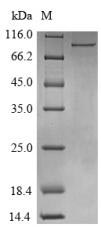
Recombinant Human ATP-dependent RNA helicase DDX3X is expressed in E. coli and contains the complete mature protein sequence, spanning amino acids 2 to 662. The protein carries an N-terminal 6xHis-B2M tag, which makes purification and detection more straightforward. SDS-PAGE analysis confirms purity levels above 90%, suggesting this preparation should work well for biochemical assays and research studies.
DDX3X belongs to the DEAD-box RNA helicase family. These proteins appear to play important roles in RNA metabolism - things like RNA splicing, translation, and transport within cells. The protein seems to influence several cellular processes and pathways, potentially affecting how genes are expressed and how cell cycles are regulated. What makes DDX3X particularly interesting for researchers is its apparent involvement in RNA processing pathways and what may be significant regulatory functions in maintaining cellular balance.
Potential Applications
Note: The applications listed below are based on what we know about this protein's biological functions, published research, and experience from experts in the field. However, we haven't fully tested all of these applications ourselves yet. We'd recommend running some preliminary tests first to make sure they work for your specific research goals.
The human DDX3X is an ATP-dependent RNA helicase that requires correct folding for its enzymatic activities, including ATP binding, RNA unwinding, and interactions with other proteins. E. coli expression can produce soluble proteins, but complex multidomain proteins like DDX3X may not fold properly without eukaryotic chaperones. The His-B2M tag may improve solubility but could sterically hinder native folding or activity. Without experimental validation (e.g., ATPase or helicase assays), the protein cannot be assumed to be correctly folded or bioactive.
1. Protein-Protein Interaction Studies Using Pull-Down Assays
The His tag allows for pull-down assays to identify binding partners, but if DDX3X is misfolded, interactions may be non-physiological. The tag itself might cause artifactual binding. Validate any identified interactions using full-length, properly folded DDX3X from eukaryotic systems (e.g., via co-immunoprecipitation from mammalian cells) to ensure biological relevance. Confirm protein folding before use.
2. Antibody Development and Validation
This recombinant DDX3X is suitable as an immunogen for antibody production, as antibodies can recognize linear epitopes even in misfolded proteins. The high purity supports consistent immunization. However, antibodies generated may not bind to native, correctly folded DDX3X in cellular contexts due to conformational differences. Validate antibody specificity against endogenous DDX3X in cell lysates or tissues.
3. Biochemical Characterization and Enzyme Kinetics Studies
This application requires confirmed bioactivity. If DDX3X is verified to be active (e.g., via ATP hydrolysis or RNA unwinding assays), it can be used for kinetic studies. However, without activity validation, data on ATP binding or enzyme kinetics are meaningless. First, perform functional assays to confirm activity before proceeding with biochemical characterization.
4. ELISA-Based Quantitative Assays
The His-tagged DDX3X can be used in ELISA if properly folded. However, if misfolded, it may not bind antibodies or ligands accurately, leading to unreliable quantification. Validate the protein's conformation and binding capability using known antibodies or ligands before developing quantitative assays. Use it as a standard only if it mimics native DDX3X.
Final Recommendation & Action Plan
Before using this recombinant DDX3X for any functional application, prioritize experimental validation of its folding and bioactivity. Start with functional assays such as ATP hydrolysis or RNA unwinding to confirm enzymatic activity. If active, proceed with interaction or kinetic studies, but include controls like known inhibitors or native DDX3X. For antibody development, proceed but validate antibodies against the native protein. If inactive, limit use to non-functional applications like antibody production, and avoid kinetic or interaction studies. For reliable results, consider expressing DDX3X in a eukaryotic system (e.g., insect or mammalian cells) that supports proper folding and post-translational modifications. Always validate outcomes with native DDX3X to ensure biological relevance.
There are currently no reviews for this product.





