
Call us
301-363-4651 (Available 9 a.m. to 5 p.m. CST from Monday to Friday)

| Code | CSB-EP362073HQDb0 |
| Abbreviation | Recombinant Human rhinovirus A serotype 89 Genome polyprotein, partial |
| MSDS | |
| Size | $224 |
| Order now | |
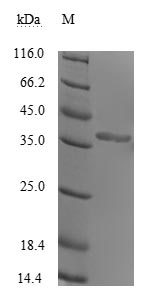
| Image |
|
| Have Questions? | Leave a Message or Start an on-line Chat |
The genome polyprotein is a precursor molecule that is translated from a viral RNA and is subsequently cleaved into individual functional proteins. This strategy of genome expression is utilized by various positive-strand RNA viruses, including plant viruses and animal viruses [1]. The maturation process of viral polyproteins is crucial for viral replication, as it enables the synthesis of new viral genomes and the functionality of viral proteins [2]. For instance, the genome of Rubella virus encodes a polyprotein precursor, which is subsequently processed into nonstructural proteins that support viral replication [3]. Similarly, the genome of SARS-CoV-2, like other coronaviruses, encodes polyproteins that require processing into functional proteins [4].
The polyprotein is initially translated as a single large molecule, which is then processed by proteolytic cleavage into smaller, functional proteins [5]. This processing is essential for the regulation of viral replication and maturation [6]. The cleavages within the replicase polyproteins are carried out by the virus's own enzymes, highlighting the intricate mechanisms involved in polyprotein processing [7]. Moreover, the polyprotein processing is a critical step in the assembly of functional viral replication complexes, which regulate RNA synthesis in viruses such as Sindbis virus [8].
The polyprotein processing involves post-translational proteolytic cleavage, which is a mechanism utilized by potyviruses for genome expression [9]. Additionally, the hepatitis C virus genome encodes a precursor polyprotein that undergoes processing into functional proteins by both host and viral proteases [10]. This exemplifies the significance of polyprotein processing in the life cycle of diverse viruses.
References:
[1] R. Margis, C. Ritzenthaler, J. Reinbolt, M. Pinck, & L. Pinck, "Genome organization of grapevine fanleaf nepovirus rna2 deduced from the 122k polyprotein p2 in vitro cleavage products", Journal of General Virology, vol. 74, no. 9, p. 1919-1926, 1993. https://doi.org/10.1099/0022-1317-74-9-1919
[2] J. Habersetzer, M. Debbah, M. Fogeron, A. Böckmann, S. Bressanelli, & S. Fieulaine, "In vitro translation of virally-encoded replication polyproteins to recapitulate polyprotein maturation processes", Protein Expression and Purification, vol. 175, p. 105694, 2020. https://doi.org/10.1016/j.pep.2020.105694
[3] M. Sakata, H. Katoh, N. Otsuki, K. Okamoto, Y. Nakatsu, C. Limet al., "Heat shock protein 90 ensures the integrity of rubella virus p150 protein and supports viral replication", Journal of Virology, vol. 93, no. 22, 2019. https://doi.org/10.1128/jvi.01142-19
[4] Q. Li and C. Kang, "Progress in developing inhibitors of sars-cov-2 3c-like protease", Microorganisms, vol. 8, no. 8, p. 1250, 2020. https://doi.org/10.3390/microorganisms8081250
[5] C. Robaglia, M. Durand-Tardif, M. Tronchet, G. Boudazin, S. Astier-Manifacier, & F. Casse-Delbart, "Nucleotide sequence of potato virus y (n strain) genomic rna", Journal of General Virology, vol. 70, no. 4, p. 935-947, 1989. https://doi.org/10.1099/0022-1317-70-4-935
[6] S. Yost and J. Marcotrigiano, "Viral precursor polyproteins: keys of regulation from replication to maturation", Current Opinion in Virology, vol. 3, no. 2, p. 137-142, 2013. https://doi.org/10.1016/j.coviro.2013.03.009
[7] A. Lulla, V. Lulla, & A. Merits, "Macromolecular assembly-driven processing of the 2/3 cleavage site in the alphavirus replicase polyprotein", Journal of Virology, vol. 86, no. 1, p. 553-565, 2012. https://doi.org/10.1128/jvi.05195-11
[8] J. Lemm, T. Rümenapf, E. Strauss, J. Strauss, & C. Rice, "Polypeptide requirements for assembly of functional sindbis virus replication complexes: a model for the temporal regulation of minus- and plus-strand rna synthesis.", The Embo Journal, vol. 13, no. 12, p. 2925-2934, 1994. https://doi.org/10.1002/j.1460-2075.1994.tb06587.x
[9] L. Domier, K. Franklin, M. Shahabuddin, G. Hellmann, J. Overmeyer, S. Hiremathet al., "The nucleotide sequence of tobacco vein mottling virus rna", Nucleic Acids Research, vol. 14, no. 13, p. 5417-5430, 1986. https://doi.org/10.1093/nar/14.13.5417
[10] A. Owsianka, R. Clayton, L. Loomis-Price, J. McKeating, & A. Patel, "Functional analysis of hepatitis c virus e2 glycoproteins and virus-like particles reveals structural dissimilarities between different forms of e2", Journal of General Virology, vol. 82, no. 8, p. 1877-1883, 2001. https://doi.org/10.1099/0022-1317-82-8-1877
There are currently no reviews for this product.





