


Call us
301-363-4651 (Available 9 a.m. to 5 p.m. CST from Monday to Friday)

| Code | CSB-RA712206A0HU |
| Size | US$210 |
| Order now | |
| Image |
|
| Have Questions? | Leave a Message or Start an on-line Chat |
| Application | Recommended Dilution |
|---|---|
| WB | 1:500-1:5000 |
| IF | 1:20-1:200 |
| FC | 1:20-1:200 |
ATP-citrate lyase serves as a critical metabolic enzyme that bridges cellular energy production with biosynthetic pathways by converting citrate into acetyl-CoA, the essential building block for fatty acid synthesis and protein acetylation. This enzymatic activity positions ACLY at the intersection of cancer metabolism, lipid biosynthesis, and epigenetic regulation, making it a compelling target for researchers investigating metabolic reprogramming in disease states and normal cellular physiology.
This recombinant monoclonal antibody, generated from clone 3A5, offers the reproducibility and consistency that demanding experimental workflows require. Because the antibody sequence is defined and production occurs in controlled recombinant systems, researchers can expect uniform performance across experiments and studies, eliminating the lot-to-lot variability that can complicate long-term projects or multi-site collaborations.
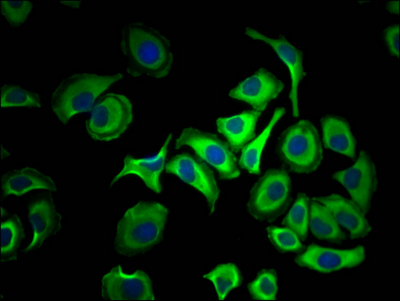
Validation across multiple detection platforms demonstrates genuine experimental flexibility. Western blot analysis confirms robust detection of ACLY at the expected 120 kDa molecular weight across diverse human cell lines including L02, K562, HeLa, Raji, and A549, providing confidence when working with hepatic, hematopoietic, cervical, or lung cancer models. Immunofluorescence staining in HepG2 cells reveals clear cytoplasmic localization patterns, while flow cytometry analysis in HeLa cells shows distinct positive population shifts compared to isotype controls, enabling quantitative single-cell studies.
The antibody's performance across these orthogonal techniques supports investigations spanning cancer biology, metabolic regulation, and signal transduction research. Whether examining ACLY expression changes in response to metabolic stress, validating knockdown efficiency, or characterizing its role in acetyl-CoA-dependent processes, this reagent provides the technical foundation for meaningful experimental insights.
There are currently no reviews for this product.





