
Call us
301-363-4651 (Available 9 a.m. to 5 p.m. CST from Monday to Friday)

| Code | CSB-RA958435A0HU |
| Size | US$210 |
| Order now | |
| Image |
|
| Have Questions? | Leave a Message or Start an on-line Chat |
| Application | Recommended Dilution |
|---|---|
| IHC | 1:50-1:200 |
BCAM, also known as the basal cell adhesion molecule or Lutheran blood group glycoprotein, serves as a critical laminin receptor that mediates cell-matrix interactions in various tissues. This immunoglobulin superfamily member plays significant roles in vascular biology, where it facilitates adhesion of red blood cells to endothelial laminin, and has garnered considerable research interest for its involvement in sickle cell disease pathophysiology and tumor cell migration. Understanding BCAM expression patterns and function provides valuable insights into both normal physiological processes and disease mechanisms affecting the cardiovascular system.
This recombinant monoclonal antibody, clone 1G12, offers researchers the reproducibility advantages inherent to recombinant technology. Because the antibody sequence is defined and produced from a stable expression system, you can expect consistent performance across experiments and over time, eliminating the lot-to-lot variability that can complicate long-term studies or multi-site collaborations. The antibody is raised in rabbit against a synthetic peptide derived from human BCAM and has been affinity-purified to ensure high specificity.
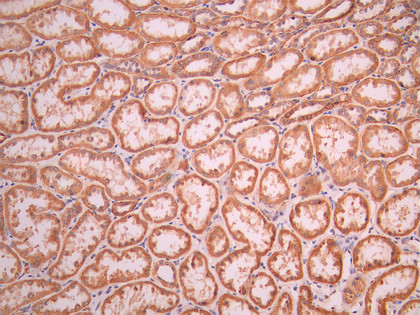
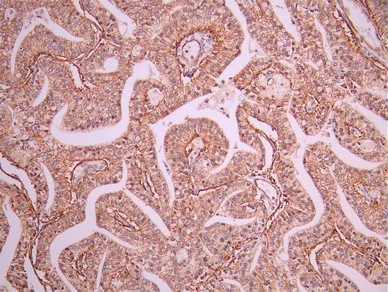
Validation studies demonstrate reliable performance in immunohistochemistry applications on formalin-fixed, paraffin-embedded human tissues. Testing in human kidney tissue and human prostate cancer specimens at 1:100 dilution using citrate buffer antigen retrieval confirms the antibody's utility for examining BCAM expression in both normal and pathological contexts. The recommended working dilution range of 1:50 to 1:200 provides flexibility for optimization across different tissue types and detection systems.
For cardiovascular researchers investigating laminin-mediated adhesion, blood group antigen biology, or tumor progression studies where BCAM expression may influence metastatic potential, this antibody provides a dependable tool for immunohistochemical analysis of human specimens.
There are currently no reviews for this product.





