
Call us
301-363-4651 (Available 9 a.m. to 5 p.m. CST from Monday to Friday)

| Code | CSB-RA012968A0HU |
| Size | US$210 |
| Order now | |
| Image |
|
| Have Questions? | Leave a Message or Start an on-line Chat |
| Application | Recommended Dilution |
|---|---|
| IHC | 1:50-1:200 |
| IF | 1:50-1:200 |
| FC | 1:50-1:200 |
BCL2L14, also known as Bcl-G, belongs to the BCL-2 family of apoptosis regulators and functions as a pro-apoptotic protein that promotes programmed cell death. This apoptosis facilitator plays important roles in tissue homeostasis and has garnered research interest for its involvement in cancer biology, where dysregulation of apoptotic pathways contributes to tumor development and therapeutic resistance. Understanding BCL2L14 expression and localization provides valuable insights into cell death mechanisms across various tissue contexts.
This recombinant monoclonal antibody, clone 9H1, offers the reproducibility and consistency that demanding research applications require. Produced using recombinant technology with a defined sequence, this rabbit IgG eliminates the lot-to-lot variability often encountered with traditional hybridoma-derived antibodies. Researchers can confidently build upon previous results knowing that antibody performance remains stable across experiments and over time.
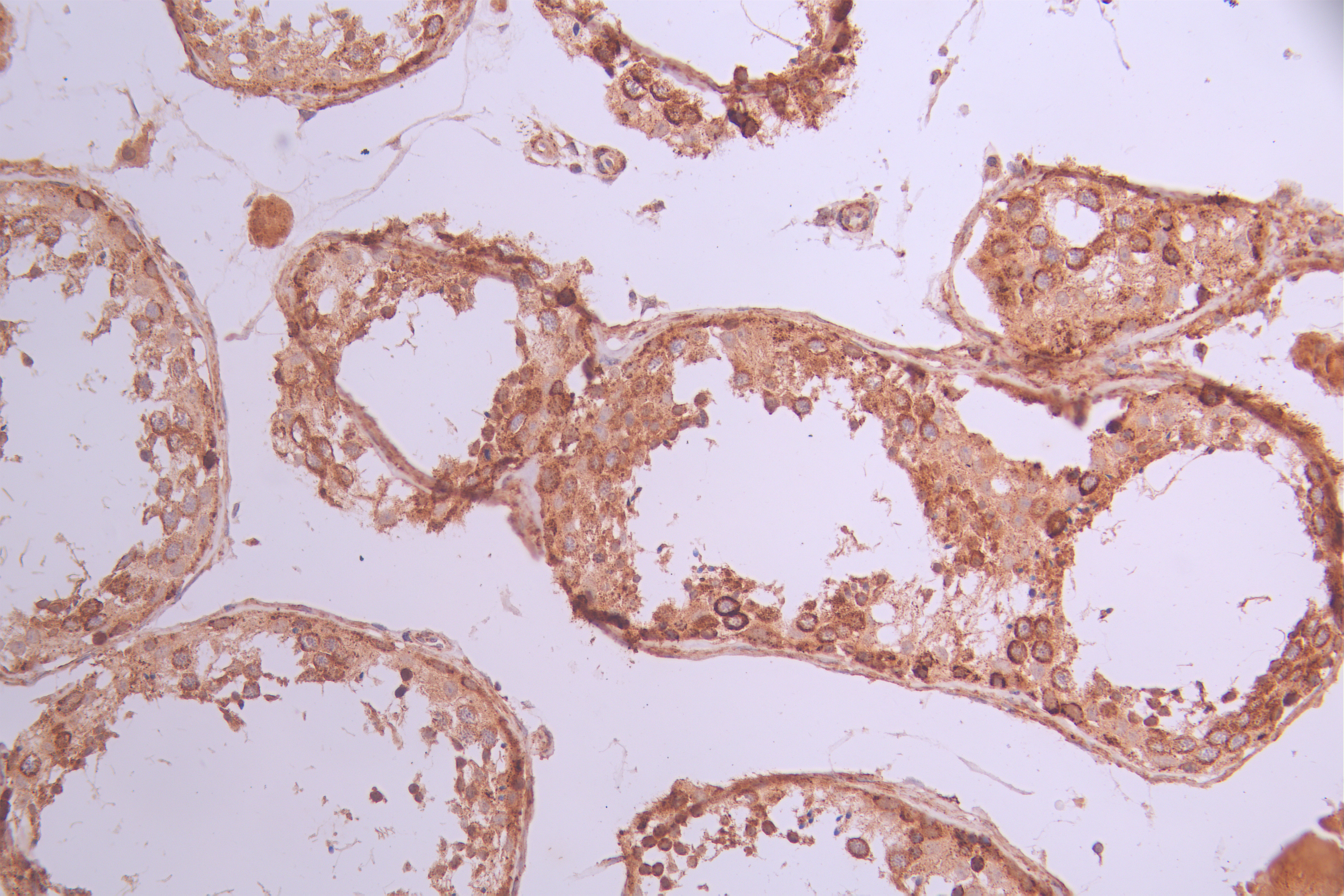
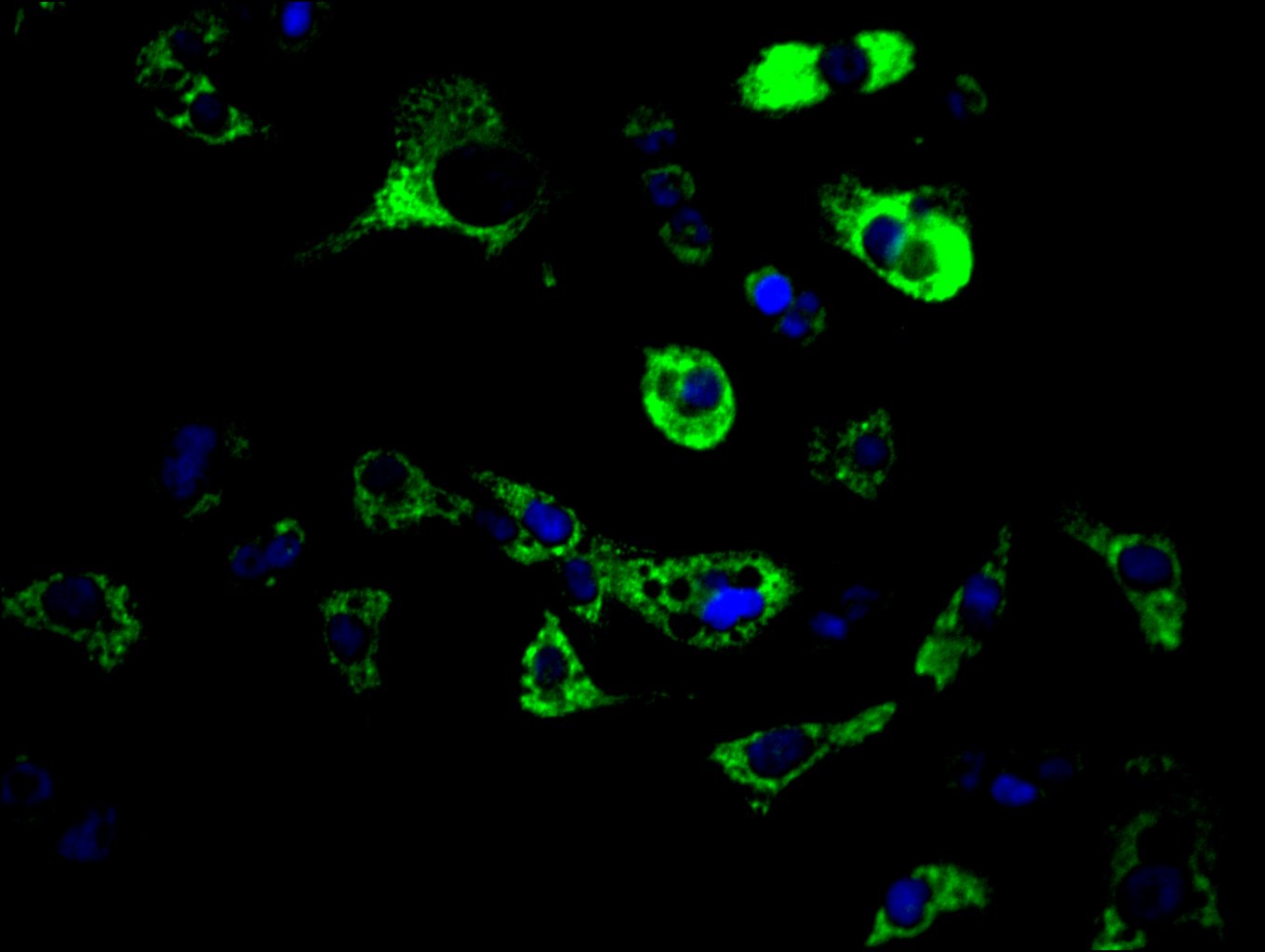
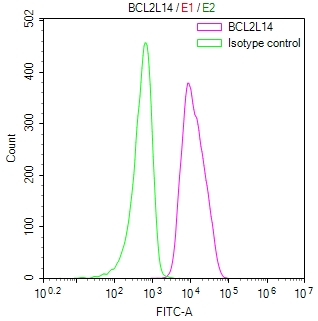
Validation across multiple detection platforms demonstrates this antibody's versatility in your experimental workflows. Immunohistochemistry studies in paraffin-embedded human testis tissue at dilutions of 1:50-1:200 reveal specific staining patterns suitable for tissue expression analysis. Immunofluorescence applications have been validated in HepG2 hepatocellular carcinoma cells, enabling subcellular localization studies with clear signal when counter-stained with DAPI. Flow cytometry validation using Jurkat T lymphocyte cells confirms utility for quantitative single-cell analysis, with overlay histograms demonstrating distinct positive population shifts compared to isotype controls.
This antibody serves researchers investigating apoptotic signaling pathways, cancer cell biology, and tissue-specific expression patterns of BCL-2 family members. The combination of recombinant production, multi-platform validation, and human reactivity makes this reagent well-suited for studies exploring BCL2L14's role in cell fate decisions and disease pathogenesis.
There are currently no reviews for this product.





