
Call us
301-363-4651 (Available 9 a.m. to 5 p.m. CST from Monday to Friday)

| Code | CSB-RA555705A0HU |
| Size | US$210 |
| Order now | |
| Image |
|
| Have Questions? | Leave a Message or Start an on-line Chat |
| Application | Recommended Dilution |
|---|---|
| WB | 1:500-1:2000 |
| IHC | 1:50-1:200 |
| FC | 1:50-1:200 |
Caspase-14 occupies a unique position within the caspase family, functioning primarily in terminal keratinocyte differentiation rather than classical apoptotic pathways. This protease plays an essential role in skin barrier formation, processing profilaggrin during cornification to generate natural moisturizing factors that maintain epidermal integrity. Its restricted expression pattern in differentiating keratinocytes makes CASP14 a valuable marker for studying skin development, barrier function disorders, and epithelial differentiation programs.
This recombinant monoclonal antibody, clone 9B10, offers the reproducibility and consistency that demanding research applications require. Developed using recombinant technology with a defined sequence, it eliminates the lot-to-lot variability that can compromise longitudinal studies and multi-site collaborations. The rabbit IgG format, raised against a synthetic peptide derived from human CASP14, provides reliable target recognition across multiple experimental platforms.
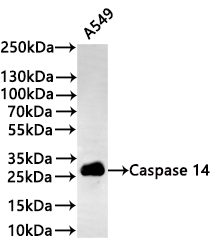
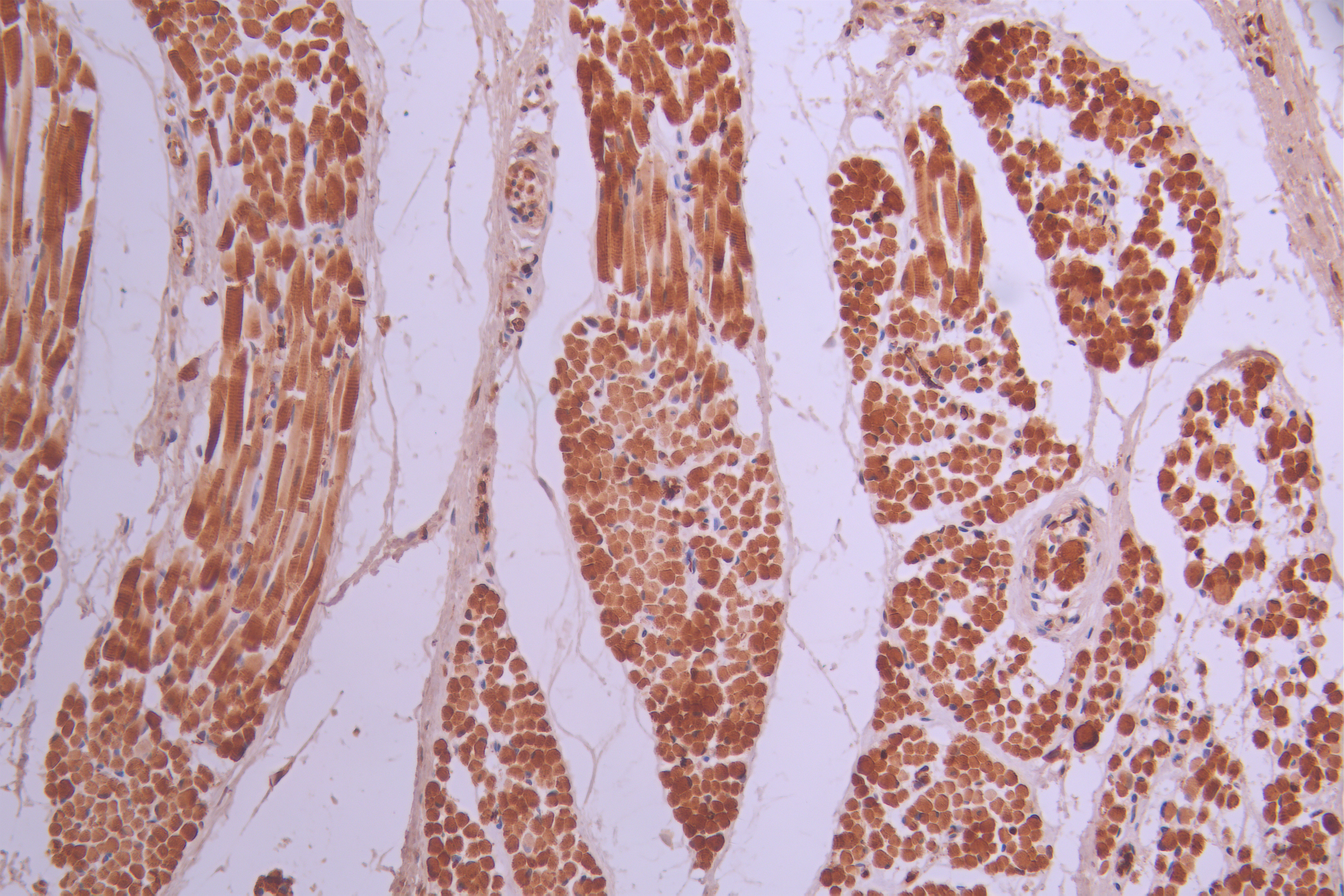
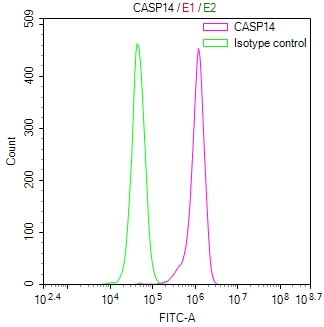
Validation studies confirm robust performance in western blotting, immunohistochemistry, and flow cytometry applications. Western blot analysis of A549 whole cell lysate demonstrates specific detection at the expected molecular weight range of 28-30 kDa, consistent with the predicted 28 kDa size. Immunohistochemical staining of paraffin-embedded human skin tissue reveals clear visualization of CASP14 in its physiologically relevant context. Flow cytometry analysis using permeabilized MCF-7 cells shows distinct positive signal separation from isotype control, enabling quantitative assessment of intracellular CASP14 expression.
The antibody arrives in a stabilized liquid format with glycerol for convenient long-term storage at -20°C or -80°C. Researchers investigating epidermal differentiation, skin barrier pathologies, ichthyosis, atopic dermatitis, or keratinocyte biology will find this antibody well-suited for characterizing CASP14 expression across diverse experimental workflows.
There are currently no reviews for this product.





