
Call us
301-363-4651 (Available 9 a.m. to 5 p.m. CST from Monday to Friday)

| Code | CSB-RA914462A0HU |
| Size | US$210 |
| Order now | |
| Image |
|
| Have Questions? | Leave a Message or Start an on-line Chat |
| Application | Recommended Dilution |
|---|---|
| IHC | 1:50-1:200 |
| IF | 1:50-1:200 |
| FC | 1:50-1:200 |
CDKN1C, also known as p57Kip2, functions as a critical negative regulator of cell cycle progression by inhibiting cyclin-dependent kinases. This tumor suppressor plays essential roles in embryonic development, genomic imprinting, and growth control, with its dysregulation implicated in various cancers and developmental disorders including Beckwith-Wiedemann syndrome. Understanding CDKN1C expression patterns and localization provides valuable insights into cell cycle regulation and tumor biology.
This recombinant monoclonal antibody, generated against a synthesized peptide from human CDKN1C, offers the reproducibility and consistency that demanding research applications require. As a sequence-defined recombinant clone, it eliminates the lot-to-lot variability that can compromise longitudinal studies and multi-site collaborations. The rabbit IgG format provides excellent signal amplification while maintaining specificity for your target.
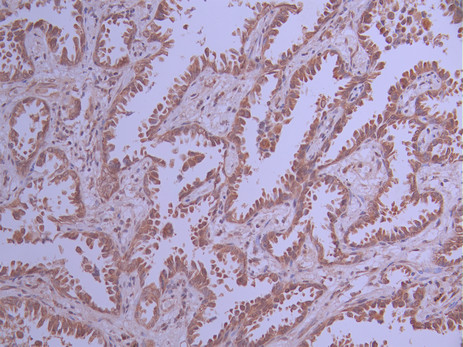
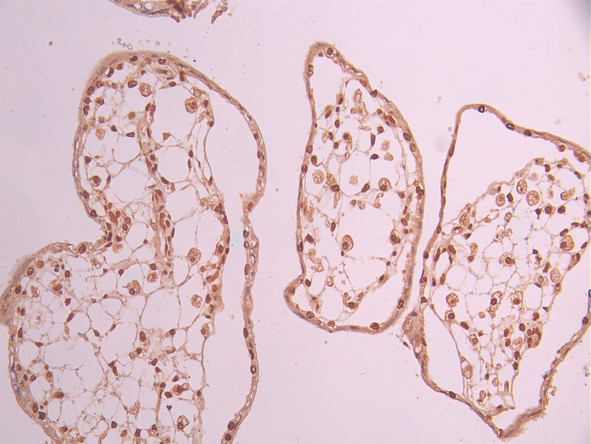
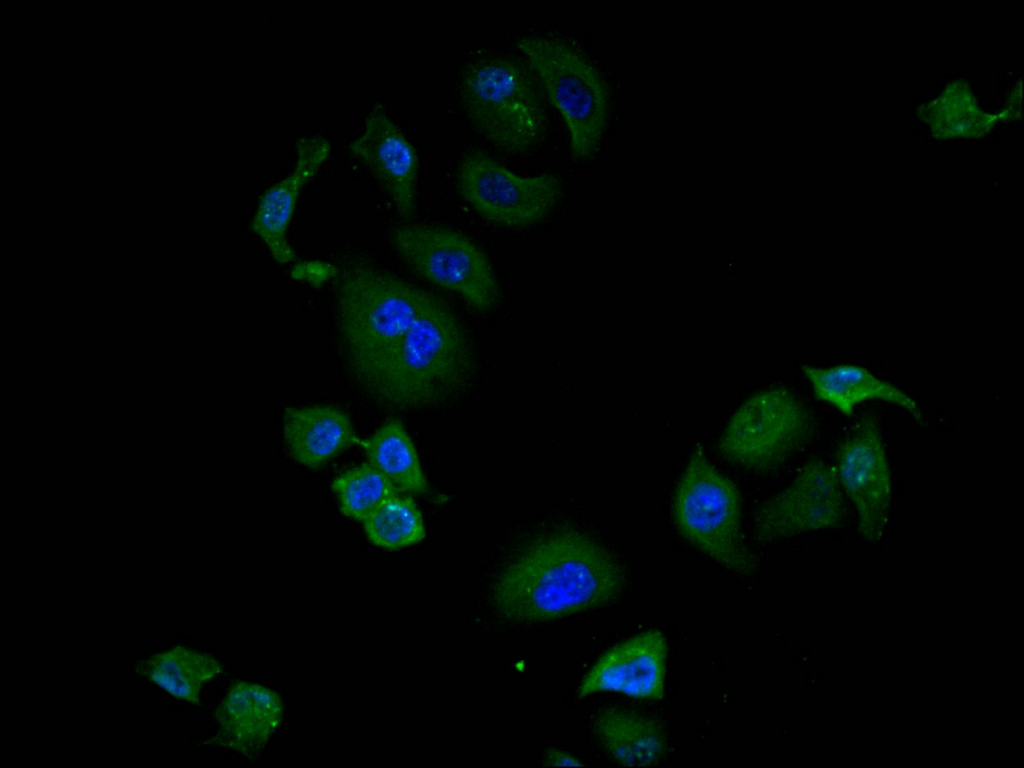
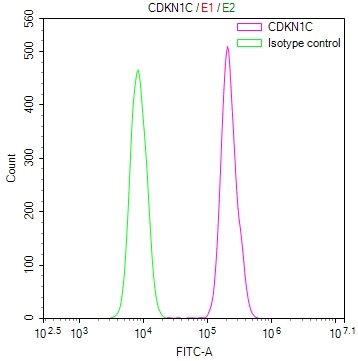
Validation across multiple platforms demonstrates this antibody's versatility in your experimental workflows. Immunohistochemistry studies in paraffin-embedded human tissues reveal clear nuclear staining in both lung cancer and placenta sections at 1:100 dilution using citrate buffer antigen retrieval, making it suitable for both oncology research and developmental biology applications. Immunofluorescence analysis in HeLa cells shows distinct subcellular localization patterns, while flow cytometry validation in the same cell line confirms reliable detection of intracellular CDKN1C with clear separation from isotype control, supporting quantitative expression studies.
Whether investigating cell cycle checkpoint mechanisms, exploring imprinting disorders, or characterizing tumor suppressor pathways in cancer research, this antibody provides a dependable tool for detecting human CDKN1C across tissue sections, cultured cells, and single-cell analyses.
There are currently no reviews for this product.





