
Call us
301-363-4651 (Available 9 a.m. to 5 p.m. CST from Monday to Friday)

| Code | CSB-RA591955A0HU |
| Size | US$210 |
| Order now | |
| Image |
|
| Have Questions? | Leave a Message or Start an on-line Chat |
| Application | Recommended Dilution |
|---|---|
| IHC | 1:50-1:200 |
| FC | 1:50-1:200 |
CHMP3, also known as VPS24 or chromatin-modifying protein 3, serves as an essential component of the ESCRT-III complex, playing a critical role in multivesicular body formation, cytokinetic abscission, and viral budding processes. As a key regulator of membrane remodeling and protein sorting pathways, CHMP3 has emerged as an important target for researchers investigating endosomal trafficking, autophagy, and the mechanisms by which enveloped viruses exploit host cellular machinery for their release.
This recombinant monoclonal antibody, clone 24F6, offers the consistency and reliability that demanding experimental workflows require. Developed using recombinant technology with a defined sequence, this antibody eliminates the lot-to-lot variability that can compromise longitudinal studies and reproducibility. The rabbit host-derived IgG format provides excellent signal amplification while maintaining specificity against human CHMP3.
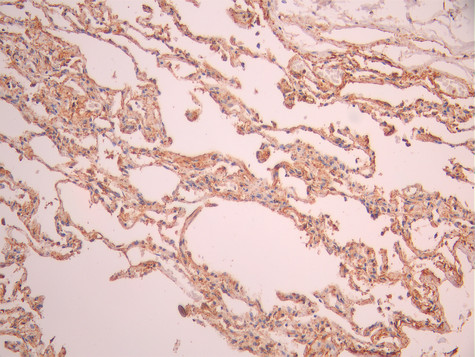
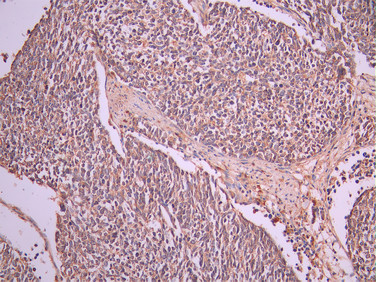
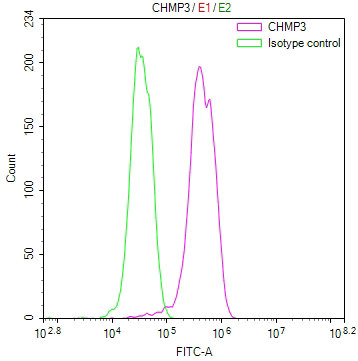
Validation studies demonstrate robust performance across multiple applications. Immunohistochemistry experiments using paraffin-embedded human lung tissue and lung cancer specimens at 1:100 dilution reveal clear target detection following citrate buffer antigen retrieval, enabling researchers to examine CHMP3 expression patterns in both normal and pathological contexts. Flow cytometry analysis using MCF-7 breast cancer cells confirms the antibody's utility for quantitative single-cell studies, with distinct positive population shifts observed compared to isotype controls when cells are fixed and permeabilized.
The antibody is supplied in a stabilized liquid format with glycerol for convenient long-term storage at -20°C or -80°C. Whether investigating ESCRT-mediated membrane dynamics, exploring neuroendocrine differentiation pathways, or characterizing signal transduction mechanisms, this antibody provides a dependable tool for advancing your research objectives.
There are currently no reviews for this product.





