
Call us
301-363-4651 (Available 9 a.m. to 5 p.m. CST from Monday to Friday)

| Code | CSB-RA936751A0HU |
| Size | US$210 |
| Order now | |
| Image |
|
| Have Questions? | Leave a Message or Start an on-line Chat |
| Application | Recommended Dilution |
|---|---|
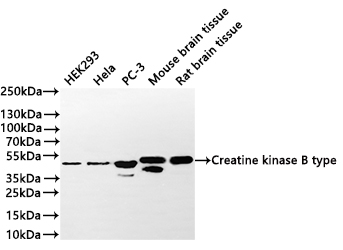
| WB | 1:500-1:2000 |
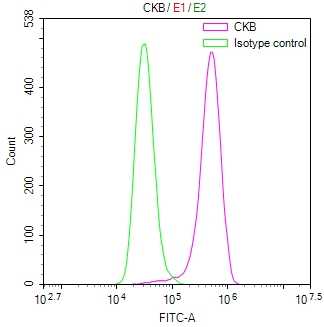
| FC | 1:50-1:200 |
Creatine kinase B-type (CKB) serves as the predominant cytoplasmic isoenzyme responsible for energy homeostasis in tissues with high and fluctuating energy demands, particularly the brain. By catalyzing the reversible transfer of phosphate between ATP and creatine, CKB maintains cellular energy reserves critical for neuronal function, making it an essential marker in neuroscience research, metabolic studies, and investigations of brain-specific pathologies.
This recombinant monoclonal antibody, generated in rabbit against a synthetic peptide derived from human CKB, offers the reproducibility and sequence-defined consistency that demanding experimental workflows require. Unlike traditional hybridoma-derived antibodies, recombinant production ensures lot-to-lot uniformity, allowing researchers to maintain confidence in their results across extended studies and collaborative projects.
Validation studies demonstrate robust performance across multiple applications and species. In Western blot analysis, the antibody successfully detects CKB in human cell lines including HEK293, HeLa, and PC-3, as well as in mouse and rat brain tissue lysates, confirming reliable cross-species reactivity for comparative studies. The observed band size of approximately 48 kDa, slightly higher than the predicted 43 kDa molecular weight, likely reflects post-translational modifications characteristic of the native protein. Flow cytometry validation using HeLa cells shows clear separation between specific staining and isotype control populations, supporting intracellular detection applications.
With validated performance in ELISA, Western blot, and flow cytometry, this antibody provides flexibility for researchers investigating CKB expression in neurological disease models, cellular energy metabolism, or tissue-specific creatine kinase distribution studies. The confirmed cross-species reactivity across human, mouse, and rat samples makes it particularly valuable for translational research requiring consistent detection across preclinical models.
There are currently no reviews for this product.





