
Call us
301-363-4651 (Available 9 a.m. to 5 p.m. CST from Monday to Friday)

| Code | CSB-RA180423A0HU |
| Size | US$210 |
| Order now | |
| Image |
|
| Have Questions? | Leave a Message or Start an on-line Chat |
| Application | Recommended Dilution |
|---|---|
| IHC | 1:50-1:200 |
DDX6 is a DEAD-box RNA helicase that plays essential roles in mRNA metabolism, functioning as a key regulator of cytoplasmic mRNA decay and translational repression. This ATP-dependent helicase localizes to processing bodies (P-bodies) and stress granules, where it participates in mRNA storage and degradation pathways. DDX6 has garnered significant research interest due to its involvement in post-transcriptional gene regulation and its identification as an oncogene (RCK), making it a relevant target for studies spanning RNA biology, cancer research, and cellular stress responses.
This recombinant monoclonal antibody, clone 6D8, offers the reproducibility and consistency that demanding research applications require. Because recombinant antibodies are produced from defined genetic sequences, researchers benefit from lot-to-lot uniformity that eliminates the variability often encountered with traditional hybridoma-derived antibodies. This sequence-defined production ensures that experimental conditions optimized today will yield comparable results in future studies.
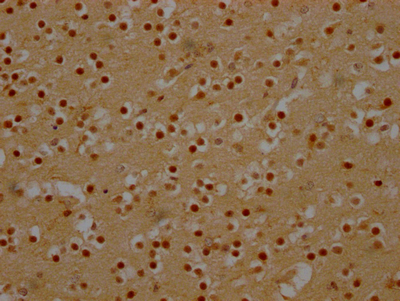
The antibody has been validated for immunohistochemistry applications, with demonstrated performance in paraffin-embedded human brain tissue at dilutions ranging from 1:50 to 1:200. Validation studies using a Leica Bond system with citrate buffer antigen retrieval and HRP-polymer detection confirm reliable target detection in fixed tissue sections. The antibody is also suitable for ELISA applications, providing flexibility across different experimental workflows.
Supplied in a glycerol-containing buffer optimized for long-term stability, this antibody serves researchers investigating epigenetics and nuclear signaling pathways. Its specificity for human DDX6 makes it particularly valuable for studies examining P-body dynamics, mRNA turnover mechanisms, and the broader landscape of post-transcriptional regulation in health and disease contexts.
There are currently no reviews for this product.





