
Call us
301-363-4651 (Available 9 a.m. to 5 p.m. CST from Monday to Friday)

| Code | CSB-RA271553A0HU |
| Size | US$210 |
| Order now | |
| Image |
|
| Have Questions? | Leave a Message or Start an on-line Chat |
| Application | Recommended Dilution |
|---|---|
| IHC | 1:50-1:200 |
Dystrophin is a critical cytoskeletal protein that anchors the intracellular actin network to the extracellular matrix in muscle fibers, forming the dystrophin-associated protein complex essential for maintaining sarcolemmal integrity during contraction. Mutations in the DMD gene result in Duchenne and Becker muscular dystrophies, making dystrophin detection fundamental to neuromuscular disease research, gene therapy development, and stem cell-based regenerative medicine studies.
This recombinant monoclonal antibody, clone 4B10, offers the reproducibility and sequence-defined consistency that dystrophin research demands. Because dystrophin expression analysis often requires longitudinal studies comparing therapeutic interventions or tracking differentiation outcomes, the lot-to-lot uniformity inherent to recombinant production ensures your baseline measurements remain comparable across extended experimental timelines. The antibody was raised in rabbit against a synthetic peptide derived from human dystrophin, providing defined epitope targeting.
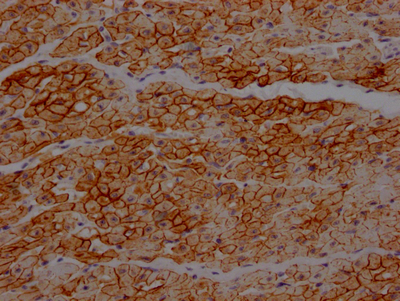
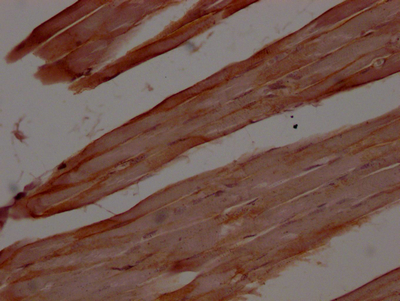
Validation in human tissue sections demonstrates reliable performance in immunohistochemistry applications. Testing in paraffin-embedded human heart tissue and human skeletal muscle tissue at 1:100 dilution using citrate buffer antigen retrieval confirms the antibody's utility for examining dystrophin localization in both cardiac and skeletal muscle contexts. This dual-tissue validation is particularly relevant for researchers investigating the cardiomyopathy component of dystrophinopathies alongside skeletal muscle pathology. The recommended working range of 1:50 to 1:200 provides flexibility for optimization across different tissue preparations and detection systems.
Whether you are characterizing dystrophin restoration in gene-edited cell lines, assessing therapeutic vector efficacy in tissue sections, or investigating dystrophin-associated signaling pathways, this antibody supports workflows spanning neuroscience, signal transduction research, and stem cell differentiation studies.
There are currently no reviews for this product.





