
Call us
301-363-4651 (Available 9 a.m. to 5 p.m. CST from Monday to Friday)

| Code | CSB-RA249552A0HU |
| Size | US$210 |
| Order now | |
| Image |
|
| Have Questions? | Leave a Message or Start an on-line Chat |
| Application | Recommended Dilution |
|---|---|
| WB | 1:500-1:5000 |
| IHC | 1:50-1:200 |
| IF | 1:50-1:200 |
| FC | 1:50-1:200 |
EIF3B serves as a critical scaffolding subunit of the eukaryotic translation initiation factor 3 complex, the largest of the initiation factors essential for cap-dependent protein synthesis. This subunit plays a fundamental role in ribosome recruitment to mRNA and is implicated in translational control mechanisms that influence cell proliferation, stress responses, and oncogenic pathways. Researchers investigating protein synthesis regulation, cancer biology, and cellular stress mechanisms will find EIF3B an informative target for understanding translational dysregulation in disease states.
This recombinant monoclonal antibody, clone 7E3, offers the reproducibility and consistency that demanding experimental workflows require. Produced using recombinant technology with a defined sequence, it eliminates the lot-to-lot variability that can compromise longitudinal studies and multi-site collaborations. The rabbit host and monoclonal nature ensure high specificity for human EIF3B detection.
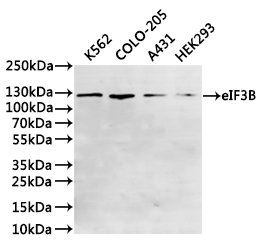
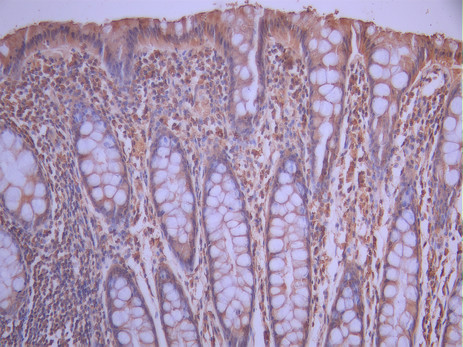
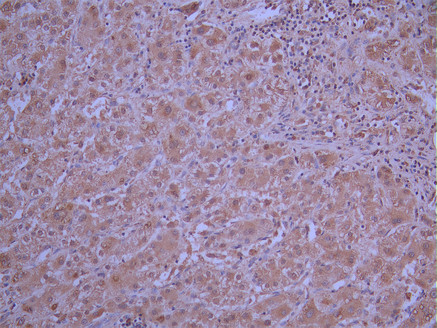
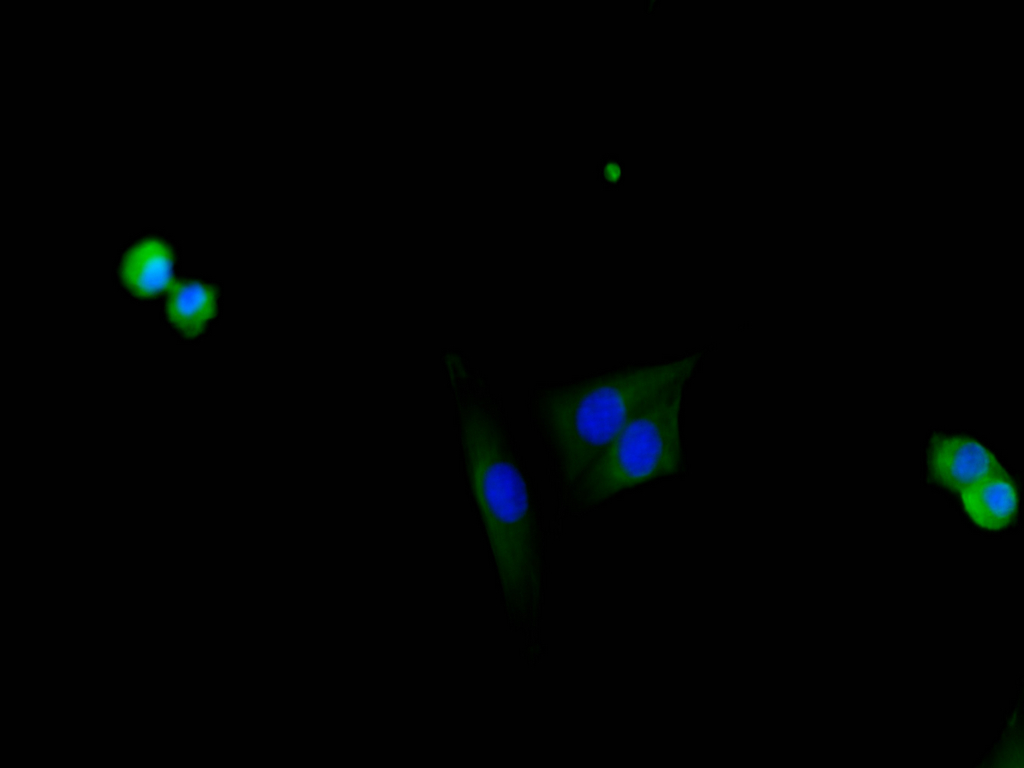
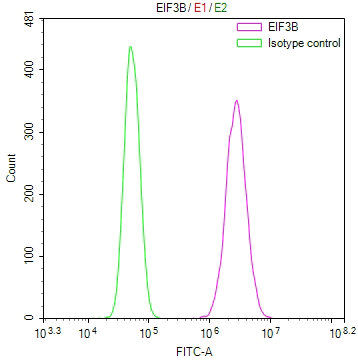
Validation across multiple platforms demonstrates genuine experimental flexibility. Western blot analysis detects a band at 116 kDa in K562, COLO-205, A431, and HEK293 cell lysates, with the observed molecular weight exceeding the predicted 92 kDa likely due to post-translational modifications such as glycosylation or phosphorylation. Immunohistochemistry has been validated in paraffin-embedded human small intestine and liver cancer tissue sections using citrate buffer antigen retrieval. Immunofluorescence staining successfully localizes the protein in NIH-3T3 cells, while flow cytometry analysis in 786-O renal carcinoma cells confirms utility for single-cell quantification studies.
This antibody supports investigations into translational control in cancer progression, metabolic regulation, and cellular stress responses where EIF3B function may be altered or therapeutically targetable.
There are currently no reviews for this product.





