ENTPD5 Recombinant Monoclonal Antibody

Code CSB-RA208179A0HU
Size US$210
Order now
Image
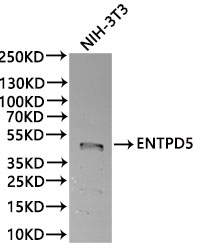
  • Western Blot
    Positive WB detected in: NIH-3T3 whole cell lysate(30µg)
    All lanes: ENTPD5 antibody at 1:1000
    Secondary
    Goat polyclonal to rabbit IgG at 1/40000 dilution
    Predicted band size:44 kDa
    Observed band size: 48 kDa
    Exposure time:3min
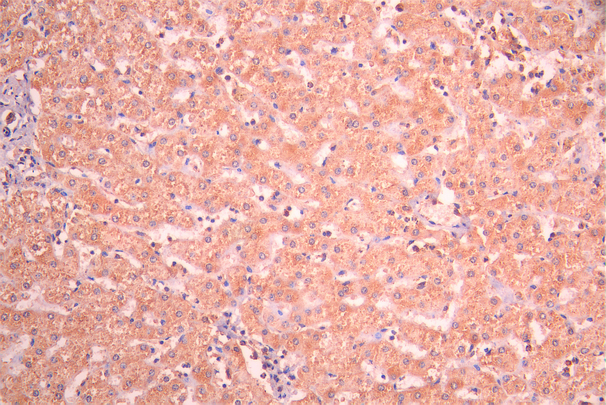
  • IHC image of CSB-RA208179A0HU diluted at 1:100 and staining in paraffin-embedded human liver tissue performed on a Leica BondTM system. After dewaxing and hydration, antigen retrieval was mediated by high pressure in a citrate buffer (pH 6.0). Section was blocked with 10% normal goat serum 30min at RT. Then primary antibody (1% BSA) was incubated at 4°C overnight. The primary is detected by a Goat anti-rabbit polymer IgG labeled by HRP and visualized using 0.05% DAB.
  • Overlay Peak curve showing HepG2 cells stained with CSB-RA208179A0HU (red line) at 1:100. The cells were fixed in 4% formaldehyde and permeated by 0.2% TritonX-100 for 10min. Then 10% normal goat serum to block non-specific protein-protein interactions followed by the antibody (1ug/1*106cells) for 45min at 4℃. The secondary antibody used was FITC-conjugated goat anti-rabbit IgG (H+L) at 1/200 dilution for 35min at 4℃.Control antibody (green line) was Rabbit IgG (1ug/1*106cells) used under the same conditions. Acquisition of >10,000 events was performed.
Have Questions? Leave a Message or Start an on-line Chat

Product Details

Uniprot No.
Target Names
ENTPD5
Alternative Names
Ectonucleoside triphosphate diphosphohydrolase 5 (NTPDase 5) (EC 3.6.1.6) (CD39 antigen-like 4) (ER-UDPase) (Guanosine-diphosphatase ENTPD5) (GDPase ENTPD5) (EC 3.6.1.42) (Nucleoside diphosphatase) (Uridine-diphosphatase ENTPD5) (UDPase ENTPD5), ENTPD5, CD39L4 PCPH
Species Reactivity
Human, Mouse
Immunogen
A synthesized peptide derived from Human ENTPD5 protein
Immunogen Species
Homo sapiens (Human)
Conjugate
Non-conjugated
Clonality
Monoclonal
Isotype
Rabbit IgG
Clone No.
18H12
Purification Method
Affinity-chromatography
Concentration
It differs from different batches. Please contact us to confirm it.
Buffer
Rabbit IgG in 10mM phosphate buffered saline , pH 7.4, 150mM sodium chloride, 0.05% BSA, 0.02% sodium azide and 50% glycerol.
Form
Liquid
Tested Applications
ELISA, WB, IHC, FC
Recommended Dilution
Application Recommended Dilution
WB 1:500-1:5000
IHC 1:50-1:200
FC 1:20-1:200
Troubleshooting and FAQs
Storage
Upon receipt, store at -20°C or -80°C. Avoid repeated freeze.
Lead Time
Basically, we can dispatch the products out in 1-3 working days after receiving your orders. Delivery time maybe differs from different purchasing way or location, please kindly consult your local distributors for specific delivery time.
Usage
For Research Use Only. Not for use in diagnostic or therapeutic procedures.
Customer Reviews and Q&A

 Customer Reviews

There are currently no reviews for this product.

Submit a Review here

Target Background

Function
Uridine diphosphatase (UDPase) that promotes protein N-glycosylation and ATP level regulation. UDP hydrolysis promotes protein N-glycosylation and folding in the endoplasmic reticulum, as well as elevated ATP consumption in the cytosol via an ATP hydrolysis cycle. Together with CMPK1 and AK1, constitutes an ATP hydrolysis cycle that converts ATP to AMP and results in a compensatory increase in aerobic glycolysis. The nucleotide hydrolyzing preference is GDP > IDP > UDP, but not any other nucleoside di-, mono- or triphosphates, nor thiamine pyrophosphate. Plays a key role in the AKT1-PTEN signaling pathway by promoting glycolysis in proliferating cells in response to phosphoinositide 3-kinase (PI3K) signaling.
Gene References into Functions
  1. ENTPD5 is a mediator of mutant p53 gain of function activity in clonogenic growth, architectural tissue remodeling, migration, invasion, and lung colonization in lung cancer and its mouse models PMID: 27956623
  2. Results suggest that ENTPD5 affects lung cancer apoptosis via Caspase 3 pathway, and can be potentially used to monitor prognosis or to guide appropriate therapeutic regimens. PMID: 25794010
  3. The main point of this review is to integrate the findings and proposed theories about the role played by NTPDase5/mt-PCPH in cancer progression, considering that these proteins have been suggested as potential early diagnostic tools and therapy targets. PMID: 25045656
  4. These results strongly suggest that the mt-PCPH ( ENTPD5)oncoprotein may regulate the cellular energy levels and subsequent chemoresistance by an NTPDase-independent mechanism PMID: 23921441
  5. Upregulation of ENTPD5 is associated with altered metabolism in gliomablastoma multiforme. PMID: 22992974
  6. The elevation of ENTPD5 activity therefore protects AKT-active cancer cells from protein-overloading-induced endoplasmic reticulum stress and the resulting growth arrest and apoptosis. PMID: 22169232
  7. Study reports that ENTPD5, an endoplasmic reticulum (ER) enzyme, is upregulated in cell lines and primary human tumor samples with active AKT. PMID: 21074248
  8. deregulation and loss of expression in the progression of laryngeal neoplasia [PCPH] PMID: 12489110
  9. Results positively identify PCPH as a good early molecular marker for testicular neoplasms, and strongly indicate that immunodetection of truncated PCPH polypeptides may be a useful diagnostic tool for testicular germ cell tumors. PMID: 16465363
  10. PCPH/ENTPD5 expression enhances the invasiveness of human prostate cancer cells by a protein kinase C delta-dependent mechanism PMID: 18006831
  11. Findings identify PCPH as an important participant in the chemotherapy response of prostate cancer cells and establish a role for PCPH-PKCalpha-Bcl-2 functional interactions in the drug response process. PMID: 19117992

Show More

Hide All

Subcellular Location
Endoplasmic reticulum. Secreted.
Protein Families
GDA1/CD39 NTPase family
Tissue Specificity
Expressed in adult liver, kidney, prostate, testis and colon. Much weaker expression in other tissues.
Database Links

HGNC: 3367

OMIM: 603162

KEGG: hsa:957

STRING: 9606.ENSP00000335246

UniGene: Hs.655070

icon of phone
Call us
301-363-4651 (Available 9 a.m. to 5 p.m. CST from Monday to Friday)
icon of address
Address
7505 Fannin St., Ste 610, Room 7 (CUBIO Innovation Center), Houston, TX 77054, USA
icon of social media
Join us with

Subscribe newsletter

Leave a message

* To protect against spam, please pass the CAPTCHA test below.
CAPTCHA verification
© 2007-2026 CUSABIO TECHNOLOGY LLC All rights reserved. 鄂ICP备15011166号-1
Place an order now

I. Product details

*
*
*
*

II. Contact details

*
*

III. Ship To

*
*
*
*
*
*
*

IV. Bill To

*
*
*
*
*
*
*
*



