
Call us
301-363-4651 (Available 9 a.m. to 5 p.m. CST from Monday to Friday)

| Code | CSB-RA007916MA1HU |
| Size | US$210 |
| Order now | |
| Image |
|
| Have Questions? | Leave a Message or Start an on-line Chat |
| Application | Recommended Dilution |
|---|---|
| ELISA | 1:5000-1:50000 |
Coagulation factor XI plays a central role in the intrinsic pathway of blood coagulation, where it serves as a zymogen that becomes activated to factor XIa upon contact activation. This serine protease then amplifies the coagulation cascade by activating factor IX, making it a compelling target for researchers investigating thrombosis, hemostasis disorders, and the development of anticoagulant therapies. The growing interest in factor XI as a safer antithrombotic target—potentially offering protection against pathological clotting without significantly increasing bleeding risk—has intensified demand for reliable detection tools in this research space.
This recombinant monoclonal antibody against human F11, produced as clone 17D2 with a human IgG1 isotype, offers the consistency and reproducibility that mechanistic coagulation studies require. Because recombinant antibodies are generated from defined sequences rather than hybridoma supernatants, researchers benefit from lot-to-lot uniformity that supports longitudinal studies and ensures experimental reproducibility across collaborative projects.
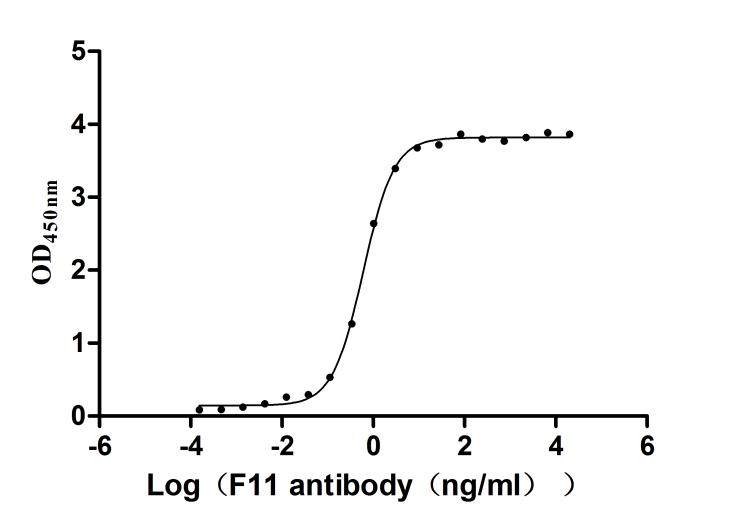
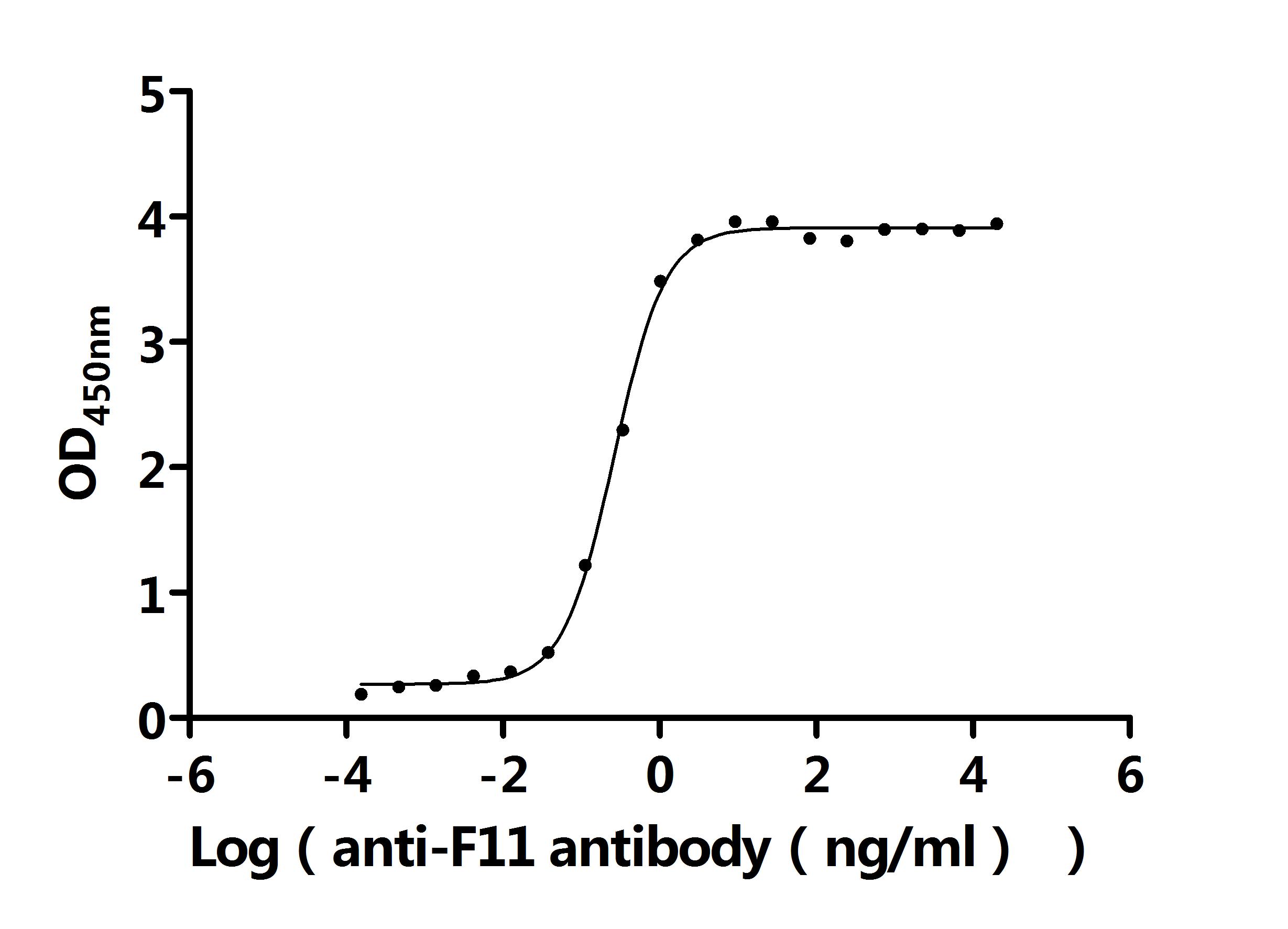
Functional ELISA validation demonstrates exceptional binding performance, with EC50 values of 0.24–0.28 ng/mL against human F11 and 0.57–0.64 ng/mL against Macaca mulatta F11. This cross-species reactivity between human and rhesus macaque targets makes the antibody particularly valuable for translational research programs where preclinical primate models inform human therapeutic development. The recommended ELISA dilution range of 1:5,000 to 1:50,000 reflects the antibody's high affinity, allowing researchers to optimize sensitivity while conserving reagent.
Supplied in a glycerol-based PBS buffer for stability, this affinity-purified antibody serves researchers exploring coagulation biology, thrombotic disease mechanisms, and novel anticoagulant development strategies.
There are currently no reviews for this product.





