
Call us
301-363-4651 (Available 9 a.m. to 5 p.m. CST from Monday to Friday)

| Code | CSB-RA246102A0HU |
| Size | US$210 |
| Order now | |
| Image |
|
| Have Questions? | Leave a Message or Start an on-line Chat |
| Application | Recommended Dilution |
|---|---|
| WB | 1:500-1:5000 |
| IHC | 1:50-1:200 |
| IP | 1:200-1:1000 |
FOXA1, also known as hepatocyte nuclear factor 3-alpha, is a pioneering transcription factor that plays a critical role in chromatin remodeling and gene regulation. This forkhead box protein opens condensed chromatin to enable other transcription factors to access DNA, making it essential for developmental processes and hormone receptor signaling. FOXA1 has garnered significant research attention due to its involvement in breast and prostate cancer progression, where it modulates estrogen and androgen receptor activity, respectively.
This recombinant monoclonal antibody, clone 3B2, offers the reproducibility and consistency that demanding research applications require. Because it is produced from a defined genetic sequence rather than traditional hybridoma methods, you can expect uniform performance across experiments and between lots, eliminating a common source of variability in long-term studies.
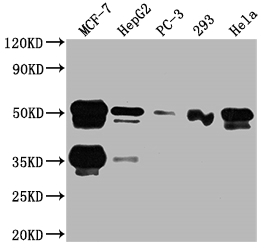
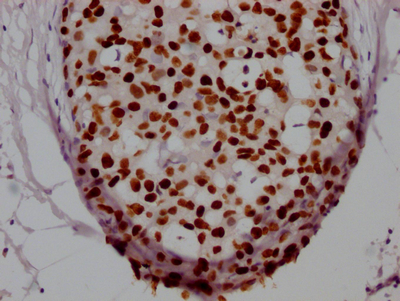
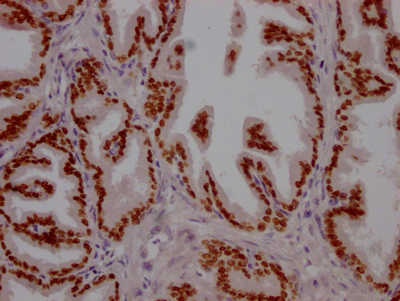
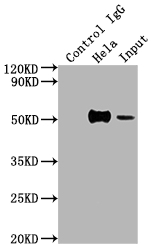
Validation data demonstrates robust performance across multiple experimental platforms. Western blot analysis confirms detection of FOXA1 at the expected 50 kDa molecular weight across a diverse panel of human cell lines, including MCF-7, HepG2, PC-3, 293, and HeLa lysates, providing confidence when working with various cellular models. Immunohistochemistry staining has been validated in paraffin-embedded human breast cancer and prostate tissue sections, directly relevant for researchers investigating FOXA1's role in hormone-responsive malignancies. Immunoprecipitation capability has been confirmed in HeLa lysates, enabling protein interaction studies and complex isolation workflows.
Whether you are investigating FOXA1's pioneering function in chromatin accessibility, its cooperative interactions with nuclear hormone receptors, or its dysregulation in cancer, this antibody provides a reliable tool for epigenetics and nuclear signaling research across biochemical, cellular, and tissue-based applications.
There are currently no reviews for this product.





