
Call us
301-363-4651 (Available 9 a.m. to 5 p.m. CST from Monday to Friday)

| Code | CSB-RA357302MA1HU |
| Size | US$210 |
| Order now | |
| Image |
|
| Have Questions? | Leave a Message or Start an on-line Chat |
| Application | Recommended Dilution |
|---|---|
| WB | 1:500-1:2000 |
| IHC | 1:50-1:200 |
| IF | 1:50-1:200 |
| FC | 1:50-1:200 |
HSPA1A, also known as HSP70-1 or HSP72, is a stress-inducible member of the heat shock protein 70 family that plays a central role in cellular proteostasis. This molecular chaperone assists in protein folding, prevents aggregation of misfolded proteins, and facilitates the degradation of damaged polypeptides. HSPA1A expression is rapidly upregulated in response to heat shock, oxidative stress, and other cellular insults, making it a critical marker in studies of stress response, cancer biology, and neurodegenerative disease research.
This recombinant monoclonal antibody, clone 10H11, offers the reproducibility and batch consistency that demanding experimental workflows require. Because recombinant antibodies are produced from defined sequences rather than hybridoma supernatants, researchers can expect uniform performance across experiments and over time, eliminating concerns about lot-to-lot variability that can compromise longitudinal studies.
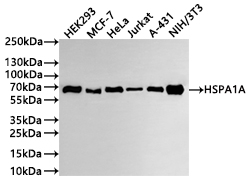
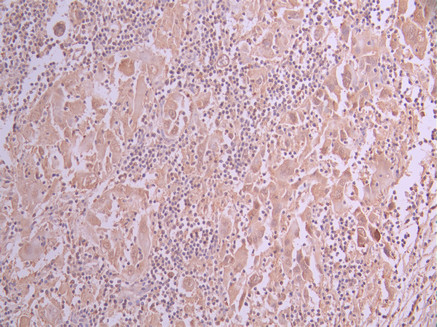
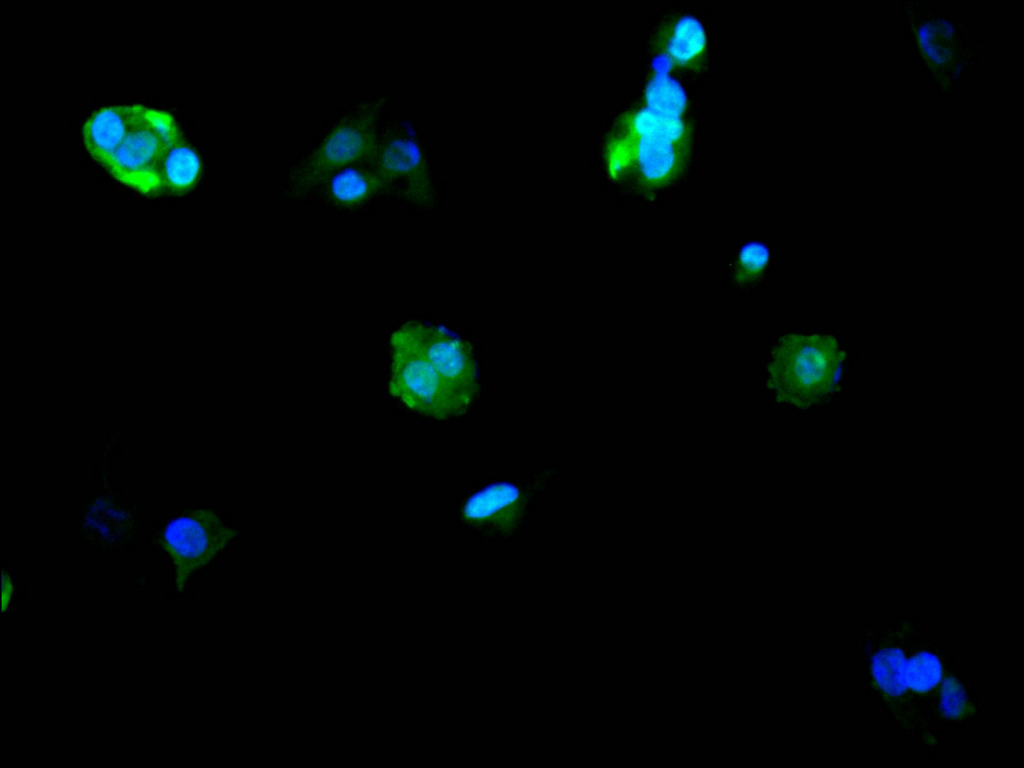
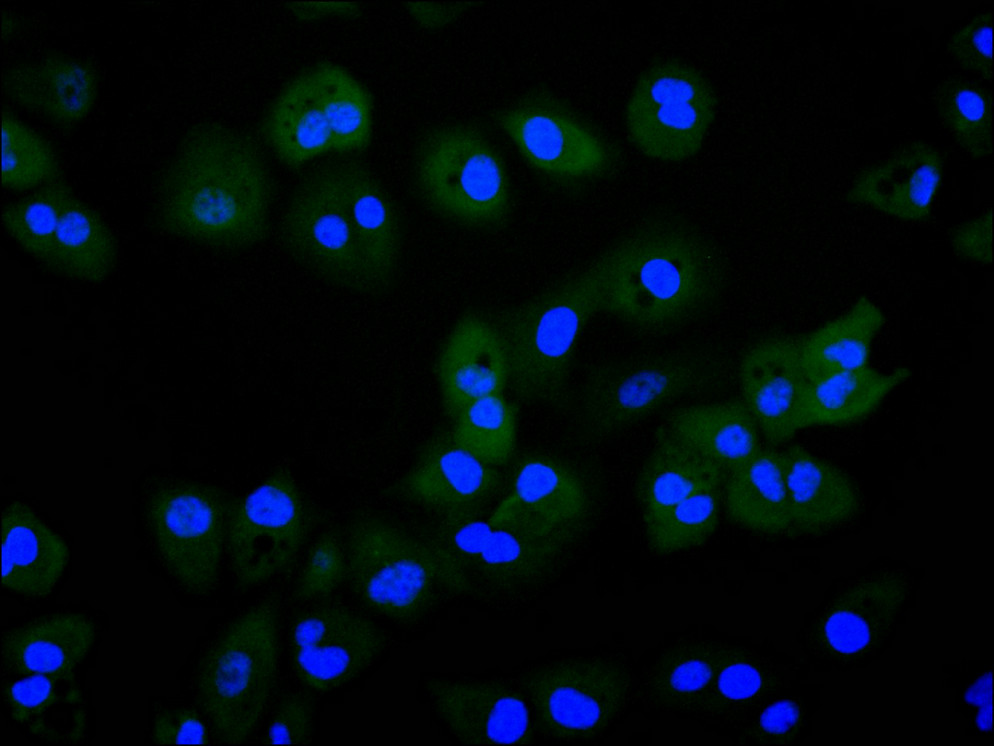
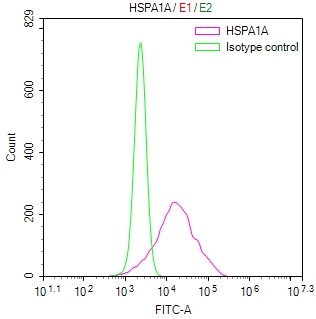
Validation data demonstrates robust performance across multiple applications. In Western blot analysis, the antibody detects a clean 70 kDa band matching the predicted molecular weight across diverse human cell lines including HEK293, MCF-7, HeLa, Jurkat, and A-431, as well as mouse NIH/3T3 cells, confirming cross-species reactivity with both human and mouse samples. Immunohistochemistry staining in paraffin-embedded human liver cancer tissue shows specific signal with citrate buffer antigen retrieval. Immunofluorescence studies in HepG2 and A549 cells reveal characteristic cytoplasmic localization, while flow cytometry analysis in HeLa cells demonstrates clear separation from isotype control.
This versatile antibody supports researchers investigating cellular stress responses, tumor microenvironment biology, and protein quality control mechanisms across multiple experimental platforms.
There are currently no reviews for this product.





