
Call us
301-363-4651 (Available 9 a.m. to 5 p.m. CST from Monday to Friday)

| Code | CSB-RA802195A0HU |
| Size | US$210 |
| Order now | |
| Image |
|
| Have Questions? | Leave a Message or Start an on-line Chat |
| Application | Recommended Dilution |
|---|---|
| IHC | 1:50-1:200 |
Huntingtin is a large, multifunctional protein that plays essential roles in neuronal development, intracellular transport, and transcriptional regulation. Mutations in the HTT gene, specifically the expansion of CAG trinucleotide repeats, cause Huntington's disease, a devastating neurodegenerative disorder characterized by progressive motor dysfunction, cognitive decline, and psychiatric symptoms. Understanding huntingtin's normal cellular functions and how polyglutamine expansion leads to neuronal toxicity remains a central focus in neuroscience research, making reliable detection tools indispensable for investigators working in this field.
This recombinant monoclonal antibody, clone 6F2, offers the reproducibility and consistency that demanding research applications require. Because recombinant antibodies are produced from defined genetic sequences rather than traditional hybridoma methods, you can expect uniform performance across different lots, eliminating the variability that can compromise longitudinal studies or multi-site collaborations. The antibody is raised in rabbit against a synthetic peptide derived from human huntingtin and has been validated for human sample reactivity.
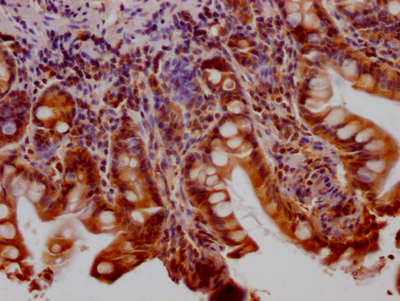
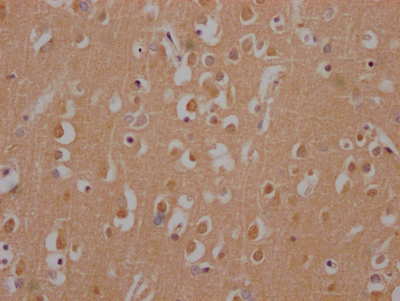
Immunohistochemistry validation demonstrates robust performance across distinct tissue contexts. Testing in paraffin-embedded human brain tissue confirms the antibody's utility for studying huntingtin expression in its most disease-relevant organ, while additional validation in human small intestine tissue indicates reliable detection in peripheral tissues where huntingtin is also expressed. Both applications performed well at 1:100 dilution using citrate buffer antigen retrieval, providing you with established starting conditions for your own optimization.
Whether you are investigating huntingtin aggregation patterns, mapping expression changes across disease stages, or exploring the protein's functions beyond the nervous system, this antibody provides a dependable foundation for your immunohistochemistry workflows in neuroscience and Huntington's disease research.
There are currently no reviews for this product.





