
Call us
301-363-4651 (Available 9 a.m. to 5 p.m. CST from Monday to Friday)

| Code | CSB-RA194560A0HU |
| Size | US$210 |
| Order now | |
| Image |
|
| Have Questions? | Leave a Message or Start an on-line Chat |
| Application | Recommended Dilution |
|---|---|
| WB | 1:500-1:5000 |
| IHC | 1:50-1:200 |
The immunoglobulin kappa constant region represents a fundamental component of antibody structure, serving as the constant domain of kappa light chains that pair with heavy chains to form functional immunoglobulins. As kappa light chains constitute the majority of light chains in human antibodies, IGKC detection provides researchers with a valuable tool for studying B cell biology, plasma cell disorders, and immunoglobulin expression patterns across diverse experimental contexts.
This recombinant monoclonal antibody, generated in rabbit host against a synthetic peptide derived from human IGKC, offers the reproducibility advantages inherent to recombinant technology. Because the antibody sequence is defined and production occurs through controlled recombinant expression, researchers can expect consistent performance across different lots, eliminating the variability concerns that can complicate long-term studies or multi-site collaborations.
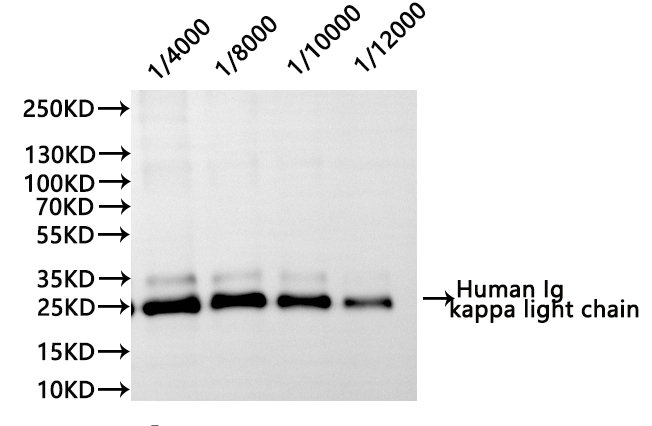
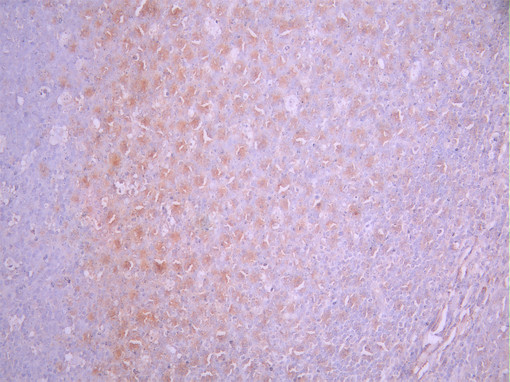
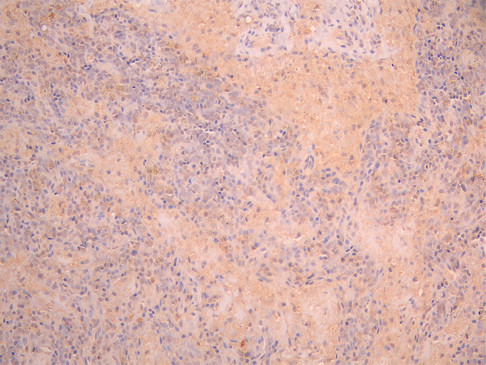
Validation studies demonstrate reliable performance across multiple applications. In western blot analysis of human serum at 1:1000 dilution, the antibody detects a band at approximately 25 kDa rather than the predicted 12 kDa molecular weight. This size difference reflects the typical observation of light chains under non-reducing conditions or as part of larger complexes, and researchers should consider their sample preparation when interpreting results. Immunohistochemistry validation in paraffin-embedded human tonsil and lymph node tissues at 1:100 dilution shows specific staining patterns consistent with B cell-rich regions, using citrate buffer antigen retrieval on automated Leica Bond systems.
The antibody's compatibility with ELISA, western blot, and immunohistochemistry workflows provides flexibility for immunology research programs investigating humoral immunity, B cell development, or plasma cell neoplasms where kappa light chain detection serves as an essential analytical parameter.
There are currently no reviews for this product.





