
Call us
301-363-4651 (Available 9 a.m. to 5 p.m. CST from Monday to Friday)

| Code | CSB-RA011892MA1HU |
| Size | $49.9 |
| Order now | |
| Promotion |

|
| Image |
|
| Have Questions? | Leave a Message or Start an on-line Chat |
| Application | Recommended Dilution |
|---|---|
| IHC | 1:50-1:200 |
| FC | 1:50-1:200 |
Integrin beta-8 plays a distinctive role among integrin family members, primarily functioning as a receptor for latent TGF-beta activation through its exclusive pairing with the alpha-v subunit. This specialized function positions ITGB8 as a critical regulator of TGF-beta bioavailability in tissues, with significant implications for developmental biology, fibrosis research, and tumor microenvironment studies. The protein's expression patterns in epithelial and neuronal tissues make it particularly relevant for investigators exploring tissue homeostasis and pathological remodeling processes.
This recombinant monoclonal antibody, clone 30G12, offers the reproducibility advantages inherent to sequence-defined production. Unlike traditional hybridoma-derived antibodies, recombinant manufacturing ensures consistent performance across lots, allowing researchers to establish reliable protocols without the variability that can complicate longitudinal studies or multi-site collaborations. The human IgG1 isotype format and affinity-chromatography purification contribute to a reagent suitable for demanding experimental workflows.
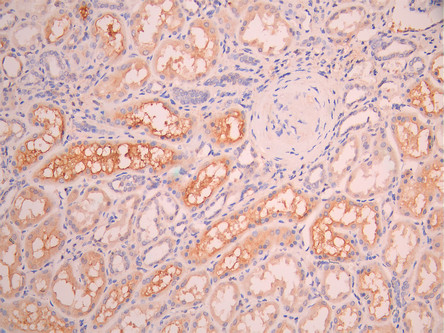
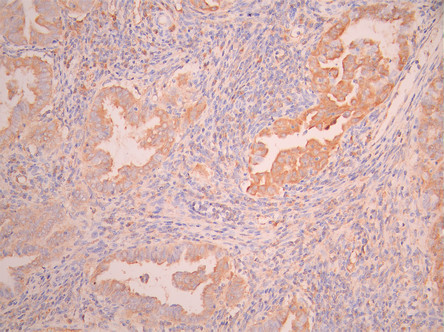
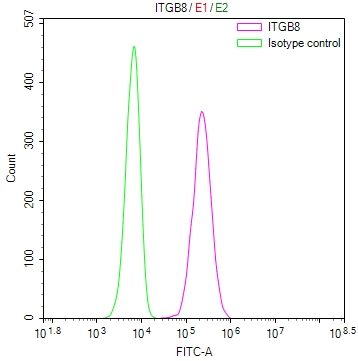
Validation studies demonstrate robust performance across multiple platforms. Immunohistochemistry applications have been confirmed in paraffin-embedded human kidney tissue and human endometrial cancer specimens at dilutions of 1:50 to 1:200, enabling detection in both normal and pathological contexts. Flow cytometry validation using 786-O renal carcinoma cells shows clear positive signal separation from isotype control, supporting cell surface detection studies at comparable dilutions.
This antibody serves researchers investigating integrin-mediated TGF-beta activation, epithelial biology, and cancer progression. The demonstrated performance in both tissue sections and live cell analysis provides flexibility for studies examining ITGB8 expression patterns, from archival clinical specimens to functional cell-based assays exploring integrin biology in disease contexts.
There are currently no reviews for this product.





