Il1rl2 Recombinant Monoclonal Antibody

Code CSB-RA875357MA1MO
Size US$210
Order now
Image
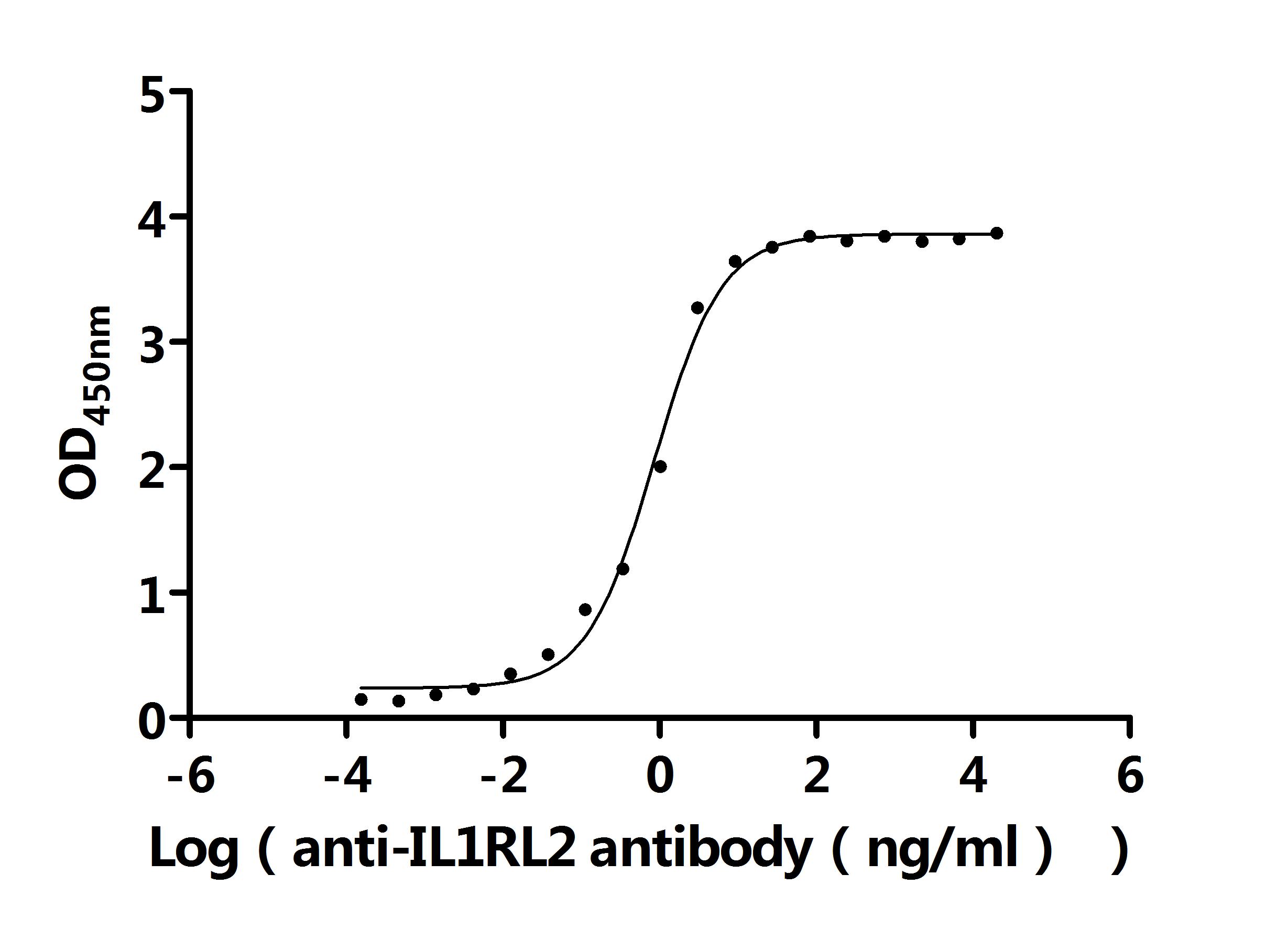
  • The Binding Activity of Mouse Il1rl2 with Anti-Il1rl2 Recombinant Antibody


    Activity: Measured by its binding ability in a functional ELISA. Immobilized Mouse Il1rl2 (CSB-MP875357MO) at 2 μg/mL can bind Anti-Il1rl2 recombinant antibody. The EC50 is 0.6983-1.037 ng/mL.
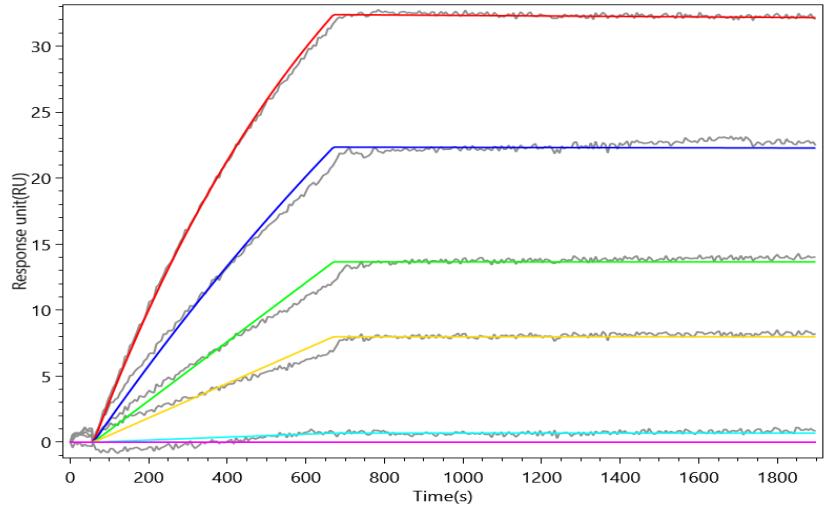
  • The Binding Activity of Mouse Il1rl2 with Anti-IL1RL2 Recombinant Antibody

    Activity:IL1RL2 Recombinant Monoclonal Antibody captured on Protein A Chip can bind Recombinant Mouse Il1rl2 (CSB-MP875357MO) protein with an affinity constant of 0.236 nM as detected by MetaSPR Assay (WeSPRTM 200).
Have Questions? Leave a Message or Start an on-line Chat

Product Details

Uniprot No.
Target Names
Alternative Names
Interleukin-1 receptor-like 2 (IL-36 receptor) (Interleukin-1 receptor-related protein 2) (IL-1Rrp2) (IL1R-rp2), Il1rl2
Species Reactivity
Mouse
Immunogen
Recombinant Mouse Il1rl2 protein
Immunogen Species
Mus musculus (Mouse)
Conjugate
Non-conjugated
Clonality
Monoclonal
Isotype
hIgG1
Clone No.
9E5
Purification Method
Affinity-chromatography
Concentration
It differs from different batches. Please contact us to confirm it.
Buffer
Preservative: 0.03% Proclin 300
Constituents: 50% Glycerol, 0.01M PBS, PH 7.4
Form
Liquid
Tested Applications
ELISA, SPR
Recommended Dilution
Application Recommended Dilution
ELISA 1:1000-1:10000
Protocols
Troubleshooting and FAQs
Storage
Upon receipt, store at -20°C or -80°C. Avoid repeated freeze.
Lead Time
Basically, we can dispatch the products out in 1-3 working days after receiving your orders. Delivery time maybe differs from different purchasing way or location, please kindly consult your local distributors for specific delivery time.
Usage
For Research Use Only. Not for use in diagnostic or therapeutic procedures.
Customer Reviews and Q&A

 Customer Reviews

There are currently no reviews for this product.

Submit a Review here

Target Background

Function
Receptor for interleukin-36 (IL36A, IL36B and IL36G). After binding to interleukin-36 associates with the coreceptor IL1RAP to form the interleukin-36 receptor complex which mediates interleukin-36-dependent activation of NF-kappa-B, MAPK and other pathways. The IL-36 signaling system is thought to be present in epithelial barriers and to take part in local inflammatory response; it is similar to the IL-1 system. Seems to be involved in skin inflammatory response by induction of the IL-23/IL-17/IL-22 pathway.
Gene References into Functions
  1. IL-36R likely contributes to acute kidney injury pathogenesis through NF-kB activity and IL-6 and TNF-a upregulation. PMID: 29241623
  2. these findings reveal a fundamental contribution for the IL-36/IL-36R axis in regulating the Treg-Th9 cell balance with broad implications for Th cell-mediated disorders, such as inflammatory bowel diseases and particularly ulcerative colitis PMID: 28327619
  3. IL-36R-deficient mice were protected from influenza virus-induced lung injury and mortality PMID: 27966554
  4. Data show that Interleukin-36 receptor (IL-36R)-deficient fibroblast-like synoviocytes (FLS) had a limited capacity to support plasma cells (PC) survival compared to wild-type FLS. PMID: 28857172
Subcellular Location
Membrane; Single-pass type I membrane protein.
Protein Families
Interleukin-1 receptor family
Tissue Specificity
Expressed in bone marrow-derived dendritic cells, splenic CD4(+) T-cells, bone marrow-derived macrophages and bone marrow-derived neutrophils.
Database Links
icon of phone
Call us
301-363-4651 (Available 9 a.m. to 5 p.m. CST from Monday to Friday)
icon of address
Address
7505 Fannin St., Ste 610, Room 7 (CUBIO Innovation Center), Houston, TX 77054, USA
icon of social media
Join us with

Subscribe newsletter

Leave a message

* To protect against spam, please pass the CAPTCHA test below.
CAPTCHA verification
© 2007-2026 CUSABIO TECHNOLOGY LLC All rights reserved. 鄂ICP备15011166号-1
Place an order now

I. Product details

*
*
*
*

II. Contact details

*
*

III. Ship To

*
*
*
*
*
*
*

IV. Bill To

*
*
*
*
*
*
*
*



