
Call us
301-363-4651 (Available 9 a.m. to 5 p.m. CST from Monday to Friday)

| Code | CSB-RA130887A0HU |
| Size | US$210 |
| Order now | |
| Image |
|
| Have Questions? | Leave a Message or Start an on-line Chat |
| Application | Recommended Dilution |
|---|---|
| WB | 1:500-1:5000 |
| IHC | 1:50-1:200 |
| IF | 1:50-1:200 |
| FC | 1:50-1:200 |
KHDRBS1, also known as Sam68 (Src-associated in mitosis 68 kDa protein), is a multifunctional RNA-binding protein that plays a central role in signal transduction pathways. As a GAP-associated tyrosine phosphoprotein, KHDRBS1 links receptor tyrosine kinase signaling to RNA metabolism, influencing alternative splicing, mRNA stability, and translation. Its involvement in cell cycle regulation and its association with Src kinase activity make it a compelling target for researchers investigating oncogenic signaling networks and post-transcriptional gene regulation.
This recombinant monoclonal antibody, clone 9F10, offers the reproducibility and sequence-defined consistency that demanding experimental workflows require. Produced in rabbit and affinity-purified, the recombinant format ensures lot-to-lot reliability, allowing you to confidently compare results across extended studies without concerns about antibody variability.
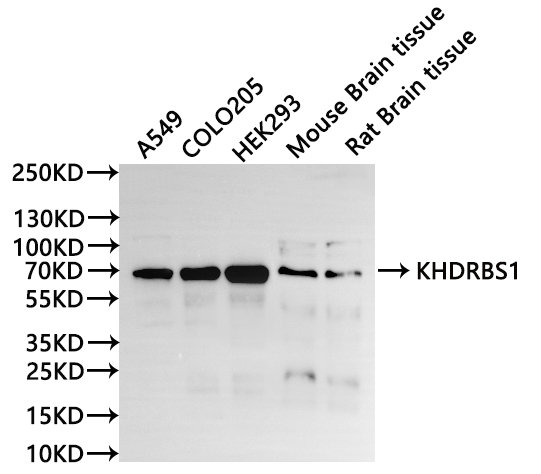
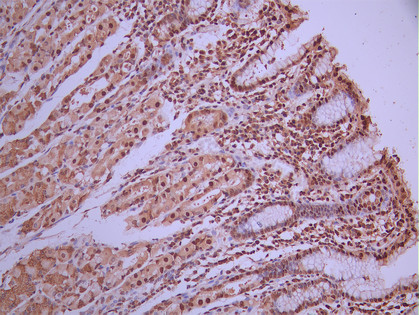
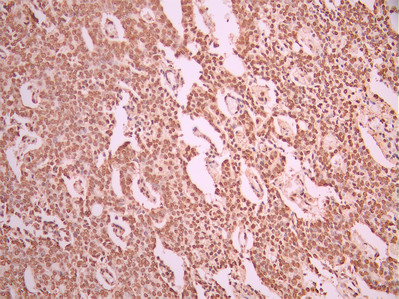
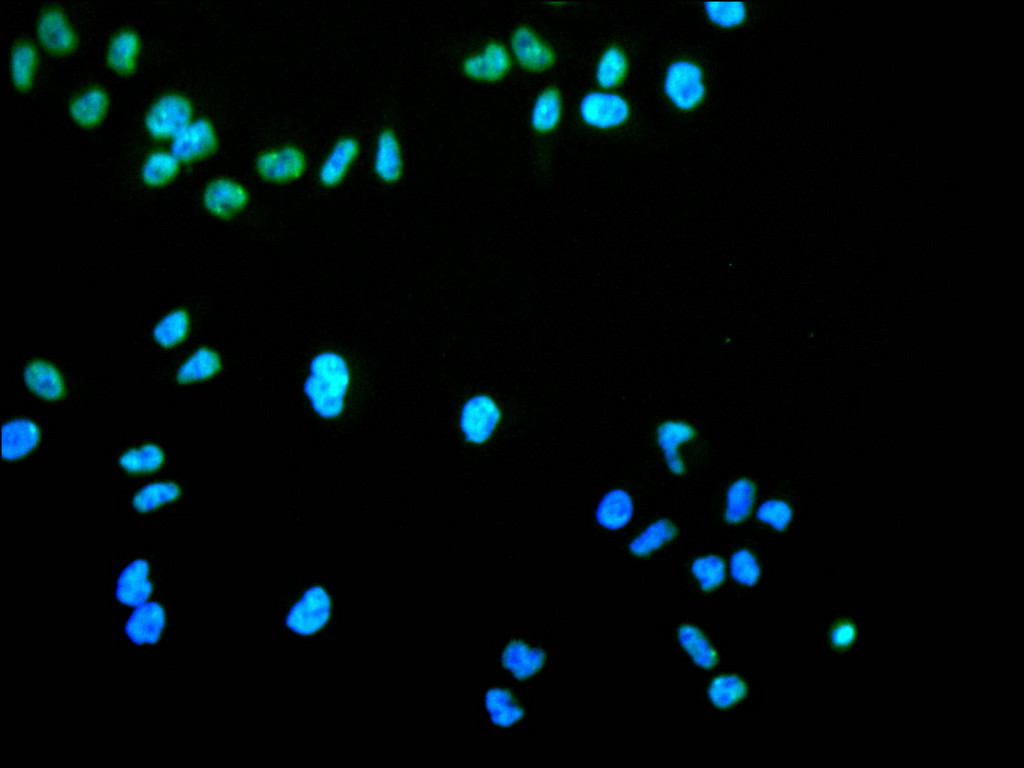
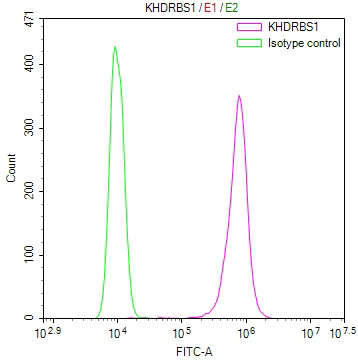
Validation data demonstrates robust performance across multiple applications. In western blot analysis, the antibody detects KHDRBS1 in human cell lines including A549, COLO205, and HEK293, as well as mouse and rat brain tissue lysates, confirming cross-species reactivity. The observed band at 68 kDa, rather than the predicted 48 kDa molecular weight, reflects post-translational modifications characteristic of this heavily phosphorylated and potentially glycosylated protein. Immunohistochemistry staining has been validated in human stomach tissue and prostate cancer specimens, while immunofluorescence studies in HeLa cells reveal the expected nuclear localization pattern. Flow cytometry analysis further demonstrates clear positive signal separation from isotype controls.
Whether you are exploring KHDRBS1's role in alternative splicing regulation, investigating its function in cancer biology, or characterizing signal transduction mechanisms, this antibody provides the application flexibility and cross-species reactivity needed to advance your research.
There are currently no reviews for this product.





