
Call us
301-363-4651 (Available 9 a.m. to 5 p.m. CST from Monday to Friday)

| Code | CSB-RA012352MA1HU |
| Size | $49.9 |
| Order now | |
| Promotion |

|
| Image |
|
| Have Questions? | Leave a Message or Start an on-line Chat |
| Application | Recommended Dilution |
|---|---|
| IHC | 1:50-1:200 |
KIR2DL1, also designated CD158a, functions as an inhibitory receptor on natural killer cells that recognizes specific HLA-C allotypes bearing group 2 epitopes. This interaction plays a central role in regulating NK cell cytotoxicity, making KIR2DL1 a significant target for researchers investigating immune tolerance, transplant immunology, and the mechanisms by which tumors evade immune surveillance. Understanding KIR-HLA interactions has become increasingly important as the field advances toward harnessing NK cell biology for therapeutic applications.
This recombinant monoclonal antibody, clone 2F3, offers the reproducibility and molecular definition that demanding immunological studies require. Produced using recombinant technology and expressed as a human IgG4 isotype with the S228P stabilizing mutation, this antibody provides consistent performance across experiments and eliminates the lot-to-lot variability that can complicate longitudinal studies. The defined sequence ensures that your results remain comparable whether you are establishing baseline protocols or building on years of accumulated data.
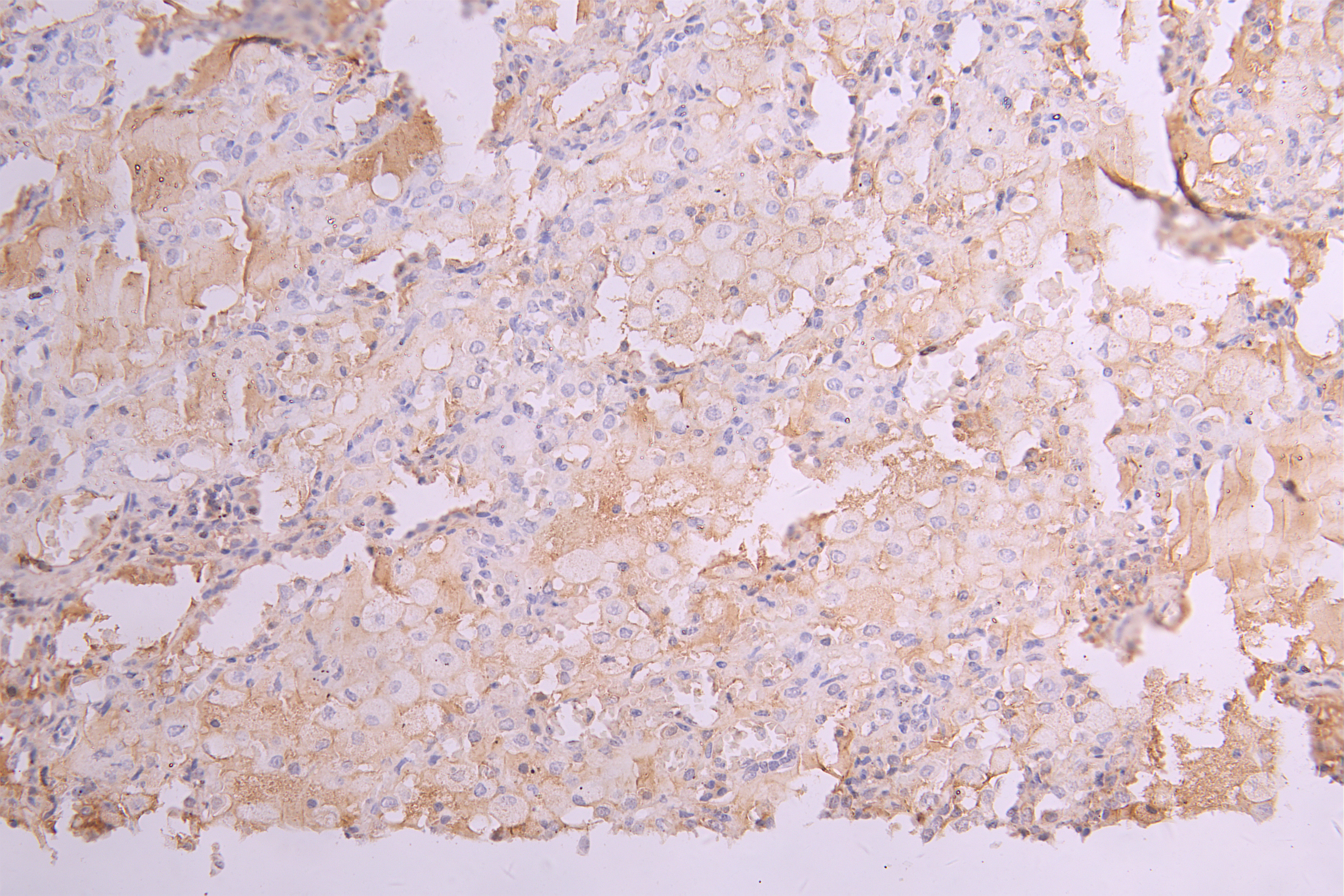
Validation in immunohistochemistry demonstrates reliable detection in human lung tissue sections, with optimal staining achieved at dilutions between 1:50 and 1:200 using citrate buffer antigen retrieval. The antibody has also been validated for ELISA applications, providing flexibility for researchers who need to characterize KIR2DL1 expression across different experimental platforms. Affinity chromatography purification ensures high purity, while the glycerol-based PBS formulation supports stable long-term storage at -20°C or -80°C.
For investigators exploring NK cell receptor biology, immune checkpoint mechanisms, or the immunological basis of transplant outcomes, this antibody delivers the specificity and consistency needed to advance understanding of KIR-mediated immune regulation.
There are currently no reviews for this product.





