
Call us
301-363-4651 (Available 9 a.m. to 5 p.m. CST from Monday to Friday)

| Code | CSB-RA179059A0HU |
| Size | US$210 |
| Order now | |
| Image |
|
| Have Questions? | Leave a Message or Start an on-line Chat |
| Application | Recommended Dilution |
|---|---|
| WB | 1:500-1:5000 |
| IHC | 1:50-1:200 |
| FC | 1:50-1:200 |
LPP, or Lipoma-preferred partner, is a LIM domain-containing protein that plays a significant role in cell adhesion, migration, and cytoskeletal organization. Originally identified through its involvement in chromosomal translocations associated with lipomas, LPP has since emerged as an important player in signal transduction pathways, making it a valuable target for researchers investigating cellular dynamics, cancer biology, and tissue development.
This recombinant monoclonal antibody, clone 23C5, offers the reliability that comes with sequence-defined production. Because it derives from a single cloned sequence expressed in rabbit host cells, you can expect consistent performance across experiments and between lots, eliminating the variability that can complicate long-term studies or multi-site collaborations.
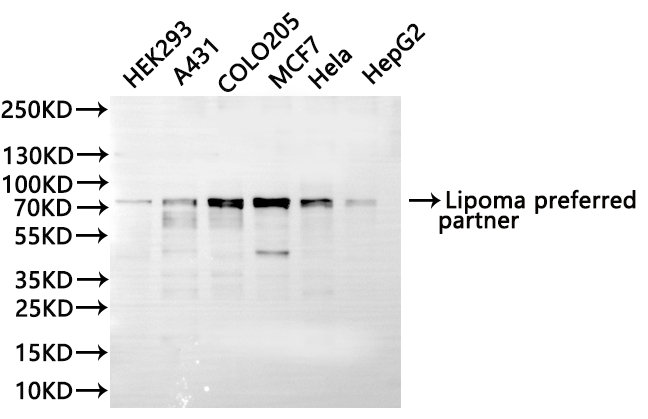
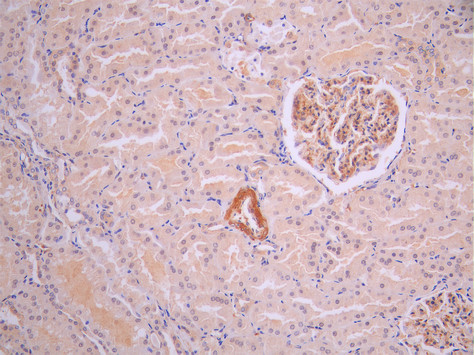
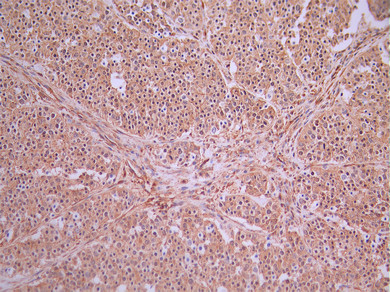
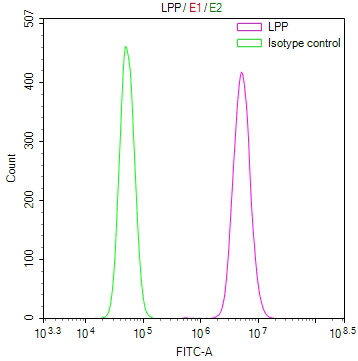
Validation data demonstrates robust performance across multiple applications. In western blot analysis, the antibody detects LPP in a diverse panel of human cell lines including HEK293, A431, COLO205, MCF7, HeLa, and HepG2, with an observed band at approximately 75 kDa. This migration slightly above the predicted 66 kDa molecular weight likely reflects post-translational modifications such as phosphorylation, which is consistent with LPP's known regulatory mechanisms in signaling pathways. For immunohistochemistry, the antibody has been validated in paraffin-embedded human kidney and liver cancer tissues, providing clear staining patterns suitable for tissue-based investigations. Flow cytometry validation using 786-O renal carcinoma cells confirms utility for single-cell analysis of intracellular LPP expression.
Whether you are exploring LPP's contributions to focal adhesion dynamics, investigating its role in tumor progression, or characterizing its expression patterns across tissue types, this antibody provides the flexibility and dependability needed for rigorous signal transduction research.
There are currently no reviews for this product.





