NDUFS3 Recombinant Monoclonal Antibody

Code CSB-RA224121A0HU
Size US$210
Order now
Image
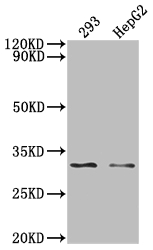
  • Western Blot
    Positive WB detected in: 293 whole cell lysate, HepG2 whole cell lysate,
    All lanes: NDUFS3 antibody at 1:2000
    Secondary
    Goat polyclonal to rabbit IgG at 1/50000 dilution
    Predicted band size: 31, 15 KDa
    Observed band size: 31 kDa
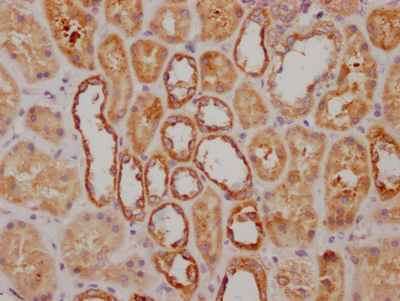
  • IHC image of CSB-RA224121A0HU diluted at 1:100 and staining in paraffin-embedded human kidney tissue performed on a Leica BondTM system. After dewaxing and hydration, antigen retrieval was mediated by high pressure in a citrate buffer (pH 6.0). Section was blocked with 10% normal goat serum 30min at RT. Then primary antibody (1% BSA) was incubated at 4℃ overnight. The primary is detected by a Goat anti-rabbit IgG polymer labeled by HRP and visualized using 0.05% DAB.
Have Questions? Leave a Message or Start an on-line Chat

Product Details

Uniprot No.
Target Names
Alternative Names
NADH dehydrogenase [ubiquinone] iron-sulfur protein 3, mitochondrial (EC 1.6.5.3) (EC 1.6.99.3) (Complex I-30kD) (CI-30kD) (NADH-ubiquinone oxidoreductase 30 kDa subunit), NDUFS3
Species Reactivity
Human
Immunogen
A synthesized peptide derived from human NDUFS3
Immunogen Species
Homo sapiens (Human)
Conjugate
Non-conjugated
Clonality
Monoclonal
Isotype
Rabbit IgG
Clone No.
1H12
Purification Method
Affinity-chromatography
Concentration
It differs from different batches. Please contact us to confirm it.
Buffer
Rabbit IgG in 10mM phosphate buffered saline , pH 7.4, 150mM sodium chloride, 0.05% BSA, 0.02% sodium azide and 50% glycerol.
Form
Liquid
Tested Applications
ELISA, WB, IHC
Recommended Dilution
Application Recommended Dilution
WB 1:500-1:5000
IHC 1:50-1:200
Troubleshooting and FAQs
Storage
Upon receipt, store at -20°C or -80°C. Avoid repeated freeze.
Lead Time
Basically, we can dispatch the products out in 1-3 working days after receiving your orders. Delivery time maybe differs from different purchasing way or location, please kindly consult your local distributors for specific delivery time.
Description

NDUFS3 serves as a core subunit of mitochondrial Complex I, the largest enzyme complex in the electron transport chain responsible for initiating oxidative phosphorylation. This 30 kDa iron-sulfur protein plays an essential role in cellular energy metabolism, and its dysfunction has been implicated in mitochondrial disorders, metabolic reprogramming in cancer, and broader questions of cellular bioenergetics. For researchers investigating these pathways, reliable detection of NDUFS3 provides critical insight into mitochondrial function and integrity.

This recombinant monoclonal antibody, generated against a synthetic peptide derived from human NDUFS3, offers the consistency and reproducibility that demanding experimental workflows require. As a sequence-defined reagent produced from a single rabbit clone (1H12), it eliminates the lot-to-lot variability that can complicate longitudinal studies or multi-site collaborations. The affinity-purified IgG format ensures minimal background while maintaining strong target recognition.

Validation studies demonstrate robust performance across multiple applications. In western blot analysis, the antibody detects a clear band at the expected 31 kDa molecular weight in both 293 and HepG2 whole cell lysates, with effective detection at 1:2000 dilution. For tissue-based studies, immunohistochemistry validation in paraffin-embedded human kidney tissue confirms reliable staining using standard heat-induced epitope retrieval in citrate buffer, with recommended dilutions between 1:50 and 1:200. The antibody is also validated for ELISA applications.

Whether you are exploring mitochondrial dysfunction in cancer metabolism, characterizing Complex I assembly, or investigating signal transduction pathways linked to cellular energetics, this antibody provides a dependable tool for detecting NDUFS3 in human samples across your experimental platforms.

Usage
For Research Use Only. Not for use in diagnostic or therapeutic procedures.

Customer Reviews and Q&A

 Customer Reviews

There are currently no reviews for this product.

Submit a Review here

Target Background

Function
Core subunit of the mitochondrial membrane respiratory chain NADH dehydrogenase (Complex I) which catalyzes electron transfer from NADH through the respiratory chain, using ubiquinone as an electron acceptor. Essential for the catalytic activity and assembly of complex I.
Gene References into Functions
  1. identified a novel Leigh syndrome causing NDUFS3 mutation and expanded the clinical spectrum caused by NDUFS3 mutations in this study. PMID: 30140060
  2. The results suggest that the impaired mitochondrial activity could be due to the broken interaction between DJ-1 and NDUFS3 and that downregulation of DJ-1 in sperm and testes contributes to AS pathogenesis. PMID: 29849492
  3. The NDUFS3 expressed in the temporal cortex in patient with late-onset Alzheimer's disease. PMID: 28242297
  4. High NDUFS3 expression is associated with IgA nephropathy. PMID: 25770168
  5. pH stability of w-t and Leigh syndrome mutant varied at extreme acidic pH. the molten globule like structure of w-t at pH1 was absent in case of the mutant protein. Both the w-t and mutant proteins showed multi-step thermal and Gdn-HCl induced unfolding PMID: 24028823
  6. NDUFS3 is down-regulated in serous ovarian adenocarcinoma PMID: 23446378
  7. Expressions of GRIM-19, NDUFS3, and extracellular matrix elements are correlated with invasive capabilities of breast cancer cell lines. PMID: 23630608
  8. a novel, biomarker potential of a mitochondrial complex I subunit protein, NDUFS3 - as a robust indicator of breast cancer progression and invasiveness as well as of hypoxia/necrosis in clinical specimens of invasive ductal carcinoma, was uncovered. PMID: 21867691
  9. Decreased protein levels of complex I 30-kDa subunit in fetal Down syndrome brains. PMID: 11771736

Show More

Hide All

Subcellular Location
Mitochondrion inner membrane; Peripheral membrane protein; Matrix side.
Protein Families
Complex I 30 kDa subunit family
Database Links

HGNC: 7710

OMIM: 603846

KEGG: hsa:4722

STRING: 9606.ENSP00000263774

UniGene: Hs.502528

icon of phone
Call us
301-363-4651 (Available 9 a.m. to 5 p.m. CST from Monday to Friday)

icon of address
Address
7505 Fannin St., Ste 610, Room 7 (CUBIO Innovation Center), Houston, TX 77054, USA
icon of social media
Join us with

Subscribe newsletter

Leave a message

* To protect against spam, please pass the CAPTCHA test below.
CAPTCHA verification
© 2007-2026 CUSABIO TECHNOLOGY LLC All rights reserved. 鄂ICP备15011166号-1
Place an order now

I. Product details

*
*
*
*

II. Contact details

*
*

III. Ship To

*
*
*
*
*
*
*

IV. Bill To

*
*
*
*
*
*
*
*


