NEFM Recombinant Monoclonal Antibody

Code CSB-RA054260A0HU
Size US$210
Order now
Image
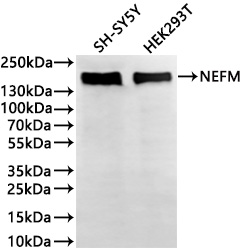
  • Western Blot
    Positive WB detected in: SH-SY5Y whole cell lysate(30µg), HEK293T whole cell lysate(30µg)
    All lanes: NEFM antibody at 1:1000
    Secondary
    Goat polyclonal to rabbit IgG at 1/40000 dilution
    Predicted band size: 102 kDa
    Observed band size: 160 kDa
    Exposure time:3min
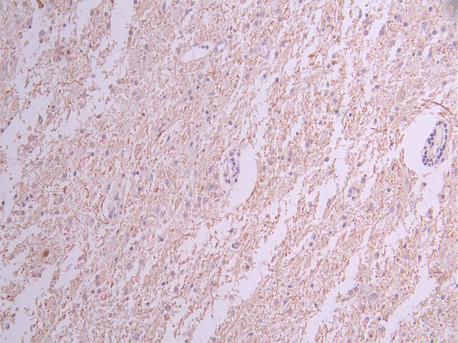
  • IHC image of CSB-RA054260A0HU diluted at 1:100 and staining in paraffin-embedded human glioma cancer performed on a Leica BondTM system. After dewaxing and hydration, antigen retrieval was mediated by high pressure in a citrate buffer (pH 6.0). Section was blocked with 10% normal goat serum 30min at RT. Then primary antibody (1% BSA) was incubated at 4°C overnight. The primary is detected by a Goat anti-rabbit polymer IgG labeled by HRP and visualized using 0.05% DAB.
Have Questions? Leave a Message or Start an on-line Chat

Product Details

Uniprot No.
Target Names
Alternative Names
Neurofilament medium polypeptide (NF-M) (160 kDa neurofilament protein) (Neurofilament 3) (Neurofilament triplet M protein), NEFM, NEF3 NFM
Species Reactivity
Human
Immunogen
A synthesized peptide from human NEFM protein
Immunogen Species
Homo sapiens (Human)
Conjugate
Non-conjugated
Clonality
Monoclonal
Isotype
Rabbit IgG
Clone No.
6F12
Purification Method
Affinity-chromatography
Concentration
It differs from different batches. Please contact us to confirm it.
Buffer
Rabbit IgG in 10mM phosphate buffered saline , pH 7.4, 150mM sodium chloride, 0.05% BSA, 0.02% sodium azide and 50% glycerol.
Form
Liquid
Tested Applications
ELISA, WB, IHC
Recommended Dilution
Application Recommended Dilution
WB 1:500-1:2000
IHC 1:50-1:200
Troubleshooting and FAQs
Storage
Upon receipt, store at -20°C or -80°C. Avoid repeated freeze.
Lead Time
Basically, we can dispatch the products out in 1-3 working days after receiving your orders. Delivery time maybe differs from different purchasing way or location, please kindly consult your local distributors for specific delivery time.
Description

Neurofilament medium polypeptide (NEFM) serves as a critical structural component of the neuronal cytoskeleton, where it contributes to axonal caliber, stability, and the maintenance of proper nerve conduction velocity. As one of three neurofilament subunits, NEFM has emerged as a valuable marker in neuroscience research, with particular relevance to studies of neurodegeneration, axonal injury, and nervous system development.

This recombinant monoclonal antibody, clone 6F12, offers the reproducibility and consistency that demanding neurological research requires. Because the antibody sequence is defined and produced recombinantly in rabbit host cells, you can expect reliable performance across experiments and over time, eliminating the lot-to-lot variability that can complicate long-term studies or multi-site collaborations.

Validation testing demonstrates robust performance across multiple applications. In western blot analysis, the antibody detects NEFM in both SH-SY5Y neuroblastoma and HEK293T cell lysates at dilutions of 1:500 to 1:2000. The observed band at approximately 160 kDa exceeds the predicted molecular weight of 102 kDa, which reflects the extensive phosphorylation characteristic of neurofilament proteins in their native state. For tissue-based studies, immunohistochemical staining has been validated in paraffin-embedded human glioma tissue sections at dilutions of 1:50 to 1:200, revealing clear target localization using standard antigen retrieval protocols.

Whether you are investigating neurodegenerative disease mechanisms, characterizing neural differentiation, or examining nervous system pathology, this antibody provides a dependable tool for detecting NEFM in human samples across both cell-based and tissue applications.

Usage
For Research Use Only. Not for use in diagnostic or therapeutic procedures.

Customer Reviews and Q&A

 Customer Reviews

There are currently no reviews for this product.

Submit a Review here

Target Background

Function
Neurofilaments usually contain three intermediate filament proteins: NEFL, NEFM, and NEFH which are involved in the maintenance of neuronal caliber. May additionally cooperate with the neuronal intermediate filament proteins PRPH and INA to form neuronal filamentous networks.
Gene References into Functions
  1. Study determined that spinophilin binding to neurofilament medium required overexpression of the catalytic subunit of protein kinase A and was decreased by cyclin-dependent protein kinase 5. PMID: 28634551
  2. NEFM is a negative regulator of aldosterone production and cell proliferation, in part by facilitating D1R internalization from the plasma membrane in Adosterone-producing Adenomas. PMID: 28584012
  3. There was a strongly elevated reactivity against neurofilament medium in a subset of schizophrenia patients compared to controls. PMID: 24636402
  4. direct evidence that NF-M/H are hyperphosphorylated in Alzheimer disease PMID: 20624930
  5. the importance of alpha-internexin and NF-L in regulating the conformations of NF-M and NF-H PMID: 20213320
  6. This protein has been found differentially expressed in the anterior cingulate cortex from patients with schizophrenia PMID: 20381070
  7. To study if the increase of levels of neurofilament (NF)-M and NF-L in brain of Alzheimer's diseases (AD) is caused by increase of NF-M and NF-L. PMID: 12133495
  8. Two polymorphisms of neurofilament M(Ala475Thr and Gly697Arg) occurred at similar frequencies in PD patients and controls. A Pro725Gln substitution and a deletion of valine in position 829 were identified in two PD patients. PMID: 14583397
  9. The G336S variant of hNF-M does not affect the formation of IF networks nor the distribution of the variant hNFM protein. If the G336S variant is involved in the development of PD, it isn't due to defects in the assembly and distribution of NFs. PMID: 15290901
  10. O-glycosylation of NF-M is highly dynamic and closely interwoven with phosphorylation cascades and may have a pathophysiological role. PMID: 16006557
  11. mutations in neurofilaments are possible risk factors that may contribute to pathogenesis in amytrophic lateral sclerosis in conjunction with one or more additional genetic or environmental factors, but are not significant primary causes PMID: 16084104
  12. variation in NEF3 influence rate of response to typical antipsychotic medication PMID: 16734940

Show More

Hide All

Subcellular Location
Cytoplasm, cytoskeleton. Cell projection, axon.
Protein Families
Intermediate filament family
Database Links

HGNC: 7734

OMIM: 162250

KEGG: hsa:4741

STRING: 9606.ENSP00000221166

UniGene: Hs.458657

icon of phone
Call us
301-363-4651 (Available 9 a.m. to 5 p.m. CST from Monday to Friday)

icon of address
Address
No. 269, Shendun 5th Road, Donghu Hi-Tech Development Area, Hubei Province, 430206, P.R.China
icon of social media
Join us with

Subscribe newsletter

Leave a message

* To protect against spam, please pass the CAPTCHA test below.
CAPTCHA verification
© 2007-2026 CUSABIO TECHNOLOGY LLC All rights reserved. 鄂ICP备15011166号-1
Place an order now

I. Product details

*
*
*
*

II. Contact details

*
*

III. Ship To

*
*
*
*
*
*
*

IV. Bill To

*
*
*
*
*
*
*
*


